博客

  • Mudless Drilling Waste Treatment System Solves the Problem of Drilling Waste Disposal

    Drilling waste/mud is one of the main sources of pollution in the oil and natural gas industry. Due to project requirements, drilling mud contains a mixture of oil, water, organic clays, and other substances. In recent years, the usage of oil-based mud, water-based mud, and composite-based mud has increased significantly in drilling operations, leading to rising costs and environmental pollution concerns.
     

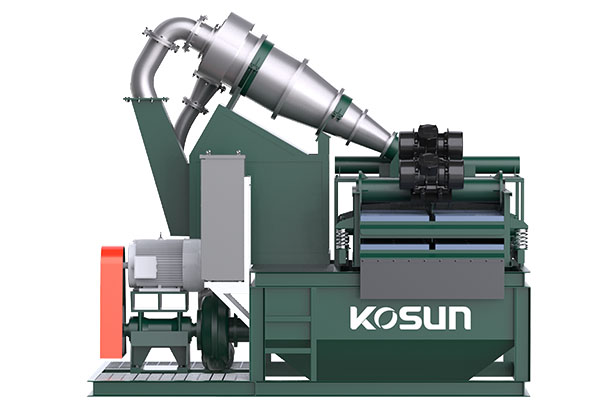
    Mudless Drilling Waste Treatment System -KOSUN
     
    The introduction of the mudless drilling waste treatment system successfully solves the problem of inefficient and environmentally unfriendly disposal of drilling waste. The system's main process involves the non-ground disposal of drilling waste at the wellhead, which can be done through harmless treatment during drilling. Alternatively, waste mud from the mud pit can be diluted and then treated and utilized. This system optimizes drilling environmental protection devices, allowing for the efficient and harmless treatment of mud, which can be reused. Additionally, it effectively reduces frictional resistance, lowers accident rates, and improves wellbore quality.
     
    The benefits of the mudless drilling waste treatment system include:
     
    1, Separated waste materials, such as cuttings, can be purified, dried, and recycled as concrete materials.
    2, The slurry water generated during the cleaning of cuttings can be treated with additives, destabilized, coagulated, and subjected to solid-liquid separation to form mud cakes. These mud cakes can be mixed with clay or shale in certain proportions and used for brick-making.
    3, The separated filtrate can undergo various pre-treatment processes, such as destabilization, coagulation, flotation, oxidation, and adsorption filtration, to remove major pollutants. This treated water can be used for oilfield reinjection, safe well re-injection, or meet regulatory discharge standards. Wastewater can be further treated through a sewage treatment system to achieve compliance with discharge standards.
  • Understanding Vertical Cuttings Dryers: A Vital Tool in Drilling Operations

    Introduction:
    In the world of drilling, efficient waste management is critical to reduce environmental impact and improve operational efficiency. The
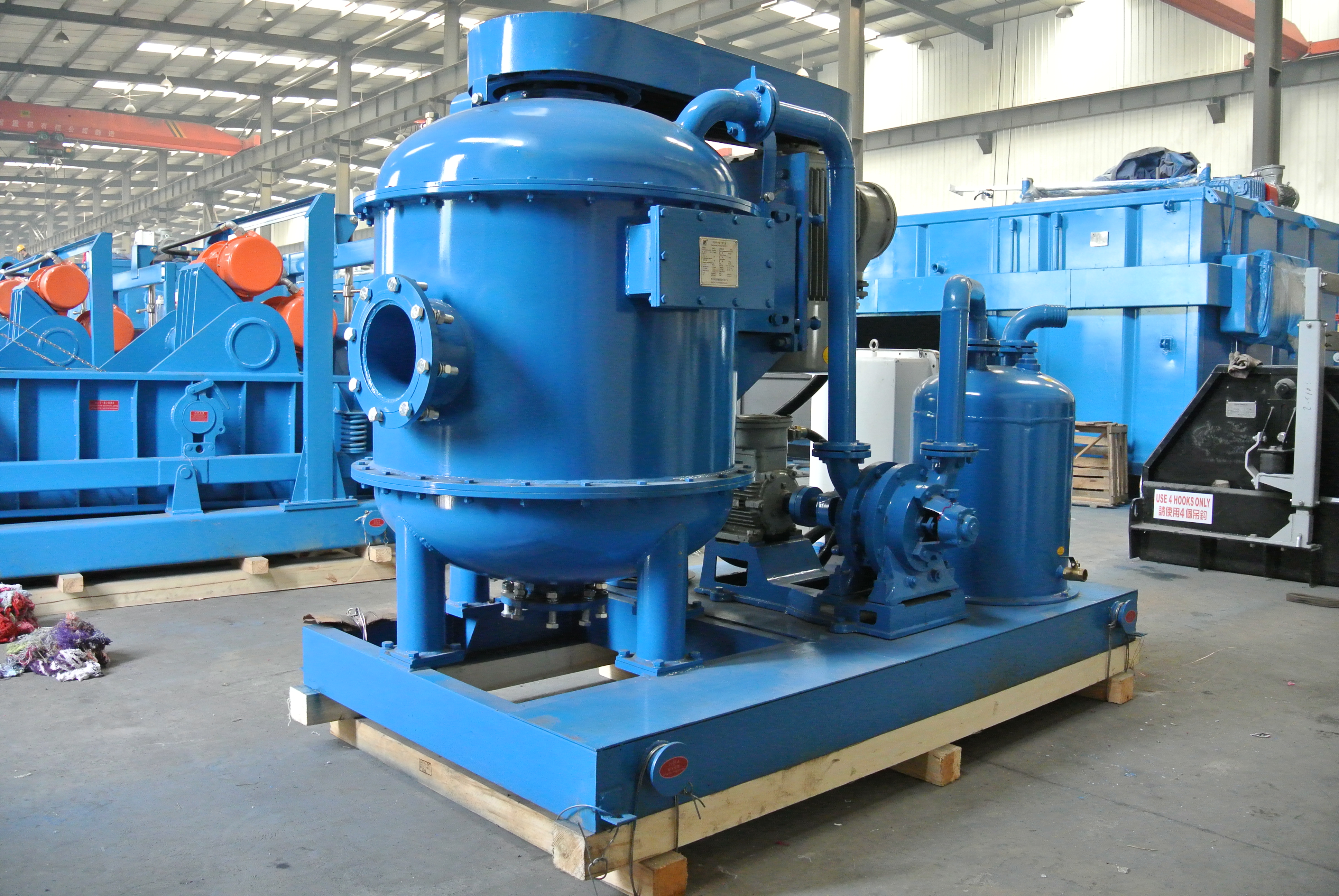
    vertical cuttings dryer plays a crucial role in separating drilling mud from cuttings, helping to recycle the drilling fluid and minimize the disposal of waste. But how does a vertical cuttings dryer work, and why is it so important?

    What is a Vertical Cuttings Dryer? A vertical cuttings dryer is a specialized piece of equipment used in the oil and gas industry to dehydrate drill cuttings. Drill cuttings are the byproducts of drilling operations and can contain harmful chemicals and fluids. This equipment uses centrifugal force to remove excess liquid from the cuttings, making them safer and more environmentally friendly.

    How Does it Work?

    • The cuttings are fed into the dryer’s cylindrical screen.
    • The screen is designed to allow smaller particles (like drilling fluid) to pass through while retaining the solid cuttings.
    • As the drum rotates, centrifugal force pushes the liquid to the outer edges, where it is collected and sent back to the mud system for reuse.
    • The dry cuttings are then discharged and ready for disposal or recycling.

    Benefits of Using a Vertical Cuttings Dryer:

    • Environmental Protection: By recovering valuable drilling fluid and reducing waste, vertical cuttings dryers contribute to more sustainable drilling operations.
    • Cost Efficiency: Recycling mud reduces the need for fresh drilling fluid, saving costs in the long run.
    • Improved Well Performance: Cleaner cuttings mean less interference with subsequent drilling phases, improving overall efficiency.

    Conclusion: The vertical cuttings dryer is an essential piece of equipment that enhances drilling operations by providing efficient waste management. Its ability to recycle drilling fluid and reduce environmental impact makes it indispensable in modern drilling projects.

  • How does the KOSUN mud zero discharge treatment system treat drilling waste?

    In many oil fields, the traditional method of dealing with drilling waste with the mud zero discharge treatment system is to dig a large mud circulation pool every time a well is drilled, covering an area ranging from 2 mu to 4 mu. Burial curing is carried out after completion. Such a simple and crude burial method makes it difficult to re-cultivate fertile fields, resulting in an irreversible outcome, and a large amount of arable land resources are wasted and idle.
     

    KOSUN mud zero discharge treatment system
     
    Now, with the continuous development of science and technology and the country's high attention to oilfield environmental protection, the standard for the mud zero discharge treatment system to deal with drilling waste is to meet the relevant discharge requirements of the national environmental protection department. Under the condition of ensuring the normal growth of green and environmentally friendly crops, the treatment of oilfield drilling fluid not only needs to achieve multiple recycling, thereby reducing production costs, but also transfers dry waste to other industries and transforms it into production value utilization.
     
    To achieve the above objectives, how does the mud zero discharge treatment system treat drilling waste? The KOSUN mud zero discharge treatment system can recycle and process drilling fluid waste, reduce treatment costs, recycle useful mud or water, and realize resource reuse and avoid the pollution of waste to the environment meets the environmental protection discharge requirements of waste in local government regulations.
     
    Tags: mud zero discharge treatment system, suppliers, manufacturers, factory, wholesale, buy, price, quotation, bulk, for sale, companies, stock, cost.
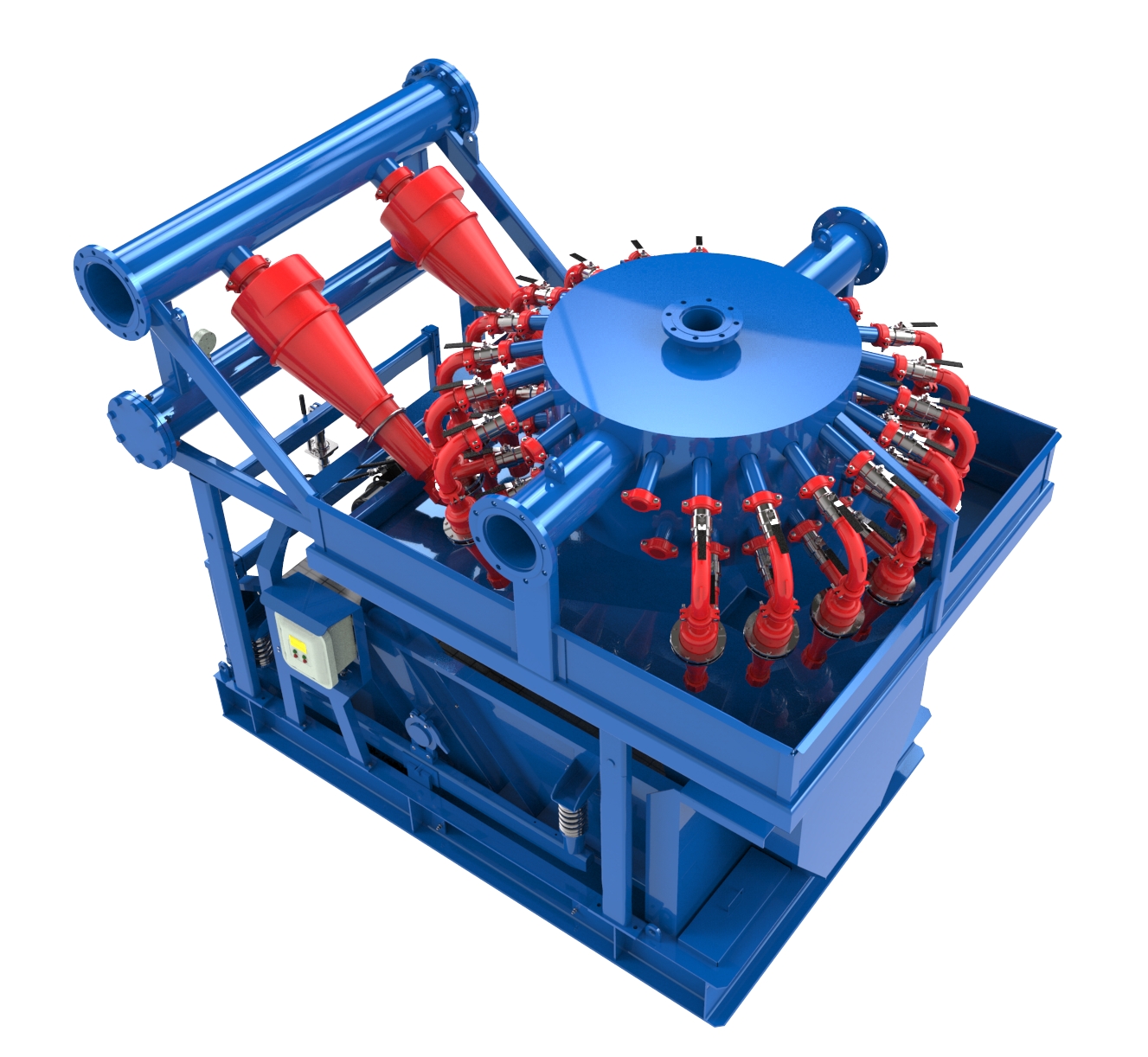
  • KOSUN Mud Cleaner: An Essential Tool in Drilling Operations

    In the world of drilling, whether for oil, gas, or water, maintaining efficient and safe operations is crucial. One of the key pieces of equipment that helps achieve this is the mud cleaner. This article will explain what a mud cleaner is, how it works, and why it’s so important in drilling operations.


    What is a Mud Cleaner?

    A mud cleaner is a specialized device used in drilling operations to remove solid particles from drilling fluid, also known as "mud." Drilling mud is a critical component in drilling processes, as it helps cool and lubricate the drill bit, carry cuttings to the surface, and maintain pressure in the wellbore. However, as drilling progresses, the mud becomes contaminated with solid particles like rock cuttings, sand, and other debris. If not removed, these solids can damage equipment, reduce drilling efficiency, and increase costs.

    The mud cleaner is designed to separate these unwanted solids from the drilling fluid, ensuring the mud remains clean and effective.


    How Does a Mud Cleaner Work?

    A mud cleaner typically combines two key pieces of equipment: a shale shaker and a desander/desilter.

    Here’s how it works:

    1. Shale Shaker:
      The first stage of the mud cleaning process involves the shale shaker. The drilling fluid, mixed with cuttings, is pumped onto a vibrating screen. The screen allows the liquid mud to pass through while trapping larger solid particles, which are then discarded.

    2. Desander and Desilter:
      After passing through the shale shaker, the mud still contains finer particles. It is then directed to the desander and desilter, which use centrifugal force to separate smaller solids. The desander removes medium-sized particles (like sand), while the desilter removes even finer particles (like silt).

    3. Clean Mud Return:
      Once the solids are removed, the clean drilling fluid is returned to the mud system for reuse. This ensures the mud maintains its properties and continues to perform effectively.


    Why is a Mud Cleaner Important?

    1. Equipment Protection:
      Solid particles in drilling mud can cause wear and tear on drilling equipment, including pumps, pipes, and the drill bit. By removing these particles, a mud cleaner helps extend the lifespan of the equipment and reduce maintenance costs.

    2. Improved Drilling Efficiency:
      Clean drilling fluid flows more smoothly and maintains its properties better, leading to faster and more efficient drilling operations.

    3. Cost Savings:
      Reusing cleaned mud reduces the need for fresh mud, saving on material costs. Additionally, fewer equipment repairs and replacements mean lower operational expenses.

    4. Environmental Benefits:
      Properly cleaned mud can be reused, reducing waste and minimizing the environmental impact of drilling operations.

    5. Safety:
      Clean mud helps maintain wellbore stability and prevents issues like stuck pipes or blowouts, ensuring safer drilling conditions.

    Applications of Mud Cleaners

    Mud cleaners are used in a variety of drilling operations, including:

    • Oil and Gas Drilling: To maintain efficient and safe drilling in both onshore and offshore operations.

    • Geothermal Drilling: To manage drilling fluid in high-temperature environments.

    • Water Well Drilling: To ensure clean drilling fluid for water extraction projects.

    • Mining and Construction: To remove solids from drilling fluids used in exploration and foundation drilling.


  • Mud Agitator is the Vital Equipment for Processing Mud Drilling Fluid

    KOSUN Machinery's MA Series mud agitators are specially designed for mixing petroleum drilling fluids. It is famous for its compact structure, small footprint, and excellent mixing effect. Drilling fluid mud agitators above 7.5kW are equipped with turbine-worm reduction transmission, which has large transmission torque and smooth operation.
     
    For drilling fluid tank solids control systems, mud agitators are an essential component. Its main function is to ensure the uniformity of drilling fluid and keep solid particles suspended. This is critical to maintaining the stability and consistency of the drilling fluid during circulation. KOSUN mud agitators is used to stir and mix drilling fluid to prevent solid particles from settling and ensure uniform mixing of drilling fluid.
     
    Turbine mud agitators are the most commonly used agitator type for drilling fluid mixing. It is capable of handling a wide viscosity range of fluids and can efficiently complete almost any mixing operation. There are two main types of turbine mixers – open and disc. The open type includes straight blades, oblique blades, and curved blades, and the disc type includes various structures of straight blades and oblique blades.  These mixers are designed to finely disperse fluid particles, making them suitable for mixing, liquid-liquid dispersion, and liquid-solid suspension of low to medium-viscosity fluids.
     
     
    Tags: Mud agitator, Drilling fluid mud agitator, Drilling mud agitator, Oil agitator, Drilling mud agitator,  Oil drilling mud agitator, Solid control drilling mud agitator, Solid control mud agitator
     
     
  • "Advanced LS1850 Shale Shaker: High-Efficiency Solid-Liquid Separation Solution for Mining and Environmental Applications"

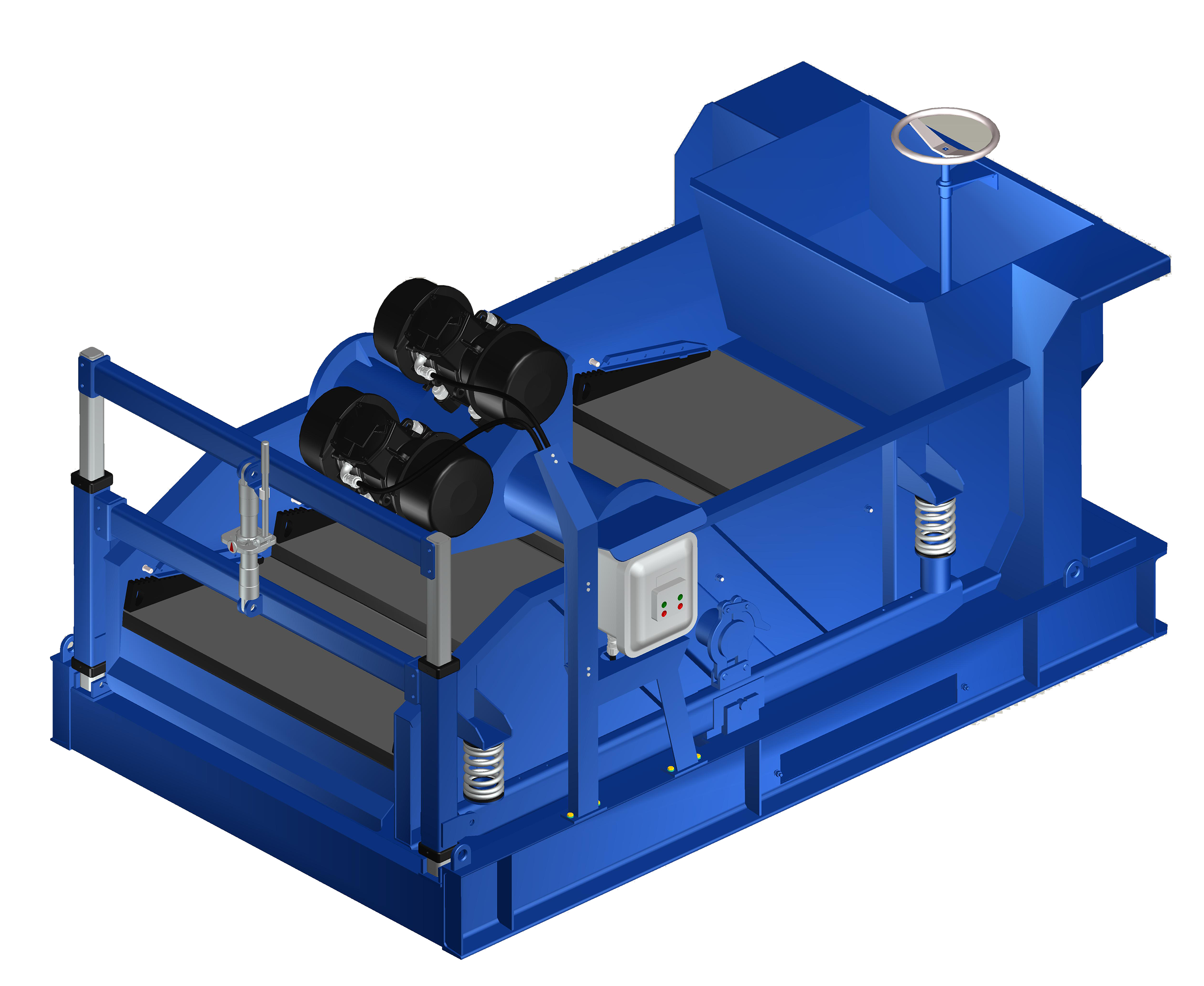
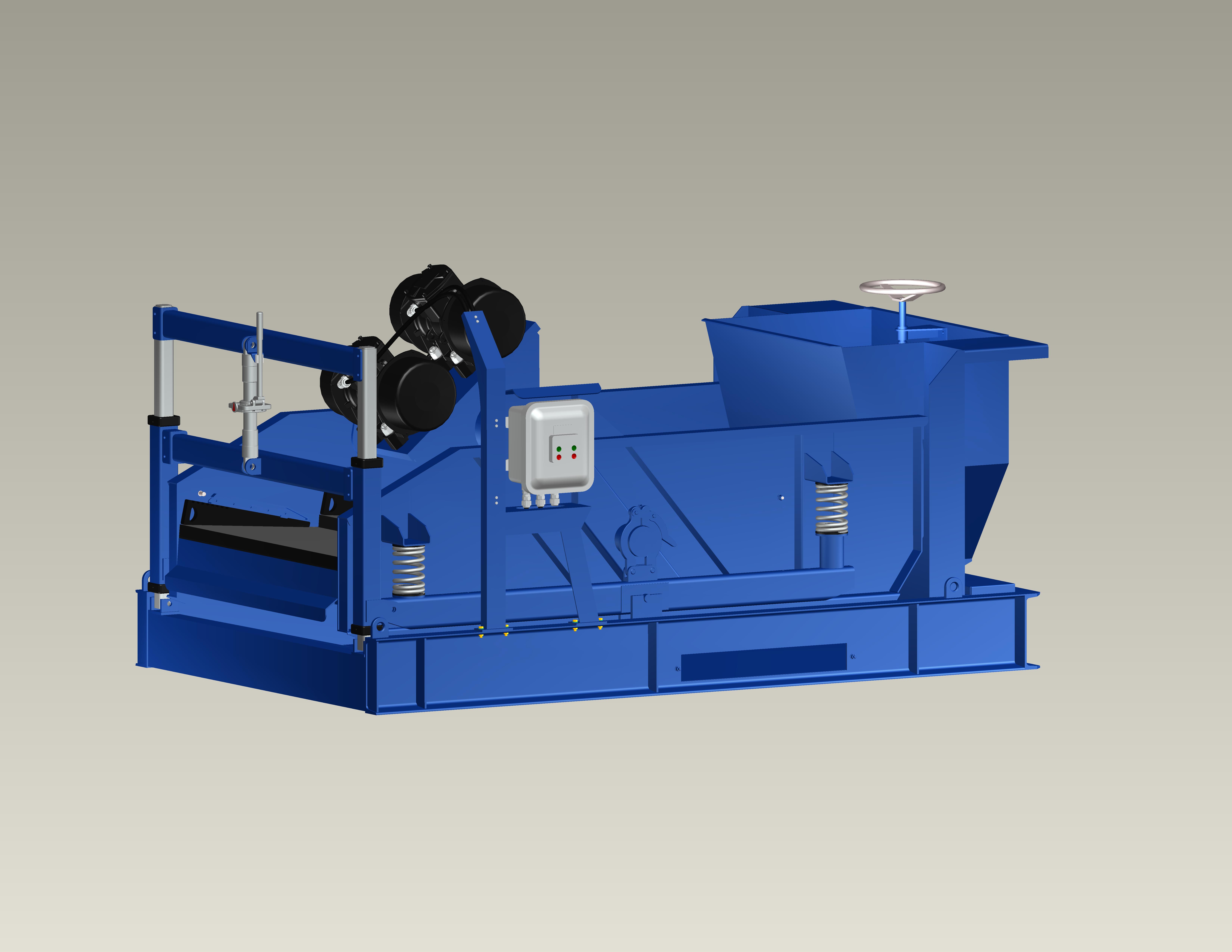
    The LS1850 Shale Shaker, developed by Xi'an Kosun, represents a state-of-the-art solution for solid-liquid separation in various industrial applications. This advanced equipment employs a sophisticated vibration system powered by two three-phase asynchronous vibration motors, which operate in reverse self-synchronous rotation to generate precise linear reciprocating motion of the screen body.


    Technical Specifications and Design Features:
    The LS1850 boasts a dual-layer screening system with an impressive total screening area of 18 square meters (9 square meters per layer). This innovative design ensures optimal material subdivision and provides sufficient residence time on the screen surface, resulting in superior separation efficiency.

    Key Features:

    1. High-Performance Vibration System:

      • Equipped with two OLI (internationally renowned brand) 7kw vibration motors

      • Delivers exceptional excitation strength for powerful vibration performance

      • Ensures stable and consistent operation

    2. Advanced Screening Surface:

      • Utilizes high-strength stainless steel seam screens

      • Features excellent plasticity and corrosion resistance

      • Employs wedge and lock bolt fixation system for secure attachment

      • Enables stable high-frequency vibration without detachment

      • Facilitates easy replacement and maintenance

    3. Premium Vibration Isolation:

      • Incorporates Tenida (international brand) imported springs

      • Provides superior elasticity and reliability

      • Ensures smooth operation and vibration dampening

    4. Intelligent Control System:

      • Offers both manual and automatic operation modes

      • Features PLC program integration for seamless communication with host computers

      • Enables advanced automatic control capabilities

      • Simplifies operational procedures

      • Enhances overall work efficiency


    Applications:
    The LS1850 Shale Shaker serves as a versatile solid-liquid separation solution across multiple industries, including:

    • Mining operations

    • Tunneling and shield construction

    • Environmental protection and treatment processes

    The equipment offers flexible deployment options, functioning effectively as a standalone unit or in dual/multiple configurations, adapting to various operational requirements and processing capacities.

    This advanced shale shaker represents a significant technological advancement in solid-liquid separation, combining robust construction, intelligent control systems, and efficient operation to meet the demanding requirements of modern industrial applications.

  • Liquid-gas separator and drilling blowout accident

    A blowout is a phenomenon in which formation fluids, such as oil, natural gas, and water, rush into the wellbore when the pressure is greater than the pressure in the well and erupt out of the wellhead without control. If the huge pressure and shock wave during the eruption cause casualties and property losses, it is a blowout accident. The most serious blowout accident is combustible gas, if the flammable gas from the underground leakage, it will threaten the safety of the surrounding area, the rescue is very difficult.

    ​The fire is fiercer than a tiger, and the blowout accident not only brings great economic property losses to the state and individuals, but also causes major pollution to the soil and surrounding environment on the site, and its losses are immeasurable.


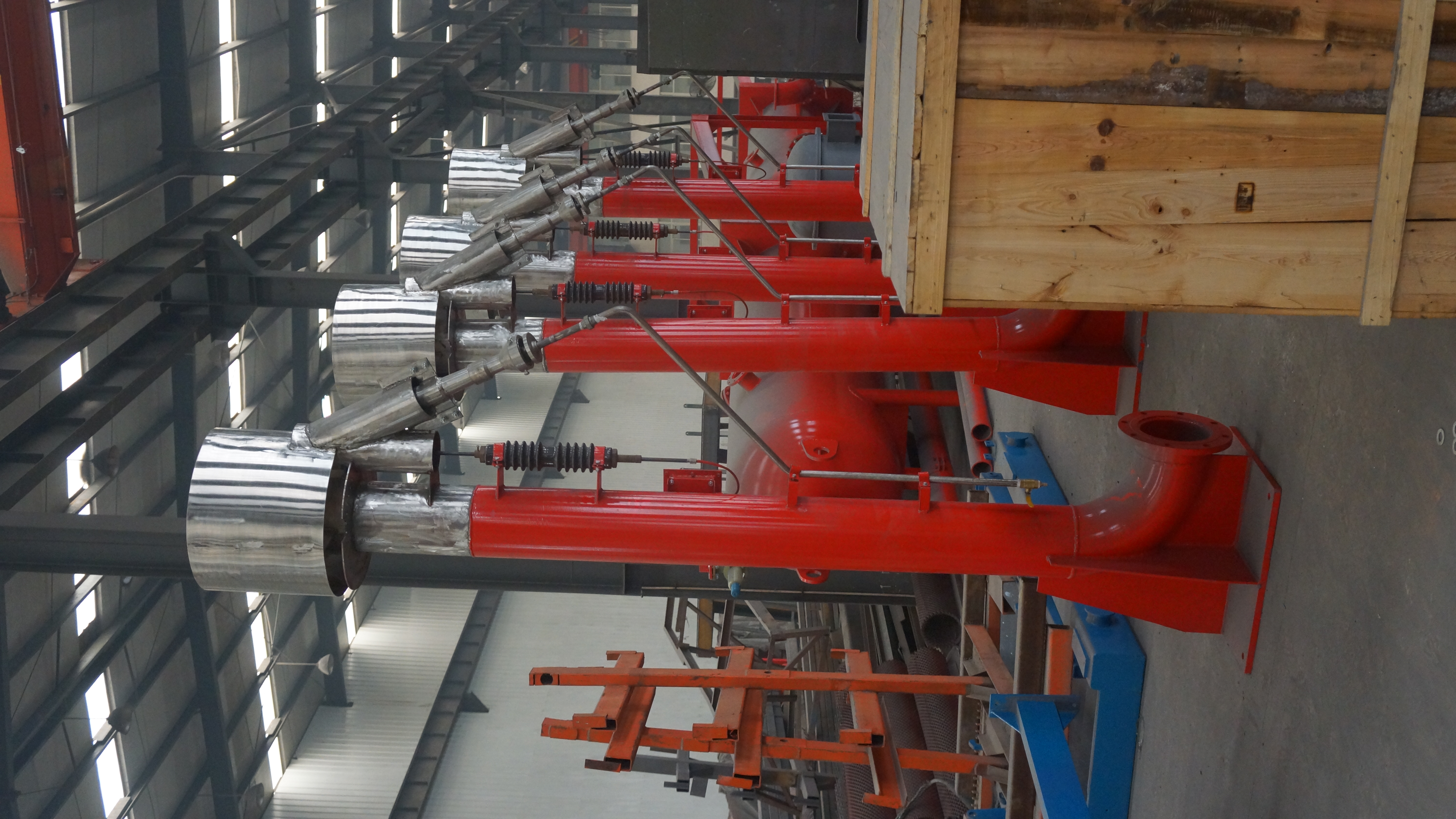
    ​​As a special equipment for the primary degassing of gas penetrating drilling fluid, the liquid-gas separator is a very useful mud gas separator. The liquid-gas separator can be divided into normal pressure and pressure automatic control according to pressure. The liquid gas separator of atmospheric pressure anti-hydrogen sulfide drilling fluid is made of materials, which can effectively prevent the erosion of harmful gases and ensure the safety of man-machine production. When the drilling fluid produces gas invasion, its specific gravity and viscosity deviate greatly, which can not meet the drilling requirements. If it is not dealt with in time, it will cause well kick and even blowout accident. The combination of a liquid-gas separator and an electronic ignition device ensures a smooth drilling process.

     XI’AN KOSUN ENVIRONMENTAL ENGINEERING CO., LTD. is a solid control manufacturer specializing in the production of liquid-gas separators and electronic ignition devices, in strict accordance with national safety standards.  Its products are mainly used in the treatment, disposal, and resource recycling of solid waste.  We are dedicated to serving every customer wholeheartedly.  We welcome visits and inspections of our company and factory.  Please contact us at +8613379250593 (WhatsApp).
     
  • Factors affecting the operation of mud shale shaker

    In the solid control system of oil drilling, the mud shale shaker belongs to the first level solid control equipment.
    The drilling fluid returned from the well through the elevated manifold passes through the shaker first, and then enters the other solid control equipment behind for processing.
    Drilling fluid vibrating screen is a filterable solid-liquid separation equipment, but also the solid control system in the first separation and separation efficiency of the equipment,
    through the vibrating screen can separate and remove a large number of harmful solid phase, effectively clean the large particles in the drilling fluid solid phase,
    then what factors will affect the work efficiency of the vibrating screen, let's take a look at it.

     
    First, there are many forms of motion of the mud vibrating screen, we commonly used is the linear motion of the vibrating screen, linear motion is to put the oscillator
    on the front of the center of gravity of the system above, so that the screen frame produces linear motion, so as to remove the solid phase compared with other motion
    trajectory vibrating screen, linear motion vibrating screen has a stable drilling fluid delivery speed, screen surface is relatively flat, It has high working efficiency,
    and it can also tilt the screen surface slightly to improve the time of drilling fluid on the screen surface, thereby improving the treatment effect.


    Second, the amplitude and frequency of the mud vibrating screen is also one of the important factors affecting the efficiency of the vibrating screen, the vibration frequency
    of the vibrating screen, the greater the rotation speed, the higher the vibration frequency, the better the effect of screening solid phase; In theory, the larger the amplitude of
    the vibrating screen, the better the treatment effect, but after the amplitude increases, the greater the force the vibrating screen is subjected to, it will shorten the service
    life of the vibrating screen, so a reasonable design of the amplitude can improve the working efficiency of the vibrating screen and the service life of the vibrating screen.

     
    Third, the inclination of the mud vibrating screen and the mesh number of the screen is also one of the factors affecting the work efficiency of the vibrating screen, the general constant single layer vibrating screen has 2-4 screens, the front screen is generally flat, and the last screen has a certain tilt Angle. This is designed so that the drilling fluid can efficiently pass through the front screen and improve the treatment effect when passing through the back screen. The mesh number of the screen is also very important, we are dealing with different materials, need to achieve different treatment effects, need to choose the appropriate mesh of the screen can improve the treatment effect and achieve our treatment effect, if the mesh number is too high will reduce our work efficiency, or the mesh number is too low will affect our treatment effect.

  • Sludge water treatment system site layout and equipment selection


    Slurry water treatment system is mainly set on the ground, by the pulping system, slurry system, slurry water transport system and slurry water separation system of 4 sub-systems, mainly including swelling tank, slurry mixing tank, water tank, return slurry tank, sedimentation tank, cyclone, vibrating screen, filter press and a variety of valves, pipes and pumps. The slurry prepared by the pulping system, after adjusting the index of the pulping system, is transported by the slurry conveying system to the slurry tank of the shield. The slurry sent to the surface by the slurry pump is separated and discharged step by step according to the particle size by the pre-screening treatment, the primary cyclone treatment and the secondary cyclone treatment. The slurry after the separation of the residue is sent to the slurry mixing system again for property adjustment, so that it becomes a high-quality slurry and then recycled to the slurry tank.

    KD-100 slurry treatment system,Tunnel boring mud system


    The maximum slurry capacity of the separation system is 3 300 m3 /h, with 3 stages of separation: The first stage is pre-screening separation, using the vibration of the vibrating screen to sift out the particles with a particle size of more than 3mm in the mud, the second stage is 1 stage swirl separation, the separation particle size d50 = 74μm, the third stage is 2 stage swirl separation, the separation particle size d50 = 20μm. Cyclone working principle: Under the action of pressure, the mud passes into the cyclone, and the slurry fluid inside the cyclone produces high-speed rotation. Due to the effect of centrifugal force, the larger particles are thrown to the inner wall and discharged from the underspillway along the conical shell under the action of self-weight. At the same time, negative pressure is generated at the center of the high-speed rotating cyclone. Fine particles with low specific gravity flow out of the upper spillway under the action of negative pressure.
  • Kosun shale shaker : improve screening efficiency and optimize the production process

    In modern industrial production, shale shaker as an important screening equipment, widely used in mining, chemical industry, construction, metallurgy and other fields. Its main function is to separate the material according to the particle size to ensure the efficiency and refinement of the production process.
     
    1.1 Working principle of shale shaker 
    The  shale shaker generates high-frequency vibration through the motor to drive the vibrating body, so that the material jumps or rolls along the screen surface, and then achieves the effect of screening. According to different vibration modes, the  shale shaker  can be divided into linear  shale shaker , circular shale shaker and oval shale shaker .
     
    1.2 Advantages of  shale shaker 
     
    Efficient screening: can efficiently handle large flow of materials, high screening accuracy, suitable for the classification of various granular materials.
    Energy saving and environmental protection: Compared with traditional screening equipment, vibrating screen has higher energy efficiency and can effectively reduce energy consumption.
    Strong durability: Made of high-quality materials, the vibrating screen has a long service life in long-term work, reducing the maintenance frequency of the equipment.
    1.3 Application field of shale shaker 
     shale shaker not only plays an important role in mining, but also widely used in building materials, metallurgy, food, fertilizer and other industries. In each industry, the vibrating screen can effectively improve production efficiency and reduce resource waste according to the different characteristics of the material.
     
    2. The application and advantages of vibrating screen in mining industry
    There is a huge demand for vibrating screens in the mining industry because screening is an integral part of the ore processing process. The vibrating screen can efficiently separate the useful minerals and impurities in the ore and improve the quality of the ore.
     
    2.1 Working principle and structure of vibrating screen
    The core of the vibrating screen is the screen and vibration device. The vibration device is driven by the motor to produce strong vibration, and the material jumps and rolls on the screen, so as to separate the material of different particle sizes. According to different requirements, the vibrating screen is designed with different screen size, tilt Angle and vibration frequency to ensure the high efficiency of the screening process.
     
    2.2 Technical advantages of vibrating screen
     
    High screening accuracy: It is especially suitable for the screening of fine-grained ores, and can accurately separate minerals of different particle sizes.
    Strong adaptability: the vibrating screen can handle a variety of ores, such as iron ore, bauxite, copper, etc., and can cope with a variety of complex working environments.
    Reduce production costs: By improving screening efficiency, reduce the waste of unqualified materials and reduce production costs.
    2.3 Maintenance and maintenance of vibrating screen
    In order to ensure the long-term stable operation of the vibrating screen, regular inspection of the screen, vibration system and motor is essential. Proper lubrication and timely replacement of worn parts help to extend the service life of the equipment.