博客
-
Solid control equipment: a key force in the industrial field
Solid control equipment plays an indispensable role in oil drilling, building piling, and many industrial scenarios involving solid-liquid separation. They operate silently, but have a profound impact on production efficiency, product quality, cost control, and environmental protection. With the continuous evolution of industrial technology, solid control equipment is also continuing to innovate to adapt to increasingly complex production needs.
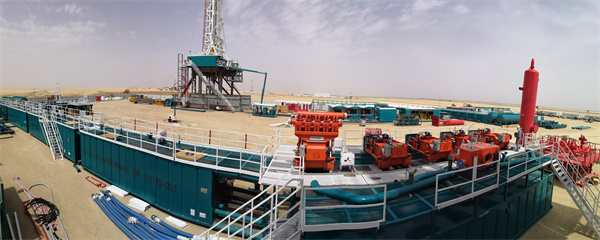
1. Basic concept and working principle of solid control equipmentSolid control equipment, that is, solid control equipment, is mainly used to separate and treat solid particles in liquids. In oil drilling operations, drilling fluid (mud) carries a large number of solid particles such as cuttings during the cycle. The task of solids control equipment is to separate these particles from the drilling fluid so that the drilling fluid can be reused. Common solid control equipment includes vibrating screen, desander, desilter, centrifuge, etc., which work together according to different working principles.
The shale shaker is the first line of defense of the solid control system. Through high-frequency vibration, the drilling fluid flows on the screen, the larger particles of cuttings are trapped and discharged by the screen, and the liquid and smaller particles enter the next level of treatment equipment through the screen. The sand remover and mud remover use the principle of centrifugal force, when the liquid containing solid particles enters the cyclone along the tangential direction, the heavier particles are thrown to the wall under the action of centrifugal force, and move down the wall, and discharged from the bottom; Lighter liquid flows out of the top overflow port. Centrifuges work on the same principle of centrifugal force, but they can achieve a finer separation, can separate very fine solid particles from the liquid, often used for deep treatment of drilling fluids.Ensure safe and efficient drilling operationsIn the process of oil drilling, if the content of solid particles in drilling fluid is too high, the density and viscosity of drilling fluid will increase, and the fluidity and cutting-carrying capacity of drilling fluid will be affected. This will not only increase the wear of the bit, reduce the drilling speed, but also may cause serious accidents such as sticking. Solid control equipment can effectively separate solid particles in time, maintain the good performance of drilling fluid, and ensure the safe and efficient drilling operation. For example, in complex environments such as deep-sea drilling, high-performance solid control equipment is essential to ensure the stable operation of the drilling platform and drilling schedule.
Reduce production costsDrilling fluid is an important consumable in oil drilling operations, and high-quality drilling fluid is expensive. Recycling drilling fluid through solid control equipment can greatly reduce the amount of new drilling fluid preparation, thus reducing production costs. According to statistics, a set of efficient solid control system can make the repeated utilization rate of drilling fluid reach more than 80%, which saves a lot of raw material procurement costs for enterprises. In addition, solid control equipment reduces the wear caused by solid particles on equipment, prolonging the service life of drilling equipment, and further reducing equipment maintenance and replacement costs.
An important barrier for environmental protectionOil drilling operation will produce a large number of waste drilling fluid containing solid particles and chemicals, if discharged at will, it will cause serious pollution to the surrounding environment such as soil and water. Solid control equipment separates solid particles from liquid through effective treatment of drilling fluid, and the separated solids can be disposed of in landfill or other compliant disposal after harmless treatment, while the treated liquid can be safely discharged or further reused if it meets discharge standards. This greatly reduces the negative impact of oil drilling operations on the environment and helps the oil industry achieve green development.
Third, solid control equipment in other industrial fields of application expansionConstruction piling industryIn building piling construction, mud will also carry a lot of solid particles such as drilling slag. The solid control equipment can treat the piling mud, realize the recycling of the mud, and reduce the mud discharge. This not only helps to protect the environment, but also reduces the cost of piling construction, especially in urban centers and other areas with high environmental requirements, the application of solid control equipment is particularly important. For example, in the pile foundation construction of large urban complex, the use of solid control equipment to treat mud can effectively avoid the blockage of urban drainage system and environmental pollution caused by mud discharge.Energy saving and environmental protectionIn the context of global advocacy of energy conservation and emission reduction, solid control equipment manufacturers are committed to the development of more energy-efficient and environmentally friendly technologies. On the one hand, by optimizing the equipment structure and working parameters, the separation efficiency of the equipment is improved and the energy consumption is reduced. For example, the new centrifuges use efficient motors and advanced transmission systems to ensure separation while reducing energy consumption. On the other hand, the development of environmentally friendly separation media and treatment agents to reduce the potential harm to the environment. For example, some solid control equipment uses biodegradable flocculants to achieve efficient solid-liquid separation while reducing the environmental impact of chemicals.Fine and multi-functional -
Introduction of KOSUN BLACK RHINO Series Shale Shaker
KOSUN BLACK RHINO Series Shale Shaker is the first-stage solids control equipment in the drilling fluid solids phase control system, and separates a large amount of cuttings carried by mud from wellhead, facilitating mud to enter the second-stage separation equipment. The shale shaker can be used separately, or be combined by double or multiple ones, and our company can provide corresponding diversion manifold.KOSUN BLACK RHINO Series Shale Shaker is a high frequency linear-motion vibrating screen machine, equipped with three screen panels and two vibrating motors, and offering a choice of manually adjusting screen frame angle while drilling (AWD). When KOSUN BLACK RHINO Series Shale Shaker works, the screen frame angle can be adjusted from -1° to +5° by dint of innovation of its structural design. KOSUN BLACK RHINO Series Shale Shaker can separate drilling cuttings efficiently. Fix vibrating motors onto a high-strength supporting beam of screen frame, and position them on the screen bed, and the positioning in this way can make vibrating motors directly exert G-forces on screens. The isolation mounts can protect the bedframe from vibration effect of the screen frame. The screen bed humps slightly in favor of tensioning screens. This method of tensioning screens can enhance performance and service life of screens. Mud is fed to KOSUN BLACK RHINO Series Shale Shaker via the collection pan of desilter and desander or via the feeder.
-
What are the effects and advantages of shale shaker and spray treatment?
838/5000通用场景Vibrating screen and spray is a common technical improvement in the process of solid-liquid separation or mud treatment, mainly used to improve the separation efficiency and treatment effect. The following is a detailed description of its role, treatment effect and advantages:
Shale shaker and spray is a common technical improvement in the process of solid-liquid separation or mud treatment, mainly used to improve the separation efficiency and treatment effect. The following is a detailed description of its role, treatment effect and advantages:
effectAuxiliary cleaning of solid particles:The spray system rinses the material on the screen by spraying water, effectively removing the mud or fine matter attached to the surface of the particles to prevent blocking the screen aperture.Improve screening efficiency:Spray water can help separate the fine particles from the larger ones, making the screening more thorough.Reduce material adhesion:When dealing with mud containing more viscous substances, spraying water can reduce the accumulation and adhesion of materials on the screen, and improve the operating stability of the vibrating screen.Keep the screen clean:When the vibrating screen runs for a long time, it is easy to block the network because of particle accumulation. The spray device can wash the screen in time to keep the screen smooth.Treatment effectSeparation efficiency:The addition of spray water can significantly improve the separation efficiency of fine particles, especially in the treatment of fine sand and powder materials.Reduction of solid content in mud:By spraying, the liquid can be separated from the solid more efficiently, so that the solid content of the sieve increases, and the solid content of the liquid under the sieve decreases.Improved mud recovery:The spray water can wash out the recyclable liquid attached to the solid, improving the recovery rate of the mud.Enhanced operational stability:Reduce screen clogging, extend the continuous working time of the vibrating screen, and improve the overall production efficiency of the equipment.advantageStrong adaptability:Vibrating screen and spray can handle high viscosity, high fine particle content of the material, to meet the needs of different working conditions.Maintenance cost reduction:Spray water can reduce the frequency of screen clogging, thereby reducing the frequency of manual cleaning and screen replacement.Environmental protection:Spraying can reduce the solid content of tailings treated by mud, reduce the burden of subsequent treatment, and be more environmentally friendly.Improve the working environment:Spraying water can reduce the diffusion of material dust, improve the site working environment, and reduce worker health risks.Application scenarioDrilling waste slurry treatment: improve solid-liquid separation efficiency in waste slurry.Mine tailings treatment: efficient screening of fine particles, improve resource recovery.Aggregate production: Clean fine dust and soil in sand and stone.Environmental protection: Fine treatment of solid-liquid separation in wastewater and waste pulp.Sum upThe vibrating screen and spray system can effectively improve the screening efficiency, reduce the solid content in the solid-liquid mixture, and reduce the maintenance cost and the risk of network blockage, which is an important auxiliary device to improve the overall processing capacity of the vibrating screen. This is particularly evident in demanding solids control and mud handling scenarios. -
Frequently Asked Questions about Vertical Cuttings Dryer
1. What is a vertical cuttings dryer?
A vertical cuttings dryer is a type of equipment used in the drilling industry to separate drilling fluids from cuttings. It is designed to remove drilling fluids, such as oil or water, from the cuttings to reduce waste and minimize environmental impact.
2, How does a vertical cuttings dryer work?
A vertical cuttings dryer works by using centrifugal force to separate fluids from the solid cuttings. It utilizes a high-speed rotating screen to remove the fluids from the cuttings, which are then discharged from the dryer.
3, What are the benefits of using a vertical cuttings dryer? Using a vertical cuttings dryer offers several benefits, including:
-Reduced waste: The dryer separates drilling fluids from the cuttings, allowing for the reuse of these fluids in the drilling process, minimizing waste and saving costs.
-Environmental compliance: By removing fluids from the cuttings, the dryer helps meet environmental regulations and reduces the potential for pollution.
-Cost-effective: Reusing drilling fluids and reducing waste can result in significant cost savings for drilling operations.
-Improved drilling performance: Dryer cuttings are easier to handle and transport, leading to better operational efficiency and productivity.
4, What types of drilling applications are vertical cuttings dryers used for?
Vertical cuttings dryers are used in various drilling applications, including onshore and offshore drilling operations, as well as in the oil and gas industry, geothermal drilling, and other industries that involve drilling and excavation.
5, Are vertical cuttings dryers customizable?
Yes, vertical cuttings dryers can be customized to meet specific requirements and applications. They can be designed to handle different types of drilling fluids, cuttings sizes, and capacities.
6, Are vertical cuttings dryers easy to maintain?
Vertical cuttings dryers are designed to be user-friendly and low-maintenance. Regular cleaning and inspection of the dryer's screens and other components are necessary to ensure optimal performance.
7, Can a vertical cuttings dryer be integrated into existing drilling systems?
Yes, vertical cuttings dryers can be integrated into existing drilling systems. They can be installed in various configurations to fit the available space and accommodate the drilling operation's specific requirements.
8, Is it necessary to have any additional equipment when using a vertical cuttings dryer?
Vertical cuttings dryers typically require additional equipment, such as a solids control system or a waste management system, to fully optimize their performance. These systems work in conjunction with the dryer to ensure efficient solids separation and overall waste management.
9, Are there any safety considerations when using a vertical cuttings dryer?
Yes, safety is an important consideration when operating a vertical cuttings dryer. Users should follow proper safety procedures and guidelines to prevent accidents and ensure the safe operation of the equipment.
10. Where can I purchase a vertical cuttings dryer?
Vertical cuttings dryers are available from various manufacturers and suppliers. It is recommended to research and choose a reputable supplier that offers reliable equipment and after-sales support. KOSUN can be your first choice. -
KOSUN pipe desilting system
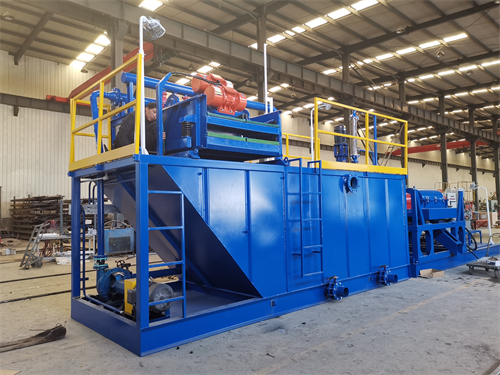
Kosun KS-60 sludge water separation system is designed for sludge water separation in silting construction. The system meets the requirements of desilting process. The whole system is composed of two functional modules: screening swirl and centrifuge, which can adapt to different construction site layout. The selection of auxiliary equipment and other materials conforms to the corresponding national standards. The solid phase can be separated from the liquid phase in the tail slurry, the solid phase can meet the conditions of external transport, the liquid phase can be reused or discharged, and the mud can completely achieve zero discharge and meet the requirements of environmental protection.
Kosun KS-60 sludge water separation system is designed for sludge water separation in silting construction. The system meets the requirements of desilting process. The whole system is composed of two functional modules: screening swirl and centrifuge, which can adapt to different construction site layout. The selection of auxiliary equipment and other materials conforms to the corresponding national standards. The solid phase can be separated from the liquid phase in the tail slurry, the solid phase can meet the conditions of external transport, the liquid phase can be reused or discharged, and the mud can completely achieve zero discharge and meet the requirements of environmental protection. -
Drilling Fluid Mud Cleaner: Unraveling Its Characteristics and Diverse Applications in the Oil and Gas Industry
Drilling mud cleaners are an essential component of the solids control process in the oil and drilling industry. It plays a vital role in separating harmful solid particles of 15um and above from drilling fluid and ensuring the purification and efficiency of drilling fluid. The principles and application areas of a drilling mud cleaner is rooted in its design and functionality, making it an important tool in solids control system.
The drilling mud cleaner mainly consists of a cleaner base, a screen box, an inclination adjustment mechanism, a bracket, a vibration motor, an explosion-proof controller, a desander, a desilter, a throttling manifold, etc. This comprehensive composition efficiently and effectively separates solid particles from drilling fluids. The mud desander is located after the vibrating screen and before the centrifuge in the mud solids control system. It is a second- and third-level advanced solid control equipment that integrates the functions of drilling fluid shale shaker, desander and desilter.One of the main features of mud cleaners is their large processing capacity and fast processing speed. In addition, its screen has a longer service life, easier maintenance, compact structure, and small size, making it an excellent separation equipment for drilling fluid purification. These properties help improve the overall efficiency and productivity of the drilling process, making mud cleaners an indispensable tool in the petroleum industry.Drilling mud cleaners have a variety of applications and are mainly used for drilling fluid treatment and solid-liquid separation. It is also used in other areas where drilling fluid separation and purification are required. The versatility of mud cleaners makes them a valuable asset to various industries, helping to improve the overall quality and effectiveness of the processes they are used in.KOSUN is a professional petroleum equipment manufacturing company with more than 30 years of experience and 58 patents, and is a leading provider of drilling mud cleaners. The company's products have obtained ISO9001, ISO14001, ISO45001, APIQ1, and CE certificates, ensuring product quality and reliability. KOSUN has a strong R&D team that continuously innovates and improves products to meet the changing needs of the industry and maintain its position as a trustworthy high-quality solid control equipment supplier.In summary, the principles and application areas of drilling mud cleaners are rooted in their design, functionality and the critical role they play in solids control systems. With its advanced functions and wide range of applications, mud cleaners have become an indispensable tool for separation and purification of drilling fluids in the petroleum industry. KOSUN's commitment to quality and innovation further enhances the reliability and effectiveness of drilling mud cleaners, making them a valuable asset to companies in the oil industry. -
Where does the oil come from?
For many people, drilling for oil is the same thing as drilling for water Wells: Deep underground, there is a huge liquid space filled with tens of millions of tons of oil, which can be sucked out by drilling through the formation. In fact, oil is the authentic "oil in stone", let's see what the raw material of oil looks like.
This is called Kerogen, transliterated as kerogen, and the rock containing this material is the source rock, which is commonly called source rock or source rock, from which oil is extracted.
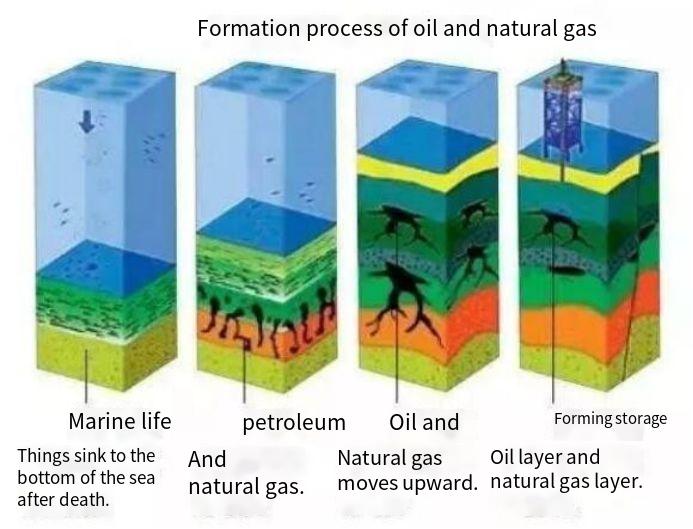
The past and present lives of oil We know that coal comes from the remains of ancient plants, which is not controversial, because there are many coal with plant wood texture and even leaf veins and other structures. And what is oil? Everyone has seen underwater silt, which is black because it contains a lot of organic matter. The source of this organic matter is algae in the water, which are deposited on the lake bottom after they die. Given the chance to be buried quickly and cut off from oxygen, the deposited organic matter is buried under thick sedimentary rocks over long geological times. Under the high temperature and high pressure underground, their organic matter is gradually transformed into oil parent material.
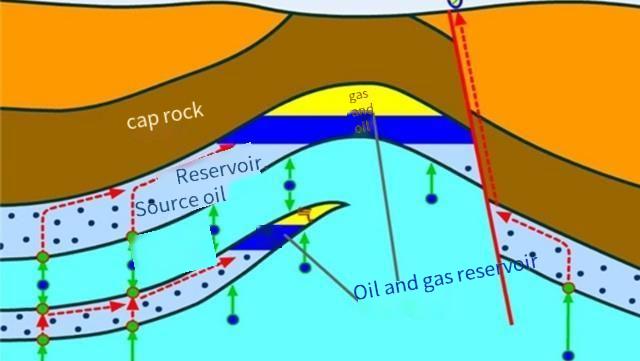
The formation of oil parent material is mostly in the early stage of sedimentation and burial, when the ground temperature is not more than 50℃. After about tens of millions of years, the deeper the sediment is buried and the higher the ground temperature (about 100-150 ° C), the maturity of the oil parent material reaches a certain range and is converted into hydrocarbons (hydrocarbons), that is, liquid oil or natural gas. Because these hydrocarbons are lighter than nearby rock, they percolate upward into the pores of the source rock formation. On the way, the oil-impervious formation is blocked and stays down, and slowly gathers in this formation, and the more and more, the formation of oil fields. So coal comes from the accumulation of plant remains, while oil is the deposition of algae, mainly from water bodies. The oil parent material in the sediment of the lake is mostly from algae, bacterial spores, pollen or resin, which mainly produces hydrocarbon petroleum of liquid paraffin. The oil parent material in Marine sediments mostly comes from plankton, algae, bacteria and a few land plants, which mainly produces liquid petroleum, supplemented by natural gas. The oil parent material in land sediments is mostly from lignin of higher plants, which is mainly used to produce natural gas. Therefore, knowing the source of the oil parent material in the source rock can predict the composition of the produced oil and the ratio of oil to gas.

How is oil extractedAfter geological exploration, the underground reservoir is found, the location, number and depth of the well are determined, and the drilling workers will drill on the set well location. At present, the commonly used drilling technology is rotary drilling. It consists of a set of surface equipment (including drill, derrick) and a set of lifting system and drill pipe, drill tool and drill bit. Through the lifting system, the drill tool is lifted and lowered, driven by the rotation of the rotary disk, and then the drill bit is rotated to break the rock until the target layer is reached. This is the most widely used drilling method in the world. -
Where does the oil come from?
For many people, drilling for oil is the same thing as drilling for water Wells: Deep underground, there is a huge liquid space filled with tens of millions of tons of oil, which can be sucked out by drilling through the formation. In fact, oil is the authentic "oil in stone", let's see what the raw material of oil looks like.
This is called Kerogen, transliterated as kerogen, and the rock containing this material is the source rock, which is commonly called source rock or source rock, from which oil is extracted.The past and present lives of oilWe know that coal comes from the remains of ancient plants, which is not controversial, because there are many coal with plant wood texture and even leaf veins and other structures. And what is oil? Everyone has seen underwater silt, which is black because it contains a lot of organic matter. The source of this organic matter is algae in the water, which are deposited on the lake bottom after they die. Given the chance to be buried quickly and cut off from oxygen, the deposited organic matter is buried under thick sedimentary rocks over long geological times. Under the high temperature and high pressure underground, their organic matter is gradually transformed into oil parent material.
The formation of oil parent material is mostly in the early stage of sedimentation and burial, when the ground temperature is not more than 50℃. After about tens of millions of years, the deeper the sediment is buried and the higher the ground temperature (about 100-150 ° C), the maturity of the oil parent material reaches a certain range and is converted into hydrocarbons (hydrocarbons), that is, liquid oil or natural gas. Because these hydrocarbons are lighter than nearby rock, they percolate upward into the pores of the source rock formation. On the way, the oil-impervious formation is blocked and stays down, and slowly gathers in this formation, and the more and more, the formation of oil fields.

How is oil extractedAfter geological exploration, the underground reservoir is found, the location, number and depth of the well are determined, and the drilling workers will drill on the set well location. At present, the commonly used drilling technology is rotary drilling. It consists of a set of surface equipment (including drill, derrick) and a set of lifting system and drill pipe, drill tool and drill bit. Through the lifting system, the drill tool is lifted and lowered, driven by the rotation of the rotary disk, and then the drill bit is rotated to break the rock until the target layer is reached. This is the most widely used drilling method in the world. -
Where does the oil come from?
For many people, drilling for oil is the same thing as drilling for water Wells: Deep underground, there is a huge liquid space filled with tens of millions of tons of oil, which can be sucked out by drilling through the formation. In fact, oil is the authentic "oil in stone", let's see what the raw material of oil looks like.
This is called Kerogen, transliterated as kerogen, and the rock containing this material is the source rock, which is commonly called source rock or source rock, from which oil is extracted.The past and present lives of oilWe know that coal comes from the remains of ancient plants, which is not controversial, because there are many coal with plant wood texture and even leaf veins and other structures. And what is oil? Everyone has seen underwater silt, which is black because it contains a lot of organic matter. The source of this organic matter is algae in the water, which are deposited on the lake bottom after they die. Given the chance to be buried quickly and cut off from oxygen, the deposited organic matter is buried under thick sedimentary rocks over long geological times. Under the high temperature and high pressure underground, their organic matter is gradually transformed into oil parent material.
The formation of oil parent material is mostly in the early stage of sedimentation and burial, when the ground temperature is not more than 50℃. After about tens of millions of years, the deeper the sediment is buried and the higher the ground temperature (about 100-150 ° C), the maturity of the oil parent material reaches a certain range and is converted into hydrocarbons (hydrocarbons), that is, liquid oil or natural gas. Because these hydrocarbons are lighter than nearby rock, they percolate upward into the pores of the source rock formation. On the way, the oil-impervious formation is blocked and stays down, and slowly gathers in this formation, and the more and more, the formation of oil fields.

So the mud in the lake may turn into oil in the distant future, the carbon cycle is never broken, and new oil is always being formed. So why is oil a non-renewable resource? In fact, it is very simple, these oil are the result of hundreds of millions of years of precipitation, for us humans, the formation of oil is too long about equal to non-renewable.
How is oil extractedAfter geological exploration, the underground reservoir is found, the location, number and depth of the well are determined, and the drilling workers will drill on the set well location. At present, the commonly used drilling technology is rotary drilling. It consists of a set of surface equipment (including drill, derrick) and a set of lifting system and drill pipe, drill tool and drill bit. Through the lifting system, the drill tool is lifted and lowered, driven by the rotation of the rotary disk, and then the drill bit is rotated to break the rock until the target layer is reached. This is the most widely used drilling method in the world. -
Where does the oil come from?
For many people, drilling for oil is the same thing as drilling for water Wells: Deep underground, there is a huge liquid space filled with tens of millions of tons of oil, which can be sucked out by drilling through the formation. In fact, oil is the authentic "oil in stone", let's see what the raw material of oil looks like.
This is called Kerogen, transliterated as kerogen, and the rock containing this material is the source rock, which is commonly called source rock or source rock, from which oil is extracted.The past and present lives of oilWe know that coal comes from the remains of ancient plants, which is not controversial, because there are many coal with plant wood texture and even leaf veins and other structures. And what is oil? Everyone has seen underwater silt, which is black because it contains a lot of organic matter. The source of this organic matter is algae in the water, which are deposited on the lake bottom after they die. Given the chance to be buried quickly and cut off from oxygen, the deposited organic matter is buried under thick sedimentary rocks over long geological times. Under the high temperature and high pressure underground, their organic matter is gradually transformed into oil parent material.
The formation of oil parent material is mostly in the early stage of sedimentation and burial, when the ground temperature is not more than 50℃. After about tens of millions of years, the deeper the sediment is buried and the higher the ground temperature (about 100-150 ° C), the maturity of the oil parent material reaches a certain range and is converted into hydrocarbons (hydrocarbons), that is, liquid oil or natural gas. Because these hydrocarbons are lighter than nearby rock, they percolate upward into the pores of the source rock formation. On the way, the oil-impervious formation is blocked and stays down, and slowly gathers in this formation, and the more and more, the formation of oil fields. So coal comes from the accumulation of plant remains, while oil is the deposition of algae, mainly from water bodies. The oil parent material in the sediment of the lake is mostly from algae, bacterial spores, pollen or resin, which mainly produces hydrocarbon petroleum of liquid paraffin. The oil parent material in Marine sediments mostly comes from plankton, algae, bacteria and a few land plants, which mainly produces liquid petroleum, supplemented by natural gas. The oil parent material in land sediments is mostly from lignin of higher plants, which is mainly used to produce natural gas. Therefore, knowing the source of the oil parent material in the source rock can predict the composition of the produced oil and the ratio of oil to gas.

So the mud in the lake may turn into oil in the distant future, the carbon cycle is never broken, and new oil is always being formed. So why is oil a non-renewable resource? In fact, it is very simple, these oil are the result of hundreds of millions of years of precipitation, for us humans, the formation of oil is too long about equal to non-renewable.
How is oil extractedAfter geological exploration, the underground reservoir is found, the location, number and depth of the well are determined, and the drilling workers will drill on the set well location. At present, the commonly used drilling technology is rotary drilling. It consists of a set of surface equipment (including drill, derrick) and a set of lifting system and drill pipe, drill tool and drill bit. Through the lifting system, the drill tool is lifted and lowered, driven by the rotation of the rotary disk, and then the drill bit is rotated to break the rock until the target layer is reached. This is the most widely used drilling method in the world.