博客

  • INTERNAL STRUCTURE OF DRILLING MUD TANK

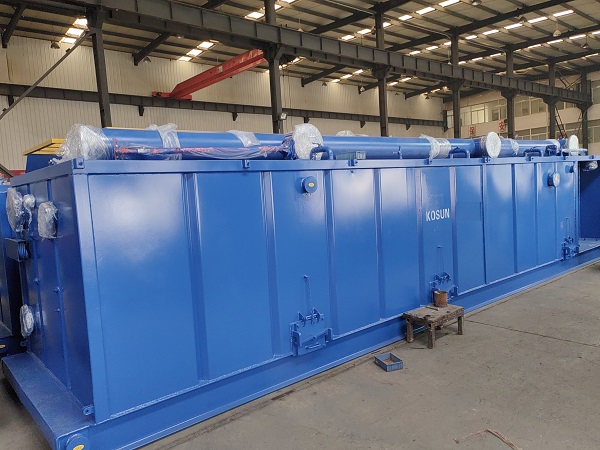
    A drilling mud tank is an important equipment in oil drilling, which is used to store and mix mud. It is composed of a tank, mixing device, discharge port, feed port, etc.
    The internal structure of the mud tank will be introduced in detail below.
    1. Tank body
    The body of the mud tank is a sealed container, usually made of welded steel plates. The tank has different shapes such as round, oval or square, and the size also varies according to the specific use needs.
    The inner wall of the tank is generally treated with anti-corrosion to prevent the corrosion of the mud on the tank.
    2. Mixing device
    A mixing device is provided inside the mud tank for mixing mud to keep it in a uniform mixing state. The stirring device is usually composed of a motor, a reducer and a stirrer.
    The motor transmits power through the reducer to the agitator, who rotates the mud to keep the solids suspended and prevent them from settling at the bottom of the tank.
    3. Discharge and feed ports
    The mud tank is provided with a discharge port and a feed port for the discharge and entry of mud. The discharge port is usually located at the bottom of the tank and drains the mud through a pipe to the next treatment unit. The feed port is usually located at the top of the tank, and the fresh mud is injected into the tank through the pipe. The location and size of the discharge and feed ports are determined according to the specific design requirements in order to achieve effective mud flow and handling.
     
    We usually add a sand pump beside the tank to provide power to transport mud, and sometimes we have a jet mud mixer to mix the mud.


  • Introduction to trenchless horizontal directional drilling III

    Definition and proportioning parameters of mud
     
    Definition of mud: trenchless mud refers to the addition of a certain proportion of clean water with a PH value of 8 to 9
     
    A mixture of bentonite and other chemical agents having a certain bulk weight and viscosity. The grading parameters of the mud: the ratio of bentonite and other chemical agents is generally 4% to 6%, and the bulk weight is between 1.05 and 1.2. In different soil layers, the mix, bulk density and concentration of mud are all different. Understanding the soil layer and ratio is of great guiding significance for trenchless mud treatment and pulping. The commonly used ratio is as follows:
    Soil layer: clay;
    Mud ratio: Bentonite 1: soda ash 0.04: fluid loss reducer 0.06: lubricant 0.06;
    Slurry characteristics: bulk density: 1.05~1.07; Viscosity: 35~40 "; PH: 8.5~9; Water loss: 4~7ml;
    Soil layer: sand layer;
    Slurry ratio: Bentonite 1: polymer 0.05: lubricant 0.06;
    Slurry characteristics: bulk weight: 1.05; Viscosity: 50~65 "; PH: 8.5~9; Water loss: 4~5ml;
    Soil layer: pebble layer;
    Slurry ratio: Bentonite 1: polymer 0.03: fluid loss control agent 0.04: lubricant 0.03;
    Slurry characteristics: bulk density: 1.05~1.10; Viscosity: 60~70 "; PH: 8.5~9; Water loss: 4~5ml;


  • How Specialized Mud Desanders Minimize Wear and Tear in Industrial Equipment?

    In industries where solids separation is critical, specialized mud desanders play a key role. These innovative devices effectively remove unwanted solids from a variety of industrial fluids, ensuring smooth equipment operation and minimizing wear.

     
    1. Understand the functions of professional desanders:
     
    Specialty desanders are specifically designed to separate solid particles such as sand, silt, scale and other debris from fluid streams. If left unattended, these particles can wreak havoc on industrial equipment, causing serious damage and operational problems. By effectively removing these contaminants, desanders ensure uninterrupted fluid flow, thereby reducing the risk of equipment wear.
     
    2. Functions of special desander:
     
    Specialized mud desanders use various technologies to achieve optimal solids separation. One common method involves using centrifugal force to spin a fluid stream at high speed inside a desander. This centrifugal force causes solid particles to migrate to the walls of the device, allowing clean fluid to pass through. The separated solids are then discharged, preventing them from accumulating in the equipment and thereby extending its service life.
     
    3. Advantages of professional desander:
     
    a) Improved equipment efficiency: By removing solid contaminants from the fluid stream, specialized desanders minimize the potential for clogging, scaling and corrosion within the equipment. This improves operational efficiency, reduces downtime and increases productivity.
     
    b) Extended equipment life: The presence of abrasive solids in fluids can cause premature wear of industrial equipment. Specialty desanders reduce this risk by eliminating these particles, significantly extending the life of critical components and saving costly repairs or replacements.
     
    c) Improved product quality: Solid contamination in industrial fluids can negatively impact the quality of the final product. By employing professional desanders, industries can ensure optimal product quality and consistency, thereby increasing reputation and customer satisfaction.
     
    4. Optimized implementation of specialized mud desanders:
     
    To take full advantage of professional desanders, industries must consider the following aspects:
     
    a) Customized solutions: It is critical to select a desander suitable for the specific fluid characteristics, particle size and flow rate in a specific industrial operation. Customized solutions ensure effective solids separation and maximize the benefits obtained.
     
    b) Regular maintenance: Like any other piece of equipment, desanders require regular maintenance to ensure optimal performance.    Regular cleaning, inspection and timely replacement of worn parts is necessary to maintain their effectiveness in minimizing wear.

    5. The material of the cyclone separator
     
    The cyclone separator for specialized desanders is divided into two types of materials: high wear-resistant polyurethane material and high chromium cast iron material. The high chromium cast iron material is composed of a stainless steel feed inlet, discharge outlet (overflow pipe), tapered ceramic cyclone, tapered stainless steel tank, self-control or manual sand discharge valve, backwash valve, etc. Its advantages are cost-effective and high-temperature resistance, but it is not wear-resistant and has a short service life. It needs to be replaced approximately every 2000 hours. The polyurethane material is composed of a spiral shell, cone cylinder, and cone body. Its advantages are wear resistance and a longer service life of up to 4200 hours. The cyclone effect is relatively good, but it is not resistant to high temperatures.
     
    Professional desanders play a vital role in minimizing wear and tear on industrial equipment by effectively separating solid contaminants from fluid streams. Their implementation can increase equipment efficiency, extend service life and improve product quality. The industry must understand the importance of customized solutions and regular maintenance to optimize the performance of this valuable equipment. By investing in a dedicated desander, businesses can protect their equipment, save on maintenance costs, and increase overall productivity.

    Tags: specialized mud desanders, for sale, how do desanders work, desander design, cyclone separator, manufacturer
     

  • The importance of thermochemical agents for removing oil from oily sludge

    1. Improve oil removal efficiency
    Function: Thermochemical agents can effectively destroy the oil-water interface in the sludge and promote the separation of oil and water.
    Effect: significantly improve the efficiency of oil removal and reduce the oil content in the sludge.


    2. Reduce processing costs
    Action: Through the action of chemical agents, reduce the energy consumption of mechanical and thermal treatment.
    Effect: reduce the overall processing cost and improve economic efficiency.
    3. Improve sludge dewatering performance
    Action: Chemical agents can change the surface properties of sludge particles and promote particle aggregation.
    Results: Improve sludge dewatering performance and facilitate subsequent treatment.
    4. Reduce secondary pollution
    Function: Effectively remove the harmful substances in the sludge, reduce the discharge of pollutants in the treatment process.
    Effect: Reduce the risk of secondary pollution and protect the environment.
    5. You're adaptable
    Function: For different sources and properties of oily sludge, the formulation can be adjusted.
    Effect: Strong adaptability to meet the needs of diverse processing.
    6. Promote resource recycling
    Function: Efficient separation of oil and water, easy to recycle oil.
    Effect: Promote resource recovery and improve resource utilization.
    7. Shorten processing time
    Function: Accelerate oil-water separation and sludge dewatering process.
    Effect: Shorten the processing time and improve the processing efficiency.
    Sum up
    Thermochemical agents are critical in oily sludge deoiling, increasing efficiency, reducing costs, improving dewatering performance, reducing pollution, adapting to diverse needs, facilitating resource recovery and shortening treatment times. The selection of appropriate agents and processes is crucial to the treatment effect and economic benefits.
  • Introduction to trenchless horizontal directional drilling II

    Definition and ratio parameters of mud in the construction of trenchless horizontal directional drilling


    Definition of mud: trenchless mud refers to the mixture of bentonite and other chemical agents added in a certain proportion of clear water with a PH value of 8 to 9,
    which has a certain bulk weight and viscosity. The grading parameters of the mud: the ratio of bentonite and other chemical agents is generally 4% to 6%,
    and the bulk weight is between 1.05 and 1.2. In different soil layers, the mix, bulk density and concentration of mud are not nearly the same.
    The mixing mud mainly has the following main components;
    Clay layer: bentonite, soda ash, fluid loss control agent, lubricant, approximate ratio: 1:0.04:0.06:0.06;
    Sand layer: bentonite, polymer, lubricant, approximate ratio: 1:05:06;
    Pebble layer: bentonite, polymer, anti-loss agent, lubricant, approximate ratio: 1:0.03:0.04:0.03;
    Action of pulping agent: in the sand layer, if only clean water is used, the water will be lost to all sides, and the hole cannot be perforated;
    If only clean water is used in the clay layer, most of the water will be sucked away by the clay layer, and a small part will be discharged out of the hole.
    The clay in the hole will expand due to water absorption and be washed and scraped by the reamer into a block and remain in the hole,
    resulting in the hole cannot be formed into a hole. In the rock layer, the rock is ground into sand particles and deposited in the lower layer of the pore,
    and the water flows out of the pore in the pore, and the sand particles cannot be discharged out of the pore, and the pore cannot be formed.
    Therefore, in the process of guiding, reaming, and towing the pipe, if no mud powder is added and only water is used, the hole cannot be formed,
    and the towing pipe is doomed to fail.
  • KOSUN supports customize HDD mud solid control recovery system

    KOSUN supports customize HDD mud solid control recovery system
     
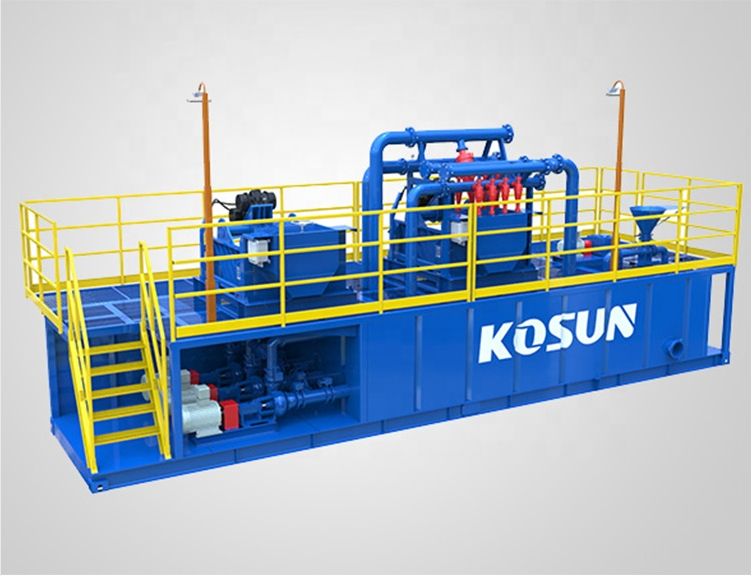
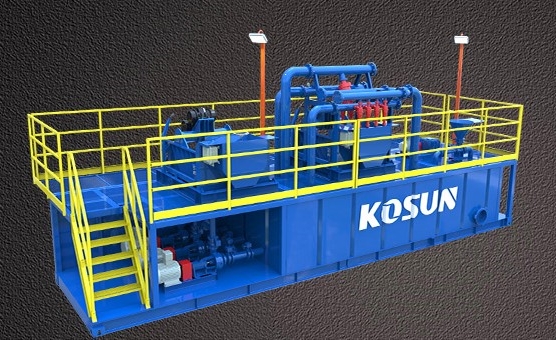
    Xi 'an KOSUN can customize HDD mud solid control recovery system for customers, the system can be configured according to customer requirements of first level (shale shaker), second level (desander), third level (desander), fourth level (centrifuge) solid control system purification treatment, The system is composed of purification equipment (shale shaker, desander, desilter, centrifuge), sand pump, jet mixing device, agitator, mud tank (size and number customer requirements), walkway guardrail, manifold, electric control system, according to the oil drilling rig mud solid control system.


    The system has mud purification and recovery function, mud reserve function, jet slurry distribution system, mixing system, mud pump pipe system, lighting system and electric control system. We can match the requirements of different engineering customers or use the system parameter configuration suggested by our company.
     
    HDD mud solid control recovery system is widely used in oil and gas pipelines through rivers, lakes, traffic lines, railway hubs and other obstacles and important areas have obvious advantages.
     
    The multi-functional design of the HDD horizontal directional crossing system enables the system to meet the requirements of different well depths and different mud systems. The individual systems and processes can work independently or simultaneously.

    Tags: HDD mud solid control recovery system,  HDD horizontal directional crossing system 

  • Xi ‘an KOSUN black rhino shaker successfully sent overseas, Successfully concluded the last international project of the year!

    At the end of the year, a batch of black rhino drilling fluid shakers produced by Xi 'an KOSUN were successfully sent overseas for use in oil drilling mud treatment projects. The successful delivery of this batch of equipment demonstrates Xi 'an Kosun's excellent performance and reliable delivery capability in international projects.

     
    Black Rhino drilling Fluid Shaker is an efficient solid control device designed by Xi 'an KOSUN for the oil and gas drilling industry, which is used to deal with drilling fluid (also known as mud) generated during drilling. It is mainly composed of rugged screen box, precision screen, efficient vibration excitation motor, spring element for shock absorption, base to provide stable support, feed and discharge ports for receiving and discharging materials, advanced control system, and protection devices to ensure safe operation and other key components. It has the advantages of efficient separation of large volume mud, fine separation of fine particles, stable operation and easy maintenance. The unique screen system can effectively separate solid particles from drilling fluid, thereby maintaining drilling fluid performance, reducing environmental pollution, and reducing drilling costs.


    This shipment is not only the recognition of Xi 'an KOSUN's engineering and technical strength, but also a successful end to the company's efforts in the past year, and brings new hopes and expectations for the New Year.
  • A Comprehensive Guide to Responsible Drilling Waste Disposal Methods

    Responsible disposal of drilling waste is crucial to protect the environment, ensure regulatory compliance, and maintain sustainable practices in industries such as oil and gas, mining, and construction. By adopting responsible drilling waste disposal methods, companies can minimize environmental impact, optimize operational efficiency, and uphold their commitment to environmental stewardship. In this article, we present a comprehensive guide to responsible drilling waste disposal methods, providing insights into effective techniques that promote sustainability and environmental protection.
     

    Responsible Drilling Waste Disposal Methods-kosun
     
    1, Solids Control and Waste Minimization:
     
    Implementing robust solids control equipment, including shale shakers, desanders, and decanter centrifuges, is a fundamental step in responsible drilling waste management. These systems efficiently separate and remove drill cuttings and solids from drilling fluids, enabling the recycling and reuse of clean drilling fluids. By reducing the volume of waste generated at the source, companies can minimize the need for disposal and associated environmental impact.
     
    2, Recycling and Reuse:
     
    Whenever possible, recycling and reuse should be prioritized as responsible drilling waste disposal methods. Properly treated drilling fluids and cuttings can often be recycled and reintroduced into drilling operations. Companies should invest in advanced treatment technologies, such as centrifuges and drying systems, that allow for the extraction of valuable components from drilling waste for reuse. This approach not only minimizes waste generation but also reduces the consumption of fresh resources.
     
    3, Stabilization and Solidification:
     
    For certain types of drilling waste, stabilization and solidification techniques can be employed. Stabilization involves adding chemical agents to immobilize contaminants and reduce their leachability, making the waste less harmful to the environment. Solidification, on the other hand, involves binding the waste materials with cement or other binding agents to create a solid matrix. These methods enhance waste stability and reduce the risk of contamination during disposal. However, it is important to ensure that the final solidified waste meets regulatory requirements and can be safely transported and stored.
     
    4, Thermal Treatment:
     
    Thermal treatment methods, such as incineration and thermal desorption, can be utilized for drilling waste with high organic content or hazardous constituents. These processes involve subjecting the waste to high temperatures, which can effectively destroy organic contaminants and reduce waste volume. However, thermal treatment should only be considered when it aligns with environmental regulations and emissions control measures are in place to minimize air pollution.
     
    5, Authorized Waste Disposal Facilities:
     
    For drilling waste that cannot be recycled, reused, or treated on-site, it is crucial to partner with authorized waste disposal facilities. These facilities have the necessary permits and infrastructure to handle and dispose of different types of drilling waste in compliance with environmental regulations. Proper documentation, including waste manifests and tracking, should be maintained to ensure transparency and accountability in the disposal process.
     
    6, Environmental Monitoring and Reporting:
     
    Companies should establish robust environmental monitoring programs to assess the impact of drilling waste disposal methods on surrounding ecosystems. This includes monitoring soil, water, and air quality to detect any potential contamination. Regular reporting on waste management practices, compliance with regulations, and environmental performance is essential to demonstrate accountability and transparency.
     
    Responsible drilling waste disposal methods are vital to protect the environment, comply with regulations, and maintain sustainable practices in various industries. By implementing effective solids control, recycling and reuse, stabilization and solidification, thermal treatment when appropriate, and partnering with authorized waste disposal facilities, companies can ensure responsible management of drilling waste. Environmental monitoring and reporting further reinforce the commitment to transparency and sustainability. By adopting these practices, companies can contribute to a greener future while optimizing their operational efficiency.
     
    Tags: drilling waste disposal, drilling waste disposal methods, Responsible disposal of drilling waste, suppliers, manufacturers, factory, wholesale, buy, price, quotation, bulk, for sale, companies, stock, cost.
     
  • Xi ‘an KOSUN sludge treatment screening system was sent to a large domestic lake desilting project to help national key environmental protection projects

    Xi 'an KOSUN sludge treatment screening system was sent to a large domestic lake desilting project to help national key environmental protection projects
    kosun sludge treatment screening system successfully delivered

    Recently, the sludge treatment screening system produced by Xi 'an KOSUN was successfully sent to a large domestic lake desilting project, contributing to the national key environmental protection projects.
     
    The sludge treatment and screening system is mainly composed of seven core functional modules, such as feeding module, distributing module, screening module, spray module, slag discharge module, emergency module and electrical module, forming a highly integrated and efficient solid-liquid separation and treatment scheme to ensure excellent performance and reliability under various working conditions.
     
     
    The core equipment of the system is LS1850 large vibrating screen independently developed by Xi 'an KOSUN, which adopts double-layer screening design and can effectively subdivide the material. The total area of the screen reaches 18 square meters (9 square meters per layer), ensuring that the material has sufficient dwell time on the screen, so as to achieve efficient screening effect.
     
     
    LS1850 shale shaker core advantages.
     
    High performance vibration motor: OLI (international well-known brand) two 7kw vibration motor with large excitation strength to ensure strong vibration performance and stable operation.
    High-quality stainless steel seam screen: The selection of high strength, good plasticity, corrosion resistance and beautiful and durable stainless steel seam screen, through the wedge and the combination of the lock bolt fixed, to ensure that the high frequency vibration is stable and not fall off, and easy to replace.
    Imported springs: All imported springs from the internationally renowned brand Tenida provide excellent elasticity and reliability.
    Flexible operation mode: The system supports both manual and automatic operation modes. In the automatic mode, the PLC program communicates with the host computer to achieve the purpose of automatic control, with a high degree of automation, simplifying the operation process and improving work efficiency.

    The design of the system not only ensures efficient screening performance, but also pays attention to the reliability and maintenance convenience of the equipment, providing users with a complete set of solutions.
     
    As a professional manufacturer of solid-liquid separation equipment, KOSUN has perfect experience in research and development and production of separation equipment for mud, drilling cuttings, sludge and other materials, and provides customized transportation equipment solutions according to the characteristics of site construction, focusing on providing customers with solid waste reduction, harmless and resource services. The company has been adhering to the "quality first, customer first" business philosophy, constantly innovate and improve products, improve product quality and performance, to meet the changing needs of customers.
  • Drilling Waste Treatment and Disposal Company:KOSUN Machinery

    Xi'an KOSUN Machinery Co., Ltd. is a leading company in the field of energy conservation and environmental protection, specializing in providing comprehensive solutions for waste disposal. KOSUN Machinery focuses on solid waste reduction, harmlessness and resource utilization services, and is committed to solving the environmental challenges caused by drilling waste treatment.
     
     
    As an expert in comprehensive treatment of drilling waste, KOSUN Machinery provides a series of green and energy-saving sludge purification and disposal equipment. These include drilling fluid shale shaker, decanter centrifuges, vertical cuttings dryer, desilter, desandermud-water separation systems, etc. These products play a vital role in oil and gas drilling mud treatment, drilling waste treatment, oily sludge treatment, oilfield wastewater treatment, environmentally friendly soil remediation, etc.
     
     
    One of the key strengths of KOSUN Machinery is its commitment to quality and compliance with international standards. The company has obtained ISO9001, ISO14001, ISO45001, API, CE and other international standard certifications to ensure that its products meet the highest industry benchmarks. This dedication to quality enables KOSUN Machinery to provide services to customers in more than 60 countries and regions around the world and become a trustworthy partner in the global energy and environmental fields.
     
    With expertise in drilling waste management and a comprehensive range of cutting-edge equipment, KOSUN Machinery is equipped to address the complex challenges of waste management in the energy industry. By providing efficient and environmentally responsible solutions, KOSUN Machinery is committed to the sustainable development of the energy industry while minimizing its environmental footprint.
     
    To sum up, Xi'an KOSUN Machinery Co., Ltd. is a professional company that is good at providing comprehensive waste management solutions, especially focusing on drilling waste management. With innovative equipment and unwavering commitment to quality, KOSUN Machinery continues to make significant contributions to the global energy conservation and environmental protection field.