标签: KOSUN

  • Functions & Applications of Mud Gun

    READ: KOSUN MG Mud Gun mainly jets drilling fluids with high pressure inside mud tanks, in a bid to avert depositing solid phase at each corner of mud tank and pump inlets, and to deliver drilling fluids amongst compartments.

    KOSUN MG Mud Gun mainly jets drilling fluids with high pressure inside mud tanks, in a bid to avert depositing solid phase at each corner of mud tank and pump inlets, and to deliver drilling fluids amongst compartments.

    So far, both domestic and foreign companies have applied rectangular circulating tanks for better installation and more flexible movement, but even the most capable mud agitator won’t be able to reach the difficult corners. For this reason, the tanks outside China are equipped with nozzled low-pressure hydraulic mixing pipelines while, at home, the problem is being tackled with the assistance of mud gun placed on top of tanks.

    Though hydraulic mixing pipelines can reach the corners difficult for mechanical agitators, much interlocked pipelines may also break the convection current generated by agitator, accelerate its power and hampers the cleaning of setting sand. That is why no such pipelines are found in circulating tanks yet.

    As far as the research demonstrates, it works effectively between depths of 1.5~2.7m and its size varies with mud densities, viscosities and nozzle velocities. Mud gun has found limited application since, as an auxiliary device for mechanical agitating equipment, it cannot stop solid phase from suspending. The mobile mud gun installed on top of tanks needs adjusting at any time, which though will not make it easier to reach the difficult corners. Besides, with solid phase already deposited, mud gun will easily clump that and block tricone nozzles or damage drilling pump.


  • Choose Proper Solids Control System on Full Understanding of Oil-based Drilling Fluids

    READ: Oil-based drilling fluids is mainly composed of oil as the continuous phase. KOSUN produces complete set of solids control equipment and drilling fluids solids control system as well as such major products as drilling mud shale shaker, high-efficiency mud cleaner, degasser, decanter centrifuge.

    Oil-based drilling fluids is mainly composed of oil as the continuous phase. It has found wide application in various drilling platforms with its resistance against elevated temperature and calcium salt corrosion, strong sidewall stabilization, good lubricating effects and little damage of oil & gas formation. Water, as an unuseful composition, does not account for more than 10% in oil-based drilling fluids. However, it normally takes up 10%~60% in water-in-oil drilling fluids, as an essential part evenly dispersed in diesel.

    Constituents of Oil-based Drilling Fluids:

    Oil base, water phase, weighting materials, emulsifiers, wetting agents, oleophylic colloid and lime.

    1. In comparison, oil-based drilling fluids has a head start over water-based drilling fluids by its resistance against elevated temperature and calcium salt corrosion, strong sidewall stabilization, good lubricating effects, little damage of oil & gas formation, etc.

    2. It now plays significant role in skilled high-temperature deep well drilling, high-angle directional drilling, horizontal drilling and many other difficult formations, and has found wide application as borehole lubricants, perforated well completion fluids, workover fluids, coring fluids, etc.

    3. It costs more to prepare oil-based mud than water-based mud. Besides, it usually is more damaging to the ecological environment in vinicity of drilling fields.

    4. Since Mid 1970s, low-gel water-in-oil emulsifying drilling fluids has been used in a larger scale to accelerate drilling speed.

    5. Since early 1980s, for purposes of protecting environment and fulfilling offshore drilling needs, low-toxicity water-in-oil emulsifying driling mud which is mineral-oil-based has been progressively rolles out.

    KOSUN produces complete set of solids control equipment and drilling fluids solids control system as well as such major products as drilling mud shale shaker, high-efficiency mud cleaner, degasser, decanter centrifuge, desander, desilter, jet mud mixer, centrifugal pump, shear pump, slurry pump, mud agitator, mud gun, mud tank, etc., which are widely used in such industries as oil drilling, horizontal directional crossing, river dredge, trenchless engineering, etc.


  • Why Do People Attach Increasing Importance on Solids Control Equipment?

    READ: The latest development of drilling technology increases its demands on the performance of drilling fluids. It has been proved that it takes a complete set of suitable solids control equipment to improve that via contolling the solid content in drilling fluids, which guarantees the good performance of drilling fluids for a long time.

    In terms of functions, drilling fluids can be categorized into such two groups as useful solids, which contain barite, chemical agents, bentonites, etc. and harmful solids, for instance, drill cuttings, coarse bentonites, silt, etc. Drilling solids control is defined as the technology used to fulfill the demands on the performance of drilling fluids by removing the harmful solids and keeping the useful solids.

    The latest development of drilling technology increases its demands on the performance of drilling fluids. It has been proved that it takes a complete set of suitable solids control equipment to improve that via contolling the solid content in drilling fluids, which guarantees the good performance of drilling fluids for a long time.

    All of the drilling operators wish to own premium drilling fluids since it can enhance drilling facilities and allow them to drill fast and safely. Mere chemical treatment cannot ensure a stable performance of drilling fluids, though at a considerable cost. It will also take effective mechanical treatment equipment to control its solids content ( in fact, water usually works together with mechanical treatment for better effects ). Thus, mechanical solids control is both an essential process in mud performance maintenance and a constituent of normal drilling technology.

    In drilling fluids, the solid particles exerting greatest influence on its performance and mechanical drilling speed are mostly more than 15μm in diameter. They account for 70% of all solid phase. It is popular pursuit that effective mechanical equipment can remove them at any time.

    It is an important measure to apply solids control equipment in optimization of well drilling. And it is necessary for scientific drilling to well control the solid content in the mud. Proper solids control can protect oil/gas bed, decrease drilling torque and friction, reduce the pressure wave of annulus pumping, prevent sticking caused by differential pressure, increase drilling speed, extend service life of drilling bit, minimize abrasion on equipment and tubes, prolong the lifespan of wear parts in drilling fluids circulating system, stabilize the boreholes, improve casing conditions, lessen environmental pollution, lower the expenses on drilling fluids, etc. Statistics show that 1% decrease of solid content ( that is, to reduce drilling fluids density by 0.01 ) in the mud will result in the increase in soft soil mechanical drilling by 8% or so. Accordingly, it will bring remarkable benefits if solids control is well performed.

    In a word, people become increasingly aware of the significance of solids control equipment since it has directly influenced the safe, excellent and efficient drilling as well as protection of oil/gas bed.


  • A Brief History of Drilling Fluids Solids Control

    Anyone having a broad familiarity with oil & gas drilling knows that drilling fluids is quite indispensable in oil drilling. It is mainly used to help the drilling of boreholes. There are three main categories of drilling fluids: water-based drilling fluids, oil-based drilling fluids and gaseous drilling fluids.

    Drilling fluids is truly functional in drilling industry since it is able to remove cuttings from wells, suspend and release cuttings, control formation pressures, seal permeable formations, maintain wellbore stability, cool, lubricate and support the bit and drilling assembly, minimize formation damage, etc.

    However, due to the precious materials used in drilling fluids, once it is deserted, it is fairly hard and expensive to produce and concoct another. What is more, drilling fluids is not automatically recyclable since the solid phase, cuttings and gases will penetrate and change its performance from many aspects, for example, the active clay included in cuttings will exert greater negative influence on its viscosity, thus causing difficulties in drilling and forming filter cake.

    Many oilfields and companies injected water or other chemical fluids to dilute drilling fluids for maintaining certain density and visocity. Later, mud bits were discovered as more effective and less costly. They were required for holding an excess volume of drilling mud at the surface, which allows time for settling of the finer rock cuttings and for the release of entrained gas bubbles not mechanically separated. With the development of scientific technology and raise of mud treatment standards worldwide, nowadays mud circulating system also includes various solids control equipment such as shale shaker, hydraulic cones, centrifuges, degassers and so on.

    This addition has largely improved mud treating effects, reduced the considerable cost on drilling fluids and borehole maintenance, and kept drilling workers and environment from fatal damages.

    Shale shaker is the first grade equipment for solids control system. It is quite useful for separation of solid phase above 75 μm in diameter. Then, it sends the mud into the next grade—desander for more delicate separation of solid phase between 45-74 μm in diameter. Treated mud will flow into desilter, the third grade equipment for further treatment where the 15-44 μm cuttings will be taken away. In the fourth grade, low-speed and high-speed centrifuge respectively remove tiny particles like barites and infinitesmal substances that is 2-5 μm in diameter. If the drilling mud is entrained by gases, degasser can be installed between shale shaker and desander.

    After drilling mud goes through all the processes, they can be very well recycled and re-applied in oil drilling.


    Key words:

    KOSUN: Established in 1992 and headquartered in Xi’an China, Xi’an KOSUN Machinery Co., Ltd. (KOSUN) is among the first group of manufacturers of oil drilling high-frequence shale shakers, is a specialized centrifuge producer, the pioneer in the field of solids control in China, as well as an expert in drilling waste treatment. Its business scope mainly covers China mainland, Commonwealth of Independent States, North Africa and U.S.A..

    Solids control equipment: Its performance and quality play an important role in solids control technology. Drilling solids control system mainly contains such three parts as drilling fluids circulating tank, drilling fluids purification equipment and electric control equipment, among which the drilling fluids purification equipment includes shale shaker, desander, desilter, degasser, centrifuge, centrifugal pump, agitator, mixer, etc. Cuttings recovery and waste fluids treatment equipment can also be coupled for the environmental sensitive areas.


  • Solidification’s Advantages and Disadvantages in Waste Management

    READ: You may find solidification is applied worldwide as the last phase waste management choice in the waste management flow chart. However, it is not perfect since this technology is limited in countries not strict with environmental requirements. Therefore, it has not yet won… 

    You may find solidification is applied worldwide as the last phase waste management choice in the waste management flow chart. However, it is not perfect since this technology is limited in countries not strict with environmental requirements. Therefore, it has not yet won wide recognition nowadays when environmental problems are relatively sharp.

    Solidification ( including sealing, concretion, stabilization ) describes the process to reduce the free water in cuttings and potential pollutant emission with the help of additives. It is called a process because solidifying materials are still underdeveloped. In the past, it is usually applied before burial or paving with solidifying materials. I can also be used in production of recyclable materials like bricks or air bricks. Nevertheless, its best outlook is in the production of road base materials ( mud paved under road ).

    Usually, fly ash and mud are used for cutting solidification. Many solids control products in the market claim good quality, but it still remains unproved whether it has any credibility. The problem for solidification is that there is no technological process or quality control process available. Some believe casing flocculant into cuttings is one kind of solidification. However, not many advantages can be found except reduction of free water with it as a kind of dilution.

    First of all, all the materials applied for solidification should go through leaching test. And the portion cased into cuttings should weigh the same with that in leaching test. However, it is not easy to realize since casing continuation varies. Second, the goal is that solidified materials should resemble raw materials. If brick is needed, then quality bricks should be produced; if paving materials are needed, then the materials should pass road grade test.

    When there is no local solidification and burial standards available, 29B can be referred to since it assumes the materials are solidified and buried. The standard minimized compressive strength required for tested hollow brick is 20P. After the brick is crushed, sampled fragments will be immersed into water to test its oil and salt leashing. It is regulated that oil and chloride sediments quantity be less than 10mg/L and 500mg/L. Other test methods are also available except this. It should be noted that almost all the solidifications will have no economic value when the products meet the standards.

    In a word, solidification should be considered carefully for waste treatment.


    Key words:

    KOSUN: Established in 1992 and headquartered in Xi’an, China, Xi’an KOSUN Machinery Co., Ltd. (KOSUN) is among the first group of manufacturers of oil drilling high-frequence shale shakers, is a specialized centrifuge producer, the pioneer in the field of solids control in China, as well as an expert in drilling waste treatment. Its business scope mainly covers China mainland, Commonwealth of Independent States, North Africa and U.S.A..

    Solids control equipment: Its performance and quality play an important role in solids control technology. Drilling solids control system mainly contains such three parts as drilling fluids circulating tank, drilling fluids purification equipment and electric control equipment, among which the drilling fluids purification equipment includes shale shaker, desander, desilter, degasser, centrifuge, centrifugal pump, agitator, mixer, etc. Cuttings recovery and waste fluids treatment equipment can also be coupled for the environmental sensitive areas.


  • Application of Biodegradation in Drilling Waste Management

    READ: In drilling waste management, biodegradation has become one of the most favorable solutions among oil drilling companies at home and abroad due to its less expenses and the good environmental benefits it can achieve. However, different drilling environments mean…

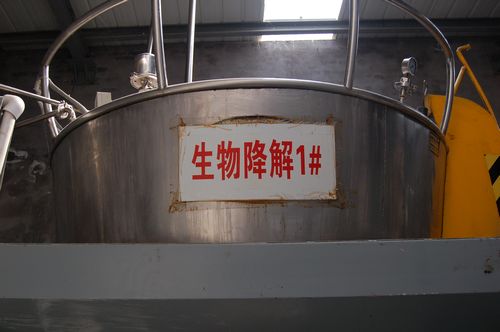
    In drilling waste management, biodegradation has become one of the most favorable solutions among oil drilling companies at home and abroad due to its less expenses and the good environmental benefits it can achieve. However, different drilling environments mean applications of biodegradation vary.

    Field Pic of Oil Exploration
    Field Picture of Oil Exploration
     

    Biological drilling waste treatment describes degradation and mineralization of pollutants in drilling waste by bacteria growth, reproduction and internal respiration introduction of degrading bacteria and nutrients with the introduction of degrading bacteria and nutrients. It also takes advantage of biological characteristics in practical operations such as, liquid/solid separation by means of bios and degradation by means of adding microbial flocculant.

    Field Pic of Biodegradation
    Field Picture of Biodegradation
     

    However, the practicality of biodegradation must be taken into consideration based on the local environmental conditions before formally deciding upon this treatment approach. "Indigenous" microorganisms, nutrition factors, humidity, hydraulic detention time, PH value, dissolved oxygen should all be factored into consideration before the implementation of biodegradation.

    “Indigenous” microorganisms are intrinsic microorganisms in drilling waste which do not need introduction and is comparatively economical, but is not effective in treatment. Nutrition factors play an important role in biological growth and metabolism. Therefore, drilling waste treatment needs appropriate addition of nutrition factors. Humidity is vital for biological growth and reproduction, but certainly of no significance for drilling fluids containing large amount of water. However, temperature should be kept under control. Minimized temperature is 15 degrees centigrade and the best is 30 degrees centigrade in drilling fluids treatment. Besides, for field operation of waste management, heating and insulation measures are needed for Winter and Spring and heating and cooling for Summer and Autumn. Hydraulic detention time defines how long treated wastewater stays in bioreactor. Organic pollutants in waste drilling fluids are, to a great extent, synthetic organic macromolecules which has a larger degradation rate than the other organic pollutants in wastewater, so the chosen bacteria should have better sludge loading ability. Above all, PH value and oxygen content of drilling fluids are also important factors and basic conditions for microorganisms to survive in drilling waste.

    At present, the international waste treatment primarily adopts such approaches as land cultivation method, composting method, bioreactor, microbial flocculants method, anaerobic bio-treatment method, aerobic bio-treatment method, natural treatment method ( oxidation pond ).

    Land cultivation method means to thoroughly degrade pollutants contained in drilling waste resorting to re-cultivation. It is very popular in many US and Russia drilling waste treatment sites, but it takes ages and costs a lot and is very easily affected by environment. Compositing method mainly degrades organisms by diluting drilling waste and then adding nutrients and sawdusts to attract microorganisms, which however truly is time-consuming. Bioreactor is both costly and energy-consuming since diluted and blended drilling waste and nutrient solution are put into certain tuner for adjustment of the survival factors for microorganism in order to achieve biodegradation. Microbial flocculants method makes good use of the principles of organic flocculants to solidify drilling fluids and degrade during the process. Apart from these, some drilling companies also apply anaerobic bio-treatment method, aerobic bio-treatment method, natural treatment method ( oxidation pond ) to improve on biodegradation and get good achievements.


    Key words:

    KOSUN: Established in 1992 and headquartered in Xi’an China, Xi’an KOSUN Machinery Co., Ltd. ( KOSUN ) is among the first group of manufacturers of oil drilling high-frequence shale shakers, is a specialized centrifuge producer, the pioneer in the field of solids control in China, as well as an expert in drilling waste treatment. Its business scope mainly covers China mainland, Commonwealth of Independent States, North Africa and U.S.A..

    Solids control equipment: Its performance and quality play an important role in solids control technology. Drilling solids control system mainly contains such three parts as drilling fluids circulating tank, drilling fluids purification equipment and electric control equipment, among which the drilling fluids purification equipment includes shale shaker, desander, desilter, degasser, centrifuge, centrifugal pump, agitator, mixer, etc. Cuttings recovery and waste fluids treatment equipment can also be coupled for the environmental sensitive areas.


  • Industrial Solids Waste Treatment Should Step up

    READ: Industrial civilization facilitated the rapid development of scientific technology and economy and improved people’s living standards. On the other hand, it has also been swallowing global natural resources in a stunning speed and discharging huge amount of insoluble waste, disturbing…

    Industrial civilization facilitated the rapid development of scientific technology and economy and improved people’s living standards. On the other hand, it has also been swallowing global natural resources in a stunning speed and discharging huge amount of insoluble waste, which disturbed the nature’s ecological balance and resulted in ever worse environmental crisis, exposing human survival and development to threat.

    Industrial solid waste describes the solid, semi-solid and liquid waste apart from high concentration wastewater produced in industrial production such as BF slag, steel slag, red mud, nonferrous metallic slag, fly ash, coal cinder, pyrite cinder, waste gypsum, salt sludge, etc. Along with the industrial development, industrial waste has mounted on a daily basis. Metallurgy and thermal power generation are among the largest waste-discharging industries. It is fairly difficult to manage the waste due to its huge amount, large varieties and complex composition. However, the waste can cause severe environmental pollution since it pollutes water resources, affects plant growth and endangers human fitness. Valid statistics show the total industrial waste emission in West China rose to 531.43 million t in 2007 from 243.09 million t in 2002, up average 17.4% annually. The discharging has really been intensified. Besides, since 2003 the annual emission in West China has accounted for 52% of the whole nation; though its recovery rate increased to 50.3% in 2007 from 40.3% in 2002, it still remains a lower level. It is easy to tell that the harm by China’s domestic solid waste to environment is already quite serious.

    The whole society need commit to industrial solid waste management. First of all, the governments should make continuous efforts to improve on laws and regulations to which all aspects of environmental protection can refer. Legal actions can limit some enterprises’ industrial waste emission and make them improve themselves by strengthened financial investment in waste treatment to reduce the nation’s industrial waste emission. At the same time, the country also need strengthen its investment in scientific research to facilitate the improvement of scientific and technological level and raise the level of industrial waste processing. Next, enterprises should constantly update its industrial structure and pull all energy into circulation economy development. In this way, the problems like high consumption of resources, large emission of pollutants and low level of utilization can be resolved. In the face of increasingly worse environment, we all should promote more on environmental knowledge and strengthen human environmental awareness. There is only one earth which we ought to take good care of but stain all the time since she brings us pretty rivers and mountains and clear streams. We should all do our bits to protect her.


    Key words:

    KOSUN: Established in 1992 and headquartered in Xi’an China, Xi’an KOSUN Machinery Co., Ltd. ( KOSUN ) is among the first group of manufacturers of oil drilling high-frequence shale shakers, is a specialized centrifuge producer, the pioneer in the field of solids control in China, as well as an expert in drilling waste treatment. Its business scope mainly covers China mainland, Commonwealth of Independent States, North Africa and U.S.A..

    Solids control equipment: Its performance and quality play an important role in solids control technology. Drilling solids control system mainly contains such three parts as drilling fluids circulating tank, drilling fluids purification equipment and electric control equipment, among which the drilling fluids purification equipment includes shale shaker, desander, desilter, degasser, centrifuge, centrifugal pump, agitator, mixer, etc. Cuttings recovery and waste fluids treatment equipment can also be coupled for the environmental sensitive areas.


  • How to Achieve Zero Disposal of Drilling Waste?

    The first dozen years of 21st century saw rapid development in China and the whole world. Mechanical industry’s leading development has been driving up the demand for oil that led to thousands of oil projects, whose pollution also created tons of trouble to Earth’s environment. Here provoked a problem that needs a careful think of all oil explorers when environmental protection is being ever touchy nowadays,“ What should be done to make oil drilling more environment-friendly?”

    First off, we need to ask ourselves “how should we achieve zero pollution in oil drilling?”

    At the beginning of last century, drilling fluids concocted by chemical compounds were largely applied while drilling boreholes for improvement of its safety and efficiency. Drilling fluids have been especially useful in carrying out drill cuttings, providing hydrostatic pressure to prevent formation fluids from entering into the well bore, cleaning the bottom of wells, preventing oil and gas from flowing up the wells, keeping the drill bit cool and clean during drilling, etc, which has made it the “blood” of drilling equipment. However, just like every coin has two sides, it will turn into poisonous “blood” when it is discharged onto soil with cuttings since it may contain soluble inorganic salt, heavy metal, organic hydrocarbon ( oil substances ), etc, which could easily be made harmful via rain immersion and river brush to the surrounding soil, water source, farmland and air.

    It is expected that our tentative efforts would make drilling waste management perfect, but the facts did not turn out so. Pollution resulted from oil drilling is still swallowing our healthy environment bit by bit and the problem is still vexing our nerves. Nevertheless, we cannot do without it because the drilling fluids have already been the “blood” in the industrial era.

    Xi’ an KOSUN Machinery Co., Ltd. who has been specialized in oil drilling machines began seeking for solutions on site in order to truly green oil drilling. Waste disposal was the biggest problem for oil drilling contamination. We need to minimize it and even better, zero it, then we can achieve greening of oil drilling.

    Via 20-year grueling efforts from 1990s to early 21st century, KOSUN has developed oil drilling solids control system and waste management equipment and has set up an integrated waste management solution system by combination of domestic and foreign treatment experience learnt on site.

    This solution would deal with disposal at the source by means of solids control equipment, dewatering purification equipment and waste management equipment.

    The first part—solids control equipment, comprising shale shaker, vacuum degasser, desander, desilter, decanter centrifuge, is directly connected to mud pumps. The drilling mud drawn out from well will go through the four phases of solids control system. Afterwards, it will be used again and the disposal is minimized at the same time.

    The next part after solids control is dewatering and water treatment, via which water may be effectively recycled. If they are applied in water-scarce area, large amount of water would be saved and waste disposal reduced.

    Then, screw pump or screw conveyor may transport dewatered waste to Hi-G Dryer and Vertical Centrifuge, waiting to have solids and liquid separated again. Hi-G Dryer’s high spinning speed and effective treatment will produce very dry dregs, recover partial drilling fluids and recycle resources.

    In the end, the dregs will be further treated by means of solidification, cutting injection, biodegradation, thermal desorption according to the actual situation on the site of drilling and the composition of dregs.

    Drilling waste disposal will be reduced to almost zero after going through the system, effectively satisfying the demands for zero disposal and the state environmental protection regulations, solving the vexing problems in oil drilling, and truly fulfilling the wish of “green drilling” in oil industry.


  • The Purpose of Drilling Fluids Purification Solids Control System

    READ: If the solids control equipment are put into prompt application, they will remove such harmful solids as drill cuttings, silts, coarse clay, etc., keep the content of useful solids like barites and bentonites under the sway of regulations, and, at the same time, recover barites and bentonites from drilling fluids.

    What is the purpose of applying drilling fluids purification solids control equipment?

    The main application that drilling fluids purification solids control equipment, as a must for drilling fluids circulating system, find is to control the solids content in drilling fluids. Increased solid content in drilling mud will result in a remarkable fall of mechanical drilling speed and even drilling accidents, thus surging the overal drilling cost up to a large degree. Experiments prove that 1% down in solid content will bring drilling speed up at least 10%.

    Solids control system is mainly functional in:

    1. Removing harmful solids and guaranteeing continuous drilling operations;

    2. Making the drilling safe and eliminating the potentials of accidents;

    3. Reducing the energy consumption;

    4. Reducing the pollution and protecting the environment.

    Such harms can be the consequences of high solids content in drilling fluids as,

    1. Raised mud density, lowered mechanical drilling speed, shortened lifespan of drill bit;

    2. Thickened the filter cakes, softened the formations as well as strong friction, which easily lead to blocked drilling tool when it is running and sticking of drill bit; and larger filtration loss, which result in expansion of inner wall, drawing down, peeling, collapse, etc.; then, more permeable filter cakes, enlarged filtration loss, which reduce oil layer permeability and crude capacity; what is more, higher solids content, thicker filter cake, which may also cementing quality;

    3. High silt content, which severely abrades the drill bit, drilling rig and mechanical equipment, thus hindering the normal drilling operation;

    4. Unsteady mud propertied, larger viscosity & shearing force, inadequent flowability, all of which produce clay and chemical contamination;

    5. Miscellaneous silts, hindered electric logging, inaccurate logging data;

    6. Complicated treatment process, which ups the cost in drilling fluids.

    Impacts That the Solid Content Exerts on Drilling Speed,

    1. Drilling speed is inversely proportional to solid content. Suppose the drilling speed in clean water stands at 100%. When the solid content goes up to 7%, drilling speed reduces to 50%, that is half that in clean water. As far as numerous data display, when the solid content is not beyond 7%, 1% down in solid content will bring drilling speed up at least 10%.

    2. In different solid content ranges, the increase rates of drilling speed vary. If the solid content remains under 7%(equal to such density as 1.08 g/cm3), drilling speed will climb at the fastest speed; if it goes beyond 7%, it does not make much significance to drilling speed.

    3. Drilling speed is influenced, to the greatest extent, by colloidal particles below 1µm in diameter. It is proved by experiments that colloidal particles with diameter below 1µm are 12 times more influential than the coarse particles with diameter above 1 cape. Accordingly, the more the colloidal particle there are, the slower the drilling speed is.

    In a word, If the solids control equipment are put into prompt application, they will remove such harmful solids as drill cuttings, silts, coarse clay, etc., keep the content of useful solids like barites and bentonites under the sway of regulations, and, at the same time, recover barites and bentonites from drilling fluids.

     

  • Functions and Potentials of Solids Control Equipment

    READ: Increased solid content in drilling fluids will result in remarkably reduced mechanical drilling speed and even some drilling accidents, thus surging up the overal cost in well. Drilling fluids circulating solids control equipment, as primarily aimed at controlling the solid content, must work together with drilling fluids purification device.

    Increased solid content in drilling fluids will result in remarkably decreased mechanical drilling speed and even some drilling accidents, thus surging up the overal cost in well. Drilling fluids circulating solids control equipment, as primarily aimed at controlling the solid content, must work together with drilling fluids purification device. Experiments prove that 1% decrease in solid content will generate at least 10% boost of drilling speed, and the size of solid particles has inversely proportional relationship with their influence on drilling speed.

    Solids control system is used to,

    1. Remove harmful solid phase and keep the drilling operations going;

    2. Keep the drilling process safe and prevent some accidents;

    3. Reduce the energy consumption;

    4. Reduce the pollution and protect the environment.

    Solids control system is constituted of,

    1. Three-in-one mud cleaner, drilling fluids shale shaker, vacuum degasser, desander, desilter;

    2. Drilling fluids decanter centrifuge;

    3. And the others, like, centrifugal pump, shear pump, mud agitator, mud gun, mud circulating tank and batching apparatus.

    At home, there is not yet a wide variety of drilling mud shale shakers. Therefore, it is necessary to research and develop dry fine-mesh shaker, tracked non-shaker analytical apparatus, offshore drilling environment-friendly solids control equipment and versatile supporting mud circulating system to enrich the variety of domestic solids control equipment.

    Though, in recent years, great breakthroughs have been made in the study on domestic solids control equipment’s theory and their production & processing level, especially that in the study of theories like, working theories of drilling mud shale shaker and centrifugal cyclones, etc., which has reached or near to the world-class standards, there is still a long way to go between domestic and foreign equipment in terms of performance and lifespan, extending to the materials, processing technology, processing precision and quality of supporting generic devices (such as, electric motor). There is no high-pressure, large-engine solids control equipment available at home now.