标签: Solid control equipment

  • Principles of oily sludge treatment

    At the end of drilling, a large amount of oily sludge is produced. But what about oily sludge? According to statistics, China's petroleum and petrochemical industry produces about 1.1 million tons of oily sludge every year. The oily sludge contains at least 330,000 tons of crude oil.


    The traditional treatment methods of oily sludge are landfill, incineration and so on. Not only caused serious environmental pollution, but also caused a huge waste of resources.
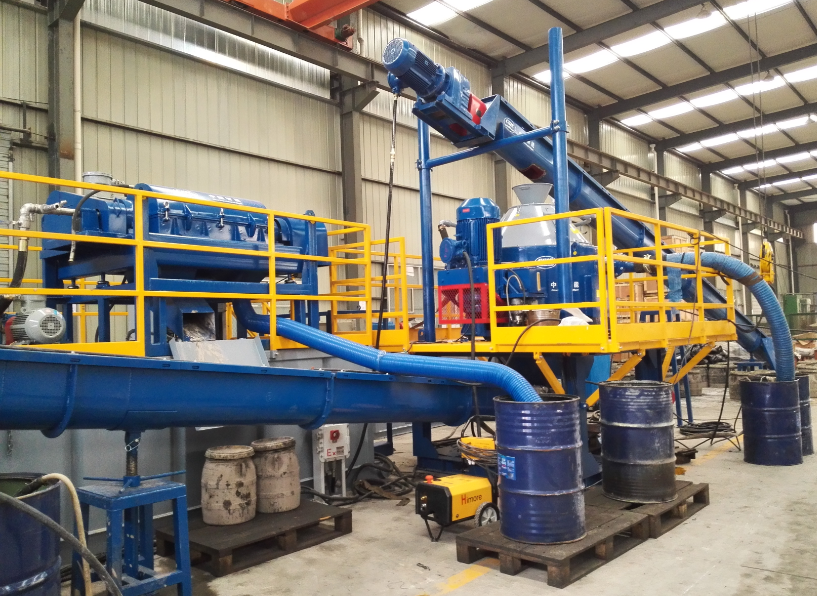
    Compared with the traditional treatment measures, the new oily sludge treatment equipment can realize the three-phase separation of oil, mud and sand.
     
    The treatment principle of oily sludge is to extract crude oil from different oily sludge by centrifugal separation. After high temperature treatment and mechanical stirring until the slurry is fully mixed. The oil on the surface of the particles is constantly broken down and absorbed.
    Under the action of density contrast and high-speed centrifugal force, oily sludge can be separated from oil, mud and sand, so as to achieve the purpose of recycling.
  • Precautions for the installation and use of vacuum degasser for drilling fluid treatment

    In the HDD mud recovery system, the vacuum degasser uses the suction effect of the vacuum pump to create a negative pressure zone in the vacuum tank. Under the action of the atmospheric vacuum degasser pressure, the mud enters the hollow shaft of the rotor through the suction tube, and then is thrown to the wall of the tank in a spray shape by the window around the hollow shaft. Due to the impact and the action of the separation wheel, the drilling fluid is separated into thin layers. The bubbles immersed in the mud are broken, the gas escapes, and the gas is pumped by the vacuum pump and separated by the gas-water separator. The gas is discharged to the safety zone by the exhaust pipe of the separator, and the mud is discharged from the tank by the impeller. Since the main motor starts first, the impeller connected with the motor is in a high-speed rotation state, so the mud can only enter the tank from the suction pipe, and will not be sucked from the drain pipe.

     
    Vacuum degasser
    Installation and use of vacuum degasser:
     
    1. When installing, the site requirements are not very strict. As long as there is no significant tilt.
     
    2. Before starting, the end of the drain pipe and suction pipe should be immersed in mud at the same time, otherwise, it will not work.
     
    3. The exhaust pipe inlet should be equipped with a filter (40 ~ 60 mesh) to prevent granular objects from entering the pump.
     
    4. Before starting, open the ball valve on the supply water pipe of the vacuum pump (you can also remove the water supply pipeline of the vacuum pump and use a hose to supply water), then unscrew the wire plug on the air water separator, fill it with water, stop when the water overflows from the overflow port, and screw on the wire plug. Finally, turn the coupling by hand or with a pipe wrench for a few weeks to make sure there is no jamming or other damage inside the pump before starting.
     
    5. Before starting, the rotation direction of the motor should be clear. The vacuum pump and the main motor belt guard are marked with the direction arrow, which should be consistent with its direction, and reverse operation is absolutely prohibited.
     
    6. When the working water in the vacuum pump is supplied by the gas-water separator, it should be ensured that the temperature of the water is at most 150C-200C higher than the surrounding temperature, otherwise it should be replaced with new cold water so that the vacuum pump can work normally.
     
    7. After use, the water in the pump and gas-water separator must be discharged.
     
    8. The user provides the drainage hose and exhaust hose.
     
    In addition, it is necessary to pay attention to the installation of vacuum pumps and motors.
     
    Before the vacuum pump is installed, turn the coupling by hand to confirm whether there is jam and other damage in the pump. If not, install the pump on the pump seat. Before the motor is fixed on the pump seat, the concentricity of the motor shaft and the pump shaft should be corrected. Because the motor shaft and pump shaft even a very small tilt will cause bearing heating and serious wear of parts and other consequences. When the ruler is placed parallel on the coupling, there is no gap between it and the coupling circle at any position of the entire circumference, and the axial gap of the coupling is equal, the required concentricity is achieved.
  • Specifications for the use of liquid-gas separators

    1. The liquid-gas separator should be tested after installation. Pour clean water or drilling fluid into the separator until there is liquid flowing out of the outlet pipe.
     
    2, before use, the maximum allowable working pressure should be calculated according to the measured effective height of U-shaped tube and drilling fluid density (maximum allowable working pressure Pmax= effective height of U-shaped tube H× drilling fluid density ρ).
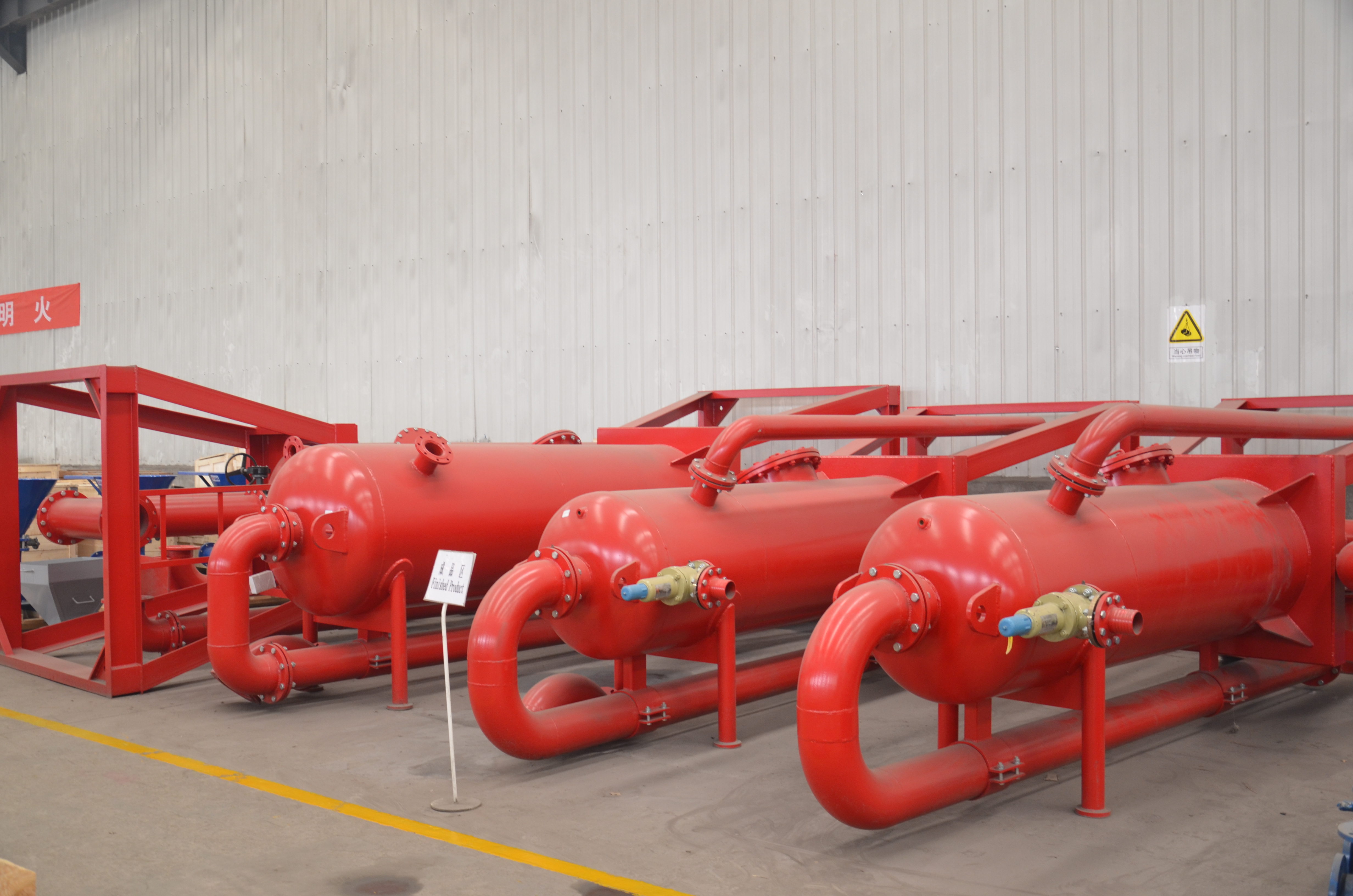
     
    3, before entering the oil and gas reservoir, the cadre on duty or the driller should check the liquid gas separator:
    (1) The stop valve under the pressure gauge is normally open.
    (2) The safety valve is in normal working condition (the safety valve handle is perpendicular to the ground). Before installation, before opening the oil and gas reservoir, and every 30 days during operation in the oil and gas reservoir, the safety valve is activated by turning the handle in the counterclockwise direction.
    (3) The pressure measuring flange globe valve is normally open.
    (4) The stop valve is closed after the exhaust pipeline blowdown.
    (5) The ignition device is complete.
     
    4, the external fitter for each shift of liquid gas separator and its accessories tour inspection, focusing on the tank, pipeline, safety valve, pressure gauge, fasteners, such as appearance inspection, found problems timely rectification.
     
    5. After the liquid-gas separator is put into use, if the separated gas contains hydrogen sulfide, carbon monoxide or flammable gas, warning measures should be taken, and the ignition operation instructions should be issued by the cadre or technician on duty, and the ignition process should be supervised.
    6, the ignition operation is implemented by the external fitter, and the ignition process should follow the procedure of first ignition and then operation.
    7. During the use of the liquid-gas separator, special personnel should be arranged to observe the return of drilling fluid from the liquid outlet, the vibration of the liquid inlet pipeline and the pressure of the exhaust pipeline, monitor the flame height, and ignition should be carried out again when the flame is extinguished. When one of the following abnormal phenomena is found, it should be stopped immediately and reported in time.
    (1) There is gas discharge at the outlet of the drain pipe or liquid discharge at the outlet of the exhaust pipe.
    (2) The exhaust pipe pressure gauge reading is greater than the maximum allowable working pressure calculated.
    (3) The main pressure elements of the liquid-gas separator appear cracks, bulging, deformation, leakage and other defects.
    (4) Safety accessories such as safety valves and pressure gauges fail.
    (5) The seal or fixed damage of liquid intake pipeline, liquid discharge pipeline, exhaust pipeline, fasteners, etc.
    (6) Severe vibration of liquid-gas separator and pipeline threatens safe operation.
    8. When the wellbore is full of gas, it is prohibited to use a liquid-gas separator.
    9. It is strictly prohibited to perform electric welding operations on the liquid gas separator tank, liquid intake pipeline and exhaust pipe line.
     
    maintenance
    After the use of the liquid-gas separator, the following maintenance should be done:
    one Clean the inside of the liquid-gas separator with clean water.
    2. Open all blowdown valves, and timely discharge the residual drilling fluid or water in the separator tank, liquid discharge and exhaust pipeline.
    3. Check, tighten and maintain connection bolts and platen bolts.
    4. During winter construction, heat preservation and anti-freezing measures should be taken for liquid inlet pipeline and blowdown valve of liquid-gas separator.
    5. If the site use time reaches one year, the well control equipment maintenance unit shall conduct inspection and maintenance, and issue inspection and maintenance report.
    6 Every three years should be in accordance with the "Special equipment safety Technical specifications: Fixed pressure vessel safety technical supervision regulations" (TSG21-2016) requirements, by the inspection qualification of the organization to carry out an internal and external inspection of the liquid gas separator. If the corrosion rate of the main material of the separator is greater than 0.3 mm/year, the period of internal and external inspection should be appropriately shortened.
    7. The safety valve and pressure gauge should be checked once a year.
  • Comprehensive analysis and treatment technology of oil-based mud

    A brief introduction to the concept of oil-based mud
     
    Oil-based mud, as the name suggests, is a drilling mud with oil as the main component. In oilfield drilling operations, oil-based mud is widely used because of its excellent lubricity, sand carrying ability and well wall protection. However, as drilling operations proceed, oil-based mud mixes with cuttings and various chemical additives to form complex mud systems.

     
    Second, the importance of the treatment of oil-based mud
     
    The improper disposal of oil-based mud will cause serious pollution to the environment. Therefore, how to effectively deal with oil-based mud and realize non-landing treatment has become an important environmental protection measure in oilfield drilling operations.
     
    Third, oil-based mud treatment scheme and equipment
     
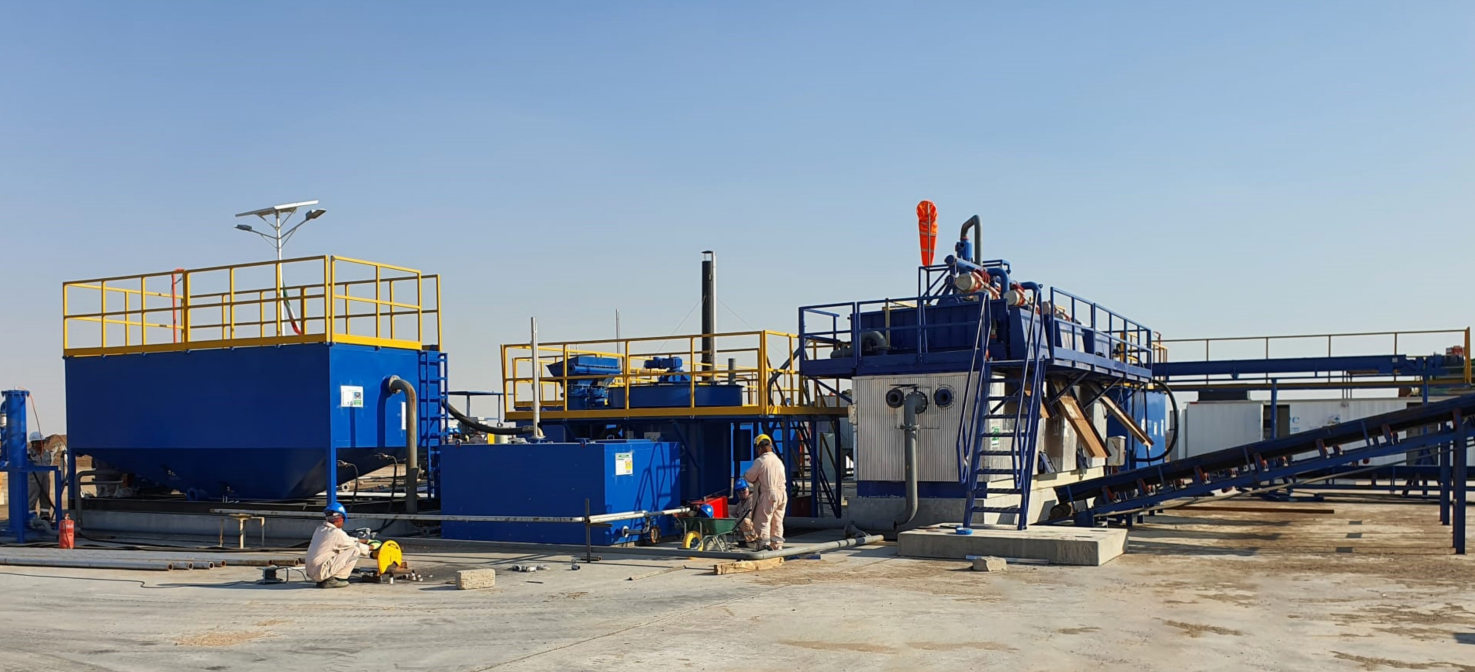
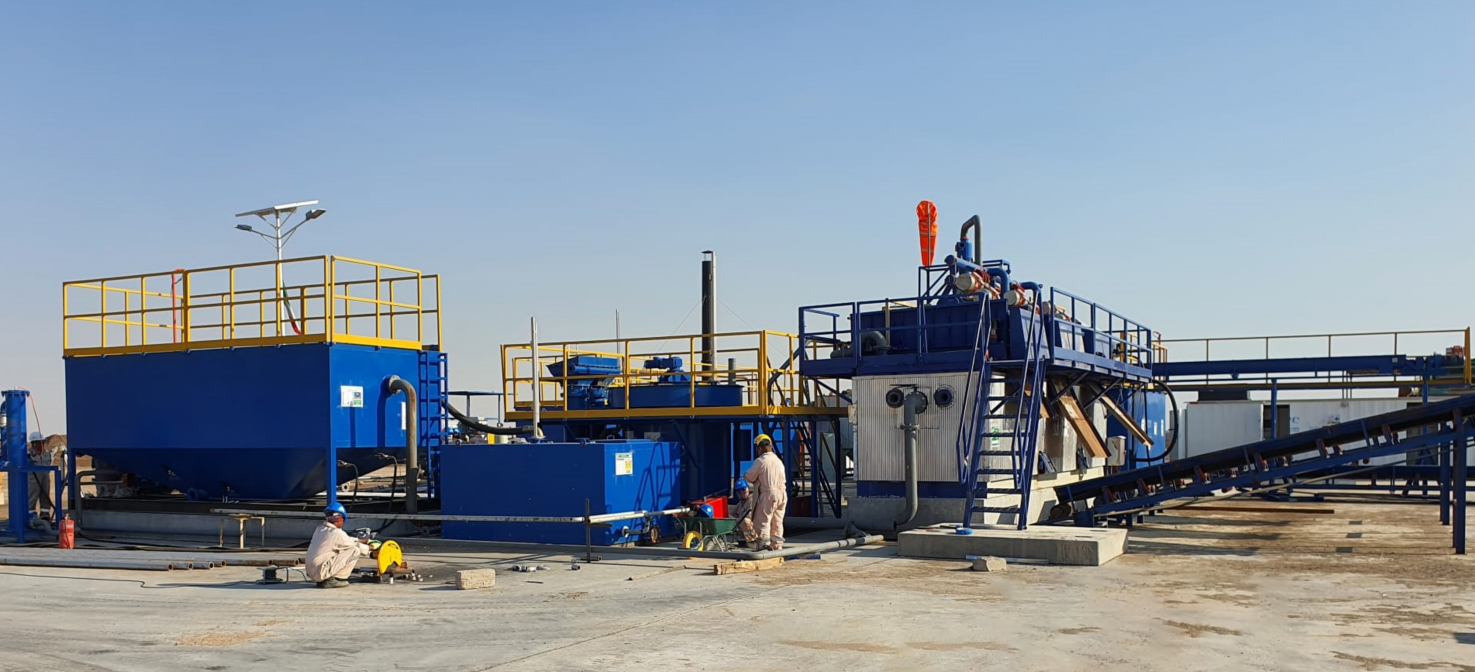
    For the treatment of oil-based mud, solid-liquid separation technology is mainly adopted. This requires the use of specific processing equipment and systems. One of the key equipment is the large capacity continuous feed unit, which can handle up to 40-60 tons per hour and can efficiently handle large quantities of oil-based mud.
     
    Fourth, Kesun oil-based mud non-landing system features and advantages
     
    Kesun oil-based mud non-landing system adopts advanced solid-liquid separation technology, with the following features and advantages:
     
    1. Large capacity continuous feeding: The system has a large capacity continuous feeding device, which can efficiently deal with oil-based mud produced by oilfield drilling.
    2. Efficient solid-liquid separation: Through efficient solid-liquid separation technology, the liquid content of drilling cuttings is minimized, and the solid phase oil content after treatment is less than 5%, so as to achieve effective oil-water separation and recover a large number of reusable drilling fluids.
    3. Integrated control and monitoring: The system adopts PLC integrated control, with automatic alarm indicator, can monitor temperature, torque, oil and running time in real time, easy to operate, safe and reliable.
    4. Convenient maintenance and transportation: Kexun oil-based mud non-landing system is designed with collapsible guardrail and walkway, which is convenient for operators to perform routine maintenance and disassembly and transportation.
     
    5. Environmental protection and economic benefits
     
    Through the application of Kesun oil-based mud non-landing system, not only realize the efficient treatment of oil-based mud and solid-liquid separation, effectively protect the environment, but also recover a large number of reusable drilling fluids, reducing drilling costs. At the same time, the automatic control and safe and reliable monitoring function of the system also improve the operation efficiency and safety.
     
    Summary: Oil base mud treatment in oilfield drilling is an important environmental protection project. With its characteristics and advantages of large capacity continuous feeding, efficient solid-liquid separation, integrated control and monitoring, and convenient maintenance and transportation, Kesun oil-based mud non-landing system provides an efficient, safe and environmentally friendly oil-based mud treatment solution for oilfield drilling operations.
  • Waste oil based drilling fluid treatment method

     
    First, the importance of waste oil-based drilling fluid treatment
    Waste oil-based drilling fluid is a drilling fluid used in drilling. The main components are oil and drilling sludge. Because it contains a large amount of waste oil, if it is directly discharged into the environment, it will seriously pollute the soil and water source, causing adverse effects. Therefore, effective treatment and disposal of waste oil-based drilling fluids is an important measure to protect the environment and human health.

     
    2. Waste oil-based drilling fluid treatment method


    1. Separation: the oil, water, sludge and other impurities in the waste oil-based drilling fluid are separated, and the commonly used methods are gravity separation method and centrifugal separation method.
     
    2. Dehydration: dehydrating waste oil-based drilling fluid with high moisture content after separation to reduce liquid discharge, commonly used methods are pressure filtration, centrifugal dehydration and so on.
     
    3. Neutralization: neutralization of acid and alkaline substances in waste oil-based drilling fluids to reduce the impact on the environment. The commonly used neutralizing agents are lime and sodium oxide.
     
    4. Filtration: Remove the small particles and suspended solids in the waste oil-based drilling fluid to achieve the purpose of purification. The common filtration methods are screen filtration, filter bag filtration, etc.
     
    Iii. Disposal method of waste oil-based drilling fluid after treatment
    After treatment, the waste oil-based drilling fluid needs to be disposed of scientifically and reasonably, and cannot be discharged directly into the environment. General treatment methods include the following two:
     
    1. Recycling: Reprocessing the treated waste oil-based drilling fluid so that it can be recycled.
     
    2. Safe disposal: the treated waste oil-based drilling fluid is disposed of by sanitary landfill, incineration and other safe disposal methods to achieve harmless treatment and protect the environment.
     
    In short, the treatment and disposal of waste oil-based drilling fluid is not only conducive to environmental protection, but also an effective way to save resources and renewable use. All walks of life should actively respond to the national environmental protection policy, accelerate technological innovation, and commit to developing more waste liquid treatment technologies to reduce environmental pollution.
  • Research and application of drilling fluid environmental protection treatment technology

    In the process of oilfield drilling, the total amount of waste is large, the content of pollutants is high, the pollution control of waste is concentrated in the end treatment, the degree of resource utilization is low, the cost is high, the pollution control in the process of drilling can not be realized, and the ecological environment of the oilfield is seriously affected. Aiming at the key technical problems of environmental protection in the drilling process, with the goal of "reduction, harmless and resource utilization", Xi 'an Kesun has carried out theoretical research, equipment research and development, technical research and integrated application, and conquered the core technologies of the reduction of drilling waste during drilling and the harmless treatment and resource utilization of drilling waste at the end. The environmental treatment technology of drilling fluid has been applied on a large scale in oil drilling areas at home and abroad.
     

    Preliminary separation of solid and liquid
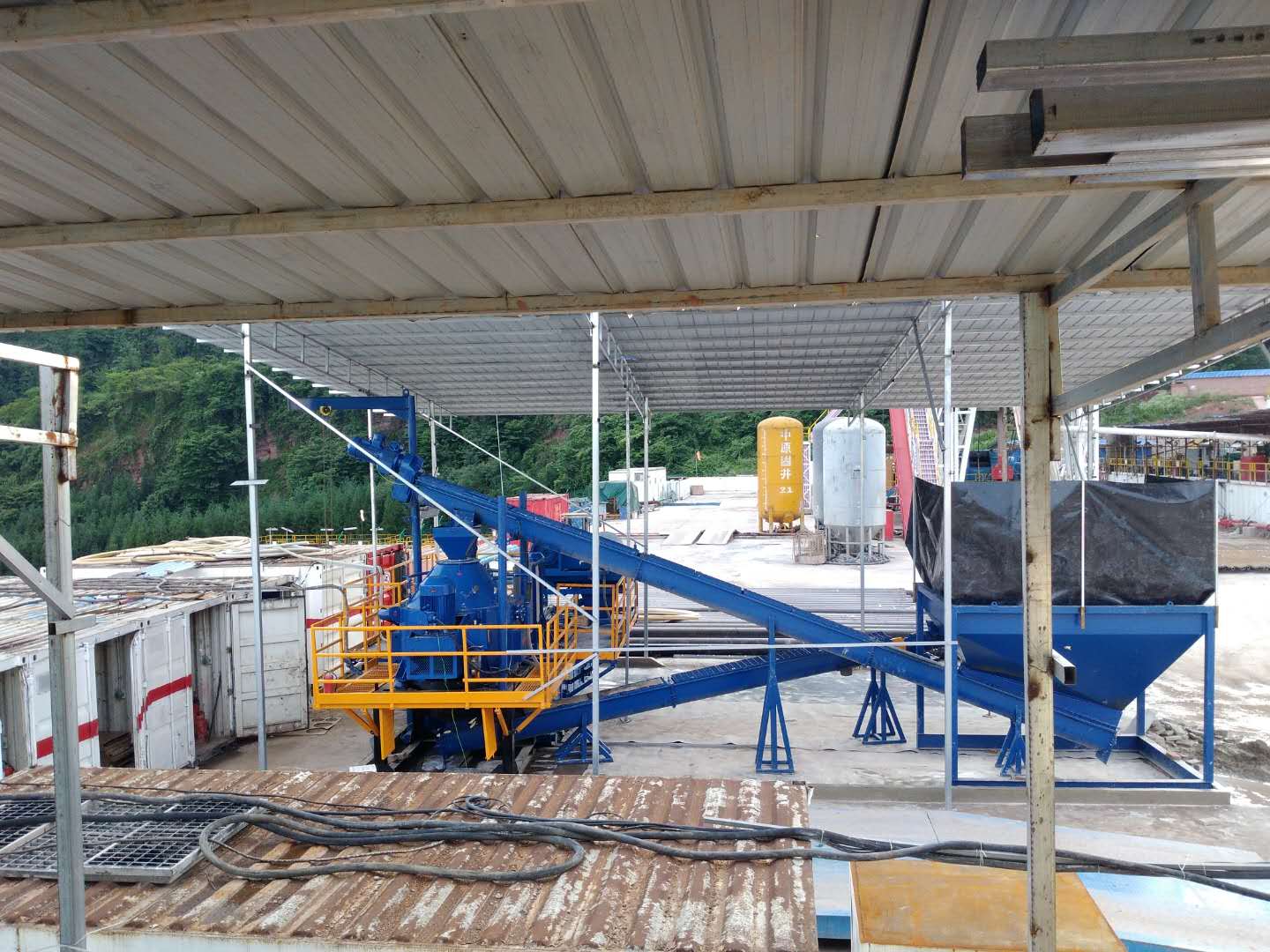
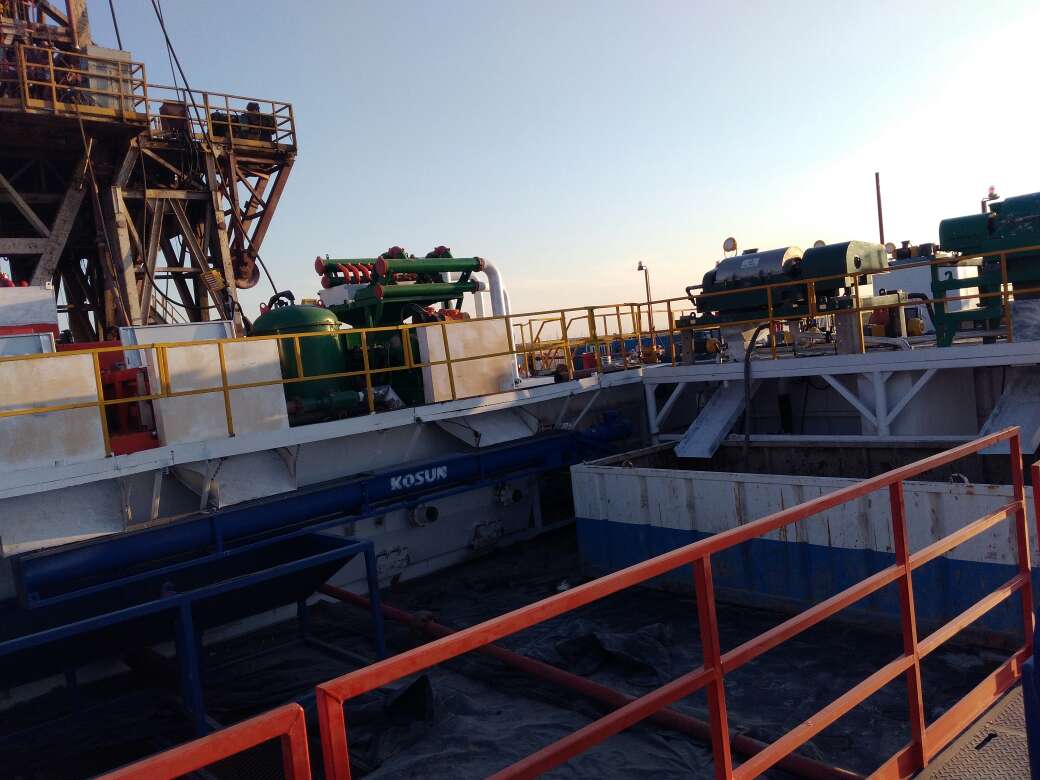
    The initial separation of solid and liquid is a process in which the liquid phase after initial separation by solid control equipment (vibrating screen, desilter, desilter and centrifuge) on drilling site enters the drilling fluid tank for recycling, and the solid phase is transmitted by spiral conveyor to the sand desilter for primary deoiling, and then enters the cuttings cleaning and drying machine for separation and discharge of cuttings up to the standard.


    The tank is equipped with mixer, dosing funnel and pump. After the solid phase enters the sand deoiling tank, turn on the mixer, add an appropriate amount of water and drugs that can separate the oil and water, so that the oil substances mixed in the solid phase are initially separated and floating on the surface of the mixture, and then use the pump to pump the oil substances away to achieve the first stage separation of the oil substances, and finally stir the solid-liquid mixture in the lower part of the tank and pump it into the cuttings cleaning and drying machine.


    The cuttings cleaning and drying machine is equipped with high-pressure water washing system and rotary dehydration system. While the high-pressure water washing system flushes the cuttings, the rotary dehydration system rotates at high speed, and the mixture realizes the separation of cuttings and drilling fluid sewage under the action of centrifugal force. If the separated cuttings meet the national standard "Comprehensive Sewage Discharge Standard" (GB 8978-2002) level 1 discharge standard, they will be transported from the well site or used for other purposes, otherwise continue to clean until they meet the requirements of the discharge standard; The separated sludge and drilling fluid water enter the sewage storage tank.
  • How to deal with mud in the construction process of large piling project

    Piling mud treatment equipment is specially for piling engineering, in the construction site for piling engineering equipped with mud treatment equipment, mainly used in the construction process of large-scale piling engineering mud treatment. The use of piling mud treatment equipment for mud treatment at the construction site can effectively improve the construction efficiency of the construction site, reduce the labor intensity of workers at the construction site, improve the construction environment, and reduce the cost of the entire project.


    First, the generation of piling mud
    1, due to the complex geological structure, drilling construction process, groundwater pressure and impact force is very large, the need for mud to maintain the stability of the drilling.
    2, during the drilling process, the drill pipe, drill bit and wall protection are easy to produce vibration, resulting in hole wall collapse, when the hole wall collapse, the mud in the hole must be fixed.
    3, in the process of drilling, due to the vibration of the drill tool or the excessive lifting of drilling and other reasons, the drill pipe will produce a large vibration or the phenomenon of excessive lifting of drilling, resulting in mud.
    4, during the drilling process, a mud layer will be formed in the hole to protect the hole wall.
    5, when drilling, in order to ensure the quality of drilling and prevent the occurrence of drilling collapse, it is necessary to inject mud in the hole.
    6, when it is found that there is sand surge in the hole, in order to protect the hole wall from collapsing, the mud in the hole must be treated.
     
     
    2. Pollution of piling mud
    1, the organic matter in the mud will pollute the water quality, reduce the oxygen content of the water, and will inhibit the growth of algae, affecting the life of aquatic animals such as fish.
    2, the harmful substances contained in the mud will also make the water black and smelly, affecting the quality of the water environment.
    3, the mud contains a large number of sediment particles and a large number of microorganisms, these substances will breed mosquitoes and pollute the air.
    4, the mud contains a large number of inorganic salts, when the temperature rises, it will decompose a large number of toxic gases, resulting in noise affecting the life and work of residents.
    5, mud also contains heavy metal ions, radioactive elements and other harmful substances to the human body.
     
    Third, piling mud treatment equipment and environmental protection treatment system
     
    Piling mud treatment equipment has mud pump, filter press pump, screening equipment, plate and frame filter press
     
    Environmental treatment system:
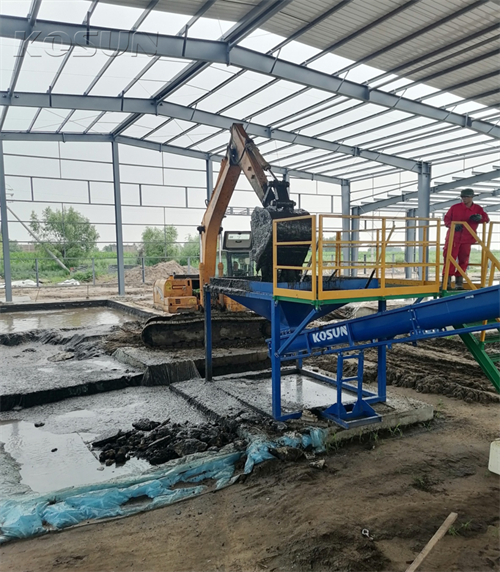
    First of all, the site piling mud is sent to the mud pool, and then the mud is screened by the screening equipment, and the sifted mud is passed into the plate and frame filter press through the special pump for solid-liquid separation. The extruded dry mud cake is transported to the designated area, and the water is discharged and recycled through the filter press.
     
     
    Iv. Summary
    In the process of piling construction, if the mud is not treated, it will cause some pollution to the environment and have an adverse effect on the quality of the project. Therefore, the mud treatment in the piling construction process is very important. In the process of piling construction, appropriate mud treatment equipment should be selected according to the site conditions and mud properties to achieve the purpose of protecting the environment and ensuring the quality of the project. When using piling mud treatment equipment for mud treatment, it is necessary to choose the appropriate equipment for mud treatment according to the site situation to achieve the best results.
  • Difficulties in the treatment of mud water and waste soil

    The working efficiency and effect of sludge and waste soil treatment can not be ignored in the construction of sludge shield. At present, the main difficulties in sludge and waste soil treatment are as follows:
     
    1. If the diameter of shield tunnel excavation is up to 15 m, the sludge water treatment capacity is large, the coordination difficulty is high in all aspects, and the mud pump load is too large, the mud water supply is insufficient on the excavation surface, or the processing capacity is insufficient. Therefore, reasonable equipment selection and sludge water site layout are very important. The formation of mud film is difficult in the long distance sand and gravel stratum with high permeability and high water pressure, which requires high pulping capacity, conveying capacity and comprehensive management ability of mud and water system.


    2. During the excavation of the initial section of the shield, a large amount of clay mud will be generated through the silty clay clay stratum with a high content of clay particles. When the shield is digging into this clay stratum, the mud-water separation equipment cannot separate the small clay particles in time, resulting in the increasing specific gravity and viscosity of the mud. After some of the mud must be abandoned, an appropriate amount of water must be added to the slurry mixing tank to meet the construction requirements, resulting in a large amount of waste mud with high gravity and high viscosity. The discharge of waste mud will not only destroy the environment, affect the civilized construction, but also cause some pollution. The conventional treatment method of waste mud is external transport and disposal, but this treatment method has the problems of high transportation and disposal cost and high environmental protection requirements.


    3. Large amount of waste soil, waste caused by external disposal, shield shaft section if located in clay stratum, construction will produce a large amount of waste clay; A large amount of silty sand residue will be produced when the shield is driven into the full section of silty sand stratum (up to 1 670 m). When the shield drives into the gravel sand, pebble and sandstone stratum, a large amount of waste gravel sand, pebble and crushed rock will be produced. If the waste soil is disposed of in accordance with the usual way of external disposal, it will cause huge waste and environmental pollution.
  • Solids Control Equipment: A Key Component in Efficient Drilling Operations

    In the oil and gas industry, the efficient management of drilling waste is crucial for both environmental protection and operational cost-effectiveness. Solids control equipment plays a vital role in this process, ensuring that drilling fluids are properly managed and recycled, while also minimizing the environmental impact of drilling operations. Additionally, the use of mud-zero discharge equipment and oily sludge treatment equipment further enhances the overall efficiency and sustainability of drilling activities.


    Solids control equipment is designed to remove solid particles from drilling fluids, ensuring that the fluid properties are maintained within the required specifications for efficient drilling operations. This equipment typically includes shale shakers, desanders, desilters, and centrifuges, all of which work together to separate and remove solid particles from the drilling mud. By effectively controlling the solid content in the drilling fluid, solids control equipment helps to prevent equipment wear, maintain wellbore stability, and reduce the overall cost of drilling operations.
     
    In conjunction with solids control equipment, mud-zero discharge equipment and oily sludge treatment equipment are essential for managing the waste generated during drilling activities. Mud-zero discharge equipment allows for the efficient treatment and recycling of drilling fluids, minimizing the need for disposal and reducing the environmental impact of drilling operations. Oily sludge treatment equipment is specifically designed to process and treat the oily waste generated from drilling activities, ensuring compliance with environmental regulations and minimizing the risk of soil and water contamination.
     
    The integration of solids control equipment, mud-zero discharge equipment, and oily sludge treatment equipment represents a comprehensive approach to waste management in drilling operations. By effectively controlling and treating drilling waste, operators can minimize the environmental footprint of their activities while also improving the overall efficiency and cost-effectiveness of their operations.
     
    In conclusion, solids control equipment, along with mud-zero discharge equipment and oily sludge treatment equipment, are essential components of modern drilling operations. By investing in these technologies, operators can ensure that their drilling activities are conducted in an environmentally responsible manner, while also optimizing operational efficiency and cost-effectiveness.

  • KOSUN_mud-water separation system

    In order to separate the solid and liquid in the mud, reduce the specific weight of the mud, and improve the performance of horizontal drilling operations, we often use mud-water separation systems.
     
    1, the composition of mud-water separation system: generally includes tempering buffer tank, mud agitator, centrifuge liquid tank, screw pump (centrifuge slurry supply), high-speed variable frequency centrifuge, liquid pump, three-chamber dosing device, screw pump (dosing pump), dosing container.
     

    2. Operating conditions:
     
    Working environment: field site (suitable for wind, rain, snow, fog, dust, etc.)
    Installation location: outdoor
    Ambient temperature: -20℃~+55℃
    Ambient humidity: ≤95%
     
    3, the main use: mud water separation device is mainly used for mud solid and liquid separation, the liquid phase after treatment for water. According to the mud condition, the centrifuge of this system can realize the following two working modes.
     
    A) Mechanical separation without dosing: centrifuge slurry feeding screw pump draws mud from the tempering mixing tank to the centrifuge for treatment.
    B) Chemical dosing assisted separation: centrifuge slurry feeding screw pump draws mud from the tempering mixing tank through the static mixer to flocculate and mix the agent, and then centrifuges into the decanter centrifuge drum for centrifugal separation. And meet the requirements of road, railway, sea and short distance hauling in the well site, the system design strives to humanized operation as the benchmark, to ensure that the staff in the operation process save time, labor and worry.
     
    At present, the mud-water separation system produced by kosun Company is widely used in pipeline companies and major oil fields. With stable working performance, quality service, won the praise of customers. Accumulated rich project experience.