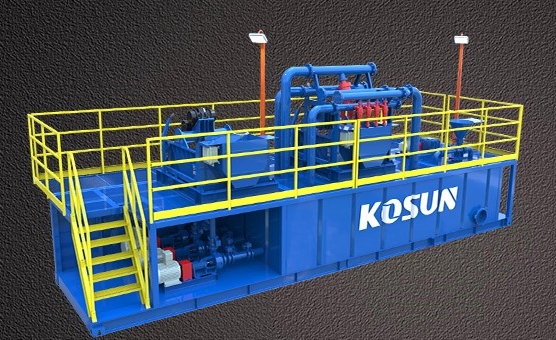
标签: Solid control equipment

  • Where does the oil come from?

    For many people, drilling for oil is the same thing as drilling for water Wells: Deep underground, there is a huge liquid space filled with tens of millions of tons of oil, which can be sucked out by drilling through the formation. In fact, oil is the authentic "oil in stone", let's see what the raw material of oil looks like.

    This is called Kerogen, transliterated as kerogen, and the rock containing this material is the source rock, which is commonly called source rock or source rock, from which oil is extracted.
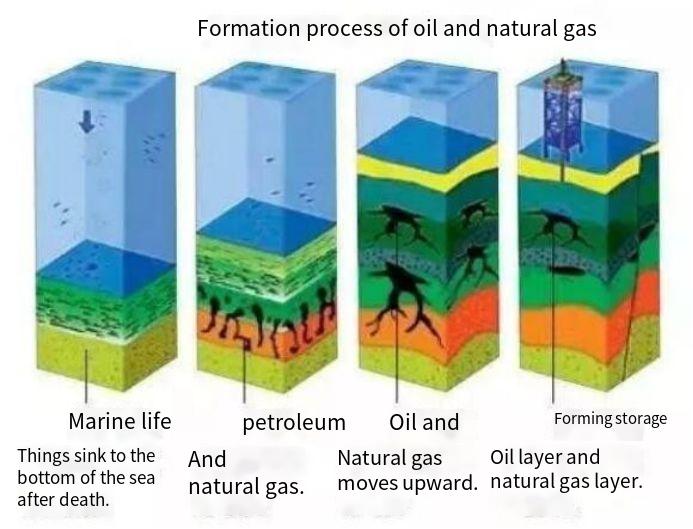
    The past and present lives of oil We know that coal comes from the remains of ancient plants, which is not controversial, because there are many coal with plant wood texture and even leaf veins and other structures. And what is oil? Everyone has seen underwater silt, which is black because it contains a lot of organic matter. The source of this organic matter is algae in the water, which are deposited on the lake bottom after they die. Given the chance to be buried quickly and cut off from oxygen, the deposited organic matter is buried under thick sedimentary rocks over long geological times. Under the high temperature and high pressure underground, their organic matter is gradually transformed into oil parent material.

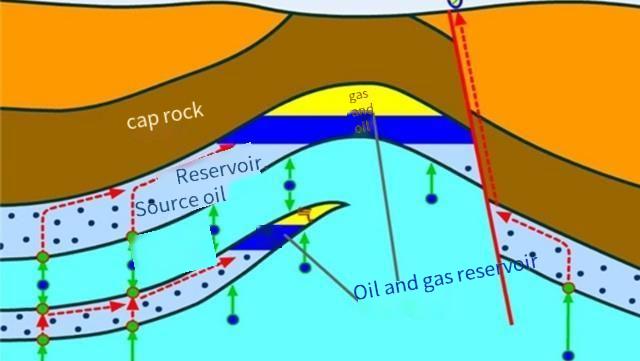
    The formation of oil parent material is mostly in the early stage of sedimentation and burial, when the ground temperature is not more than 50℃. After about tens of millions of years, the deeper the sediment is buried and the higher the ground temperature (about 100-150 ° C), the maturity of the oil parent material reaches a certain range and is converted into hydrocarbons (hydrocarbons), that is, liquid oil or natural gas. Because these hydrocarbons are lighter than nearby rock, they percolate upward into the pores of the source rock formation. On the way, the oil-impervious formation is blocked and stays down, and slowly gathers in this formation, and the more and more, the formation of oil fields. So coal comes from the accumulation of plant remains, while oil is the deposition of algae, mainly from water bodies. The oil parent material in the sediment of the lake is mostly from algae, bacterial spores, pollen or resin, which mainly produces hydrocarbon petroleum of liquid paraffin. The oil parent material in Marine sediments mostly comes from plankton, algae, bacteria and a few land plants, which mainly produces liquid petroleum, supplemented by natural gas. The oil parent material in land sediments is mostly from lignin of higher plants, which is mainly used to produce natural gas. Therefore, knowing the source of the oil parent material in the source rock can predict the composition of the produced oil and the ratio of oil to gas.

     
    How is oil extracted
    After geological exploration, the underground reservoir is found, the location, number and depth of the well are determined, and the drilling workers will drill on the set well location. At present, the commonly used drilling technology is rotary drilling. It consists of a set of surface equipment (including drill, derrick) and a set of lifting system and drill pipe, drill tool and drill bit. Through the lifting system, the drill tool is lifted and lowered, driven by the rotation of the rotary disk, and then the drill bit is rotated to break the rock until the target layer is reached. This is the most widely used drilling method in the world.


  • Where does the oil come from?

    For many people, drilling for oil is the same thing as drilling for water Wells: Deep underground, there is a huge liquid space filled with tens of millions of tons of oil, which can be sucked out by drilling through the formation. In fact, oil is the authentic "oil in stone", let's see what the raw material of oil looks like.

    This is called Kerogen, transliterated as kerogen, and the rock containing this material is the source rock, which is commonly called source rock or source rock, from which oil is extracted.
    The past and present lives of oil
    We know that coal comes from the remains of ancient plants, which is not controversial, because there are many coal with plant wood texture and even leaf veins and other structures. And what is oil? Everyone has seen underwater silt, which is black because it contains a lot of organic matter. The source of this organic matter is algae in the water, which are deposited on the lake bottom after they die. Given the chance to be buried quickly and cut off from oxygen, the deposited organic matter is buried under thick sedimentary rocks over long geological times. Under the high temperature and high pressure underground, their organic matter is gradually transformed into oil parent material.

    The formation of oil parent material is mostly in the early stage of sedimentation and burial, when the ground temperature is not more than 50℃. After about tens of millions of years, the deeper the sediment is buried and the higher the ground temperature (about 100-150 ° C), the maturity of the oil parent material reaches a certain range and is converted into hydrocarbons (hydrocarbons), that is, liquid oil or natural gas. Because these hydrocarbons are lighter than nearby rock, they percolate upward into the pores of the source rock formation. On the way, the oil-impervious formation is blocked and stays down, and slowly gathers in this formation, and the more and more, the formation of oil fields. 


    How is oil extracted
    After geological exploration, the underground reservoir is found, the location, number and depth of the well are determined, and the drilling workers will drill on the set well location. At present, the commonly used drilling technology is rotary drilling. It consists of a set of surface equipment (including drill, derrick) and a set of lifting system and drill pipe, drill tool and drill bit. Through the lifting system, the drill tool is lifted and lowered, driven by the rotation of the rotary disk, and then the drill bit is rotated to break the rock until the target layer is reached. This is the most widely used drilling method in the world.


  • Where does the oil come from?

    For many people, drilling for oil is the same thing as drilling for water Wells: Deep underground, there is a huge liquid space filled with tens of millions of tons of oil, which can be sucked out by drilling through the formation. In fact, oil is the authentic "oil in stone", let's see what the raw material of oil looks like.

    This is called Kerogen, transliterated as kerogen, and the rock containing this material is the source rock, which is commonly called source rock or source rock, from which oil is extracted.
    The past and present lives of oil
    We know that coal comes from the remains of ancient plants, which is not controversial, because there are many coal with plant wood texture and even leaf veins and other structures. And what is oil? Everyone has seen underwater silt, which is black because it contains a lot of organic matter. The source of this organic matter is algae in the water, which are deposited on the lake bottom after they die. Given the chance to be buried quickly and cut off from oxygen, the deposited organic matter is buried under thick sedimentary rocks over long geological times. Under the high temperature and high pressure underground, their organic matter is gradually transformed into oil parent material.

    The formation of oil parent material is mostly in the early stage of sedimentation and burial, when the ground temperature is not more than 50℃. After about tens of millions of years, the deeper the sediment is buried and the higher the ground temperature (about 100-150 ° C), the maturity of the oil parent material reaches a certain range and is converted into hydrocarbons (hydrocarbons), that is, liquid oil or natural gas. Because these hydrocarbons are lighter than nearby rock, they percolate upward into the pores of the source rock formation. On the way, the oil-impervious formation is blocked and stays down, and slowly gathers in this formation, and the more and more, the formation of oil fields. 


    So the mud in the lake may turn into oil in the distant future, the carbon cycle is never broken, and new oil is always being formed. So why is oil a non-renewable resource? In fact, it is very simple, these oil are the result of hundreds of millions of years of precipitation, for us humans, the formation of oil is too long about equal to non-renewable.

    How is oil extracted
    After geological exploration, the underground reservoir is found, the location, number and depth of the well are determined, and the drilling workers will drill on the set well location. At present, the commonly used drilling technology is rotary drilling. It consists of a set of surface equipment (including drill, derrick) and a set of lifting system and drill pipe, drill tool and drill bit. Through the lifting system, the drill tool is lifted and lowered, driven by the rotation of the rotary disk, and then the drill bit is rotated to break the rock until the target layer is reached. This is the most widely used drilling method in the world.


  • Where does the oil come from?

    For many people, drilling for oil is the same thing as drilling for water Wells: Deep underground, there is a huge liquid space filled with tens of millions of tons of oil, which can be sucked out by drilling through the formation. In fact, oil is the authentic "oil in stone", let's see what the raw material of oil looks like.

    This is called Kerogen, transliterated as kerogen, and the rock containing this material is the source rock, which is commonly called source rock or source rock, from which oil is extracted.
    The past and present lives of oil
    We know that coal comes from the remains of ancient plants, which is not controversial, because there are many coal with plant wood texture and even leaf veins and other structures. And what is oil? Everyone has seen underwater silt, which is black because it contains a lot of organic matter. The source of this organic matter is algae in the water, which are deposited on the lake bottom after they die. Given the chance to be buried quickly and cut off from oxygen, the deposited organic matter is buried under thick sedimentary rocks over long geological times. Under the high temperature and high pressure underground, their organic matter is gradually transformed into oil parent material.

    The formation of oil parent material is mostly in the early stage of sedimentation and burial, when the ground temperature is not more than 50℃. After about tens of millions of years, the deeper the sediment is buried and the higher the ground temperature (about 100-150 ° C), the maturity of the oil parent material reaches a certain range and is converted into hydrocarbons (hydrocarbons), that is, liquid oil or natural gas. Because these hydrocarbons are lighter than nearby rock, they percolate upward into the pores of the source rock formation. On the way, the oil-impervious formation is blocked and stays down, and slowly gathers in this formation, and the more and more, the formation of oil fields. So coal comes from the accumulation of plant remains, while oil is the deposition of algae, mainly from water bodies. The oil parent material in the sediment of the lake is mostly from algae, bacterial spores, pollen or resin, which mainly produces hydrocarbon petroleum of liquid paraffin. The oil parent material in Marine sediments mostly comes from plankton, algae, bacteria and a few land plants, which mainly produces liquid petroleum, supplemented by natural gas. The oil parent material in land sediments is mostly from lignin of higher plants, which is mainly used to produce natural gas. Therefore, knowing the source of the oil parent material in the source rock can predict the composition of the produced oil and the ratio of oil to gas.


    So the mud in the lake may turn into oil in the distant future, the carbon cycle is never broken, and new oil is always being formed. So why is oil a non-renewable resource? In fact, it is very simple, these oil are the result of hundreds of millions of years of precipitation, for us humans, the formation of oil is too long about equal to non-renewable.

    How is oil extracted
    After geological exploration, the underground reservoir is found, the location, number and depth of the well are determined, and the drilling workers will drill on the set well location. At present, the commonly used drilling technology is rotary drilling. It consists of a set of surface equipment (including drill, derrick) and a set of lifting system and drill pipe, drill tool and drill bit. Through the lifting system, the drill tool is lifted and lowered, driven by the rotation of the rotary disk, and then the drill bit is rotated to break the rock until the target layer is reached. This is the most widely used drilling method in the world.


  • Where does the oil come from?

    For many people, drilling for oil is the same thing as drilling for water Wells: Deep underground, there is a huge liquid space filled with tens of millions of tons of oil, which can be sucked out by drilling through the formation. In fact, oil is the authentic "oil in stone", let's see what the raw material of oil looks like.

    This is called Kerogen, transliterated as kerogen, and the rock containing this material is the source rock, which is commonly called source rock or source rock, from which oil is extracted.
    The past and present lives of oil
    We know that coal comes from the remains of ancient plants, which is not controversial, because there are many coal with plant wood texture and even leaf veins and other structures. And what is oil? Everyone has seen underwater silt, which is black because it contains a lot of organic matter. The source of this organic matter is algae in the water, which are deposited on the lake bottom after they die. Given the chance to be buried quickly and cut off from oxygen, the deposited organic matter is buried under thick sedimentary rocks over long geological times. Under the high temperature and high pressure underground, their organic matter is gradually transformed into oil parent material.

    The formation of oil parent material is mostly in the early stage of sedimentation and burial, when the ground temperature is not more than 50℃. After about tens of millions of years, the deeper the sediment is buried and the higher the ground temperature (about 100-150 ° C), the maturity of the oil parent material reaches a certain range and is converted into hydrocarbons (hydrocarbons), that is, liquid oil or natural gas. Because these hydrocarbons are lighter than nearby rock, they percolate upward into the pores of the source rock formation. On the way, the oil-impervious formation is blocked and stays down, and slowly gathers in this formation, and the more and more, the formation of oil fields. So coal comes from the accumulation of plant remains, while oil is the deposition of algae, mainly from water bodies. The oil parent material in the sediment of the lake is mostly from algae, bacterial spores, pollen or resin, which mainly produces hydrocarbon petroleum of liquid paraffin. The oil parent material in Marine sediments mostly comes from plankton, algae, bacteria and a few land plants, which mainly produces liquid petroleum, supplemented by natural gas. The oil parent material in land sediments is mostly from lignin of higher plants, which is mainly used to produce natural gas. Therefore, knowing the source of the oil parent material in the source rock can predict the composition of the produced oil and the ratio of oil to gas.


    So the mud in the lake may turn into oil in the distant future, the carbon cycle is never broken, and new oil is always being formed. So why is oil a non-renewable resource? In fact, it is very simple, these oil are the result of hundreds of millions of years of precipitation, for us humans, the formation of oil is too long about equal to non-renewable.

    How is oil extracted
    After geological exploration, the underground reservoir is found, the location, number and depth of the well are determined, and the drilling workers will drill on the set well location. At present, the commonly used drilling technology is rotary drilling. It consists of a set of surface equipment (including drill, derrick) and a set of lifting system and drill pipe, drill tool and drill bit. Through the lifting system, the drill tool is lifted and lowered, driven by the rotation of the rotary disk, and then the drill bit is rotated to break the rock until the target layer is reached. This is the most widely used drilling method in the world.


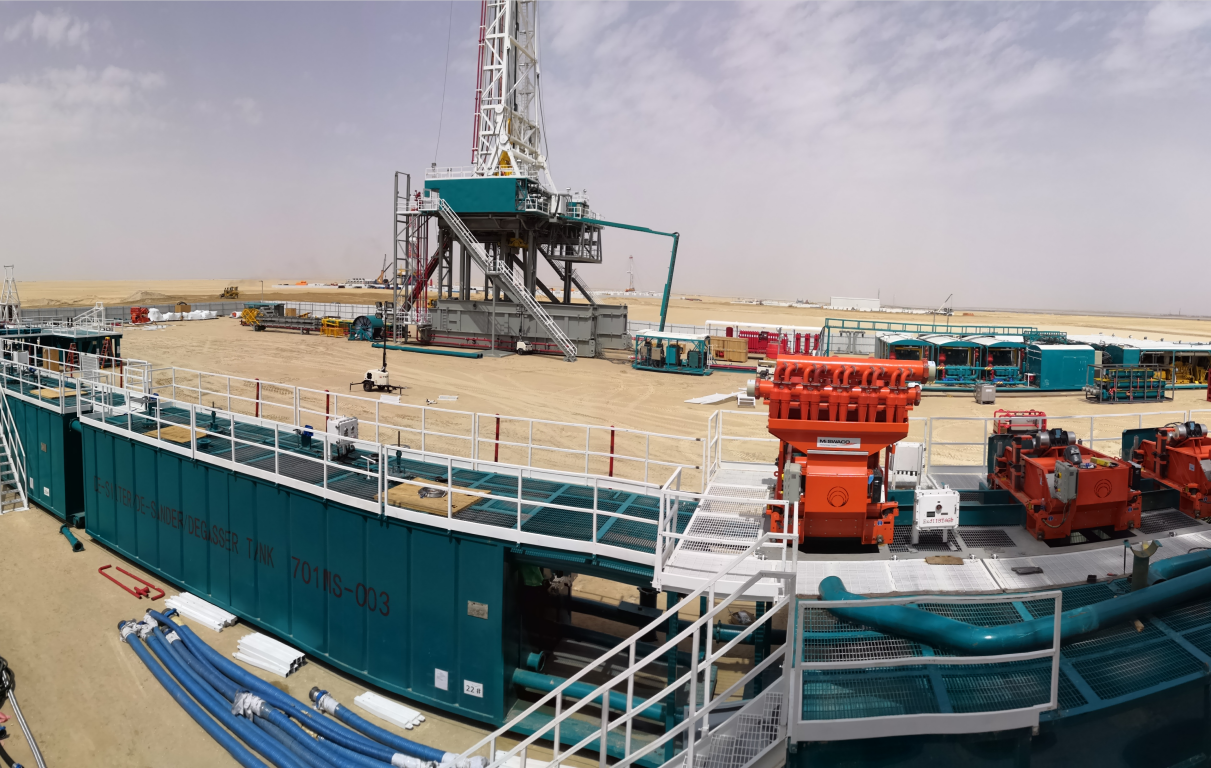
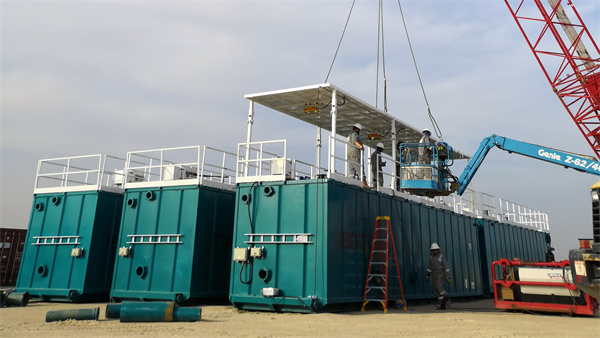
  • Desert drilling mud solid control system!

     
    In order to meet the requirements of drilling operations in the desert environment in the Middle East where the temperature is 0 ~ 55℃ and the humidity is 100%,
    Xi 'an Kosun has developed a solid control system for desert drilling rig.


    The system adopts unique tank bottom design and sand cleaning structure to meet the requirements of zero discharge. The reserve tank and mixed sled adopt self-backing skid structure,
    and the suction tank and shaker tank can realize the overall rapid transport. Meanwhile, the solid control system is also equipped with a fire protection system to meet the requirements of HSE.
    Fast moving, HSE compliance, fully meet the needs of desert drilling operations.


    In order to meet the requirements of desert drilling operations in the Middle East, where the temperature is 0 ~ 55℃ and the humidity is 100%,
    Xi 'an Kosun has developed a solid control system for desert drilling rig. The system adopts a unique tank bottom design and sand cleaning structure to meet the requirements of zero emissions. The reserve tank and mixed sled adopt a self-backing skid structure, and the suction tank and vibrating sieve tank can realize the overall rapid transport.
    At the same time, the solid control system is also equipped with a fire control system to meet the requirements of HSE.
    The test and field application results show that the solid control system of desert drilling rig has good overall performance, fast moving, in line with HSE specifications,
    and fully meets the needs of drilling operations in desert areas.
  • VC700 Vertical Cuttings Dryer

    The VC700 Cuttings Dryer produced by Xi 'an Kosun is used to reduce the operator's total drilling fluid cost and limit the amount of waste disposal.


    The VC700 cuttings dryer is used to recover drilling fluid directly from cuttings and weight mud from the shaker mesh to avoid
    loss of weight mud due to shaker failure, rig movement or screen blockage. The VC700 cuttings dryer helps meet certain cuttings
    liquid discharge requirements and automatically controls the feed for solid-liquid separation.
    The cuttings dryer is used to recover the liquid phase drilling fluid from the cuttings by applying a high centrifugal acceleration
    force to the cuttings to improve the separation of liquid from the cuttings. The VC700 chip dryer can help save money on expensive
    drilling fluids by further purifying the expensive liquid phase that can be returned to the mud system in use.
     
     
    The VC700 cuttings dryer system recovers lost mud and returns it to the in-service mud system.
    For diesel, mineral oil and synthetic oil base mud, the recovery system can work well.
    Because it is easier to separate oil from large drill cuttings, the cuttings dryer proved to be more effective for the synthesis of oil-based mud.
    Synthetic oil-based mud systems also have a higher mud value, making the machine more attractive from an economic point of view. In addition,
    the system reduces the amount of waste and disposal costs incurred on the rig site.
  • Introduction to trenchless horizontal directional drilling

    Trenchless horizontal directional drilling (hereinafter referred to as HDD) first appeared in the 1970s, began to be introduced into China in the late 1980s,
    and developed rapidly in China at the beginning of the 21st century, widely used in the construction of electricity, telecommunications, water supply, gas, sewage, etc.,
    for the road, railway, river, hillside and other pipelines. The reason why trenchless can develop so quickly into a new industry,

    it has its own advantages: safety, speed, quality and so on. As a new industry, if we want to go further and longer, we must standardize, so sorting out and writing specifications is the focus of our work in the future.


    Trenchless processes: ① survey →② mechanical and personnel approach →③ excavation into drilling →④ guided crossing →⑤ excavation into drilling →⑥ back expansion →⑦ welded pipe →⑧ pipe drag out →⑨ cleaning the site →⑩ mechanical exit. All processes do not mention the use of mud, but it is like human blood, silently running through the entire most important links.


    People die without blood, and no excavation without mud is doomed to failure. There are ten trenchless processes: survey, approach, excavation into drilling, guided crossing, excavation out drilling, back expansion and welding pipe, hauling out, cleaning the site, and exit. Of these ten processes, three are the most important: guided crossing, backspreading, and pulling out.
    The engineers say the guided crossing is halfway through. But I think the key to a successful crossing depends on whether our hero behind the scenes, the mud, is applied correctly.
  • Kuwait 50 tons of landing sludge treatment project all successfully shipped!

    Kuwait 50 tons of landing sludge treatment project all shipped, Kosun's excellent performance has won wide praise from international customers!

    61dc4de30417e37dbb69331e3b98bc7.png

    Recently, Xi 'an Kosun undertakes Kuwait 50 tons of landing sludge treatment system has completed all product shipments,
     which is a set of high-tech integrated processing system, customized by Xi 'an Kesun professional production,
    designed to provide efficient and environmentally friendly sludge treatment solutions for Kuwait.


    The design and production process of the equipment fully reflects the technical strength and professionalism of Xi 'an Kosun.
    The system modules include spiral washing module, screening module, sand and oil removal module, oil waste separation module, centrifugal separation module,
    air flotation module, water circulation module, heating system and electrical control system. The whole system has the advantages of efficient processing capacity,
    easy operation and easy maintenance, which can effectively treat oily sludge waste and meet the local environmental protection requirements.

    46d020f57d097a7f4633a02cf8a5ed3.png

    After a month of multiple batches of shipment, up to now the Kuwait sludge treatment system has been all shipped,
    in this process can not be separated from the hard work and unremitting struggle of all the staff, they with a high sense of responsibility and professionalism,
     to ensure the quality of products and delivery time, won wide praise from customers.


    Looking forward to the future, Xi 'an Kosun will continue to adhere to the concept of technological innovation and quality,
    to provide better products and services for global customers. We will continue to pay attention to the field of environmental protection and sustainable development,
     and strive to develop more innovative and practical products to make greater contributions to the protection of the earth's environment.


  • The 9th World Oil and Gas Equipment Expo (WOGE2024)

     
    The World Oil and Gas Equipment Expo, referred to as "WOGE", is the country's largest exhibition focusing on the export of petrochemical equipment, aiming at the global petrochemical loading
    Both sides provide a set of "accurate meeting, professional exhibition, new product release, brand promotion, in-depth communication, factory inspection, full tracking" seven professional services

    Effective exhibition platform! We uphold: "buy the world, sell the world" cooperation purpose, mainly Chinese exhibitors, foreign exhibitors as a supplement, through the "One exhibition" and "two sessions"
    Form for both sides to provide professional and pragmatic meet and communicate. Overseas buyers are from the Middle East, Southeast Asia, Central Asia, Africa, South America and other Belt and Road oil and gas countries,


    The exhibition has been successfully held in Oman, Russia, Iran, China Karamay, China Hainan, Kazakhstan and other places for eight sessions. The exhibition takes the essence of professional exhibition + buyer meeting Quasi-exhibition service mode, has served 1000 exhibitors, 4000 VIP professional buyers, more than 60,000 professional visitors.


    The 9th World Oil and Gas Equipment Expo (WOGE2024), held in Xi 'an International Convention and Exhibition Center, relying on the ancient city of Xi 'an's profound cultural heritage, superior geographical location and complete oil and gas industry and equipment manufacturing industry cluster, the exhibition will provide more efficient and convenient services for both suppliers and producers.