The total length of the underground drainage network in the central urban area of Shanghai exceeds 12,000 kilometers. With the arrival of the rainy season, the siltation thickness of some pipe sections exceeds 30% of the pipe diameter. Traditional manual silt removal is inefficient, has a significant impact on traffic, and poses a high risk of secondary pollution. The Xi 'an KOSUN KD-40 sludge-water separation system is specially designed for vehicle-mounted pipeline dredging scenarios. It is compact in size and easy to move, allowing for quick on-site operation and significantly enhancing dredging efficiency. It is particularly suitable for sludge treatment in urban underground pipe networks, municipal engineering, and other fields.
LS752 Double-layer slat vibrating screen: Excitation force 6G, screen life >5000 hours, slat design to prevent fiber entanglement.
3. Process Flow
Sewage suction truck suction → vehicle-mounted coarse screen →KD-40 cyclone sand removal →LS752 high-frequency dewatering → Clear water is discharged back into the pipeline network. The moisture content of the mud cake is ≤35%, which can be directly sent to the green composting or brick factory.
4. Project Effectiveness
The equipment is ready to use upon arrival, with immediate separation of sludge and water, and the sludge cakes can be transported out to meet environmental protection standards.
On-site labor costs have been reduced by 75%.
The external transportation volume of mud cakes decreased by 40%, and the comprehensive dredging cost dropped by 38%.
The drainage capacity during the rainy season has increased by 25%, and complaints about urban flooding have decreased by 90% year-on-year.
5. Customer Evaluation
The owner customer in Shanghai pointed out that the KD-40 system is equipped with a vehicle-mounted silt removal system, truly achieving "stop and go" mobile silt removal, solving the long-standing traffic organization problem. The stability of the sludge-water separation index provides real-time and reliable data support for the Shanghai Smart Drainage Platform.
6.Experience Summary
Modular and lightweight design is the key to the rapid response of narrow urban blocks.
Double-layer slit screen mesh performs exceptionally well for complex waste such as plastic bags and fibers, reducing downtime for maintenance.
This batch of equipment will be used in local oil drilling projects in Uzbekistan to help customers improve construction efficiency.
Xi 'an KOSUN mud agitators are manufactured with advanced technology and feature high-efficiency stirring, wear resistance and durability, as well as adaptability to complex working conditions.
They can be widely applied in fields such as oil drilling, mining, and municipal engineering. The products are strictly produced in accordance with international standards, featuring stable performance and reliable quality.
As an important energy producer in Central Asia, Uzbekistan has continuously intensified its efforts in the development of oil and gas resources in recent years.
With the increase in drilling depth and the complexity of the formation, the technical requirements for solid control systems are becoming increasingly strict. Xi 'an KOSUN has successfully
gained customer recognition with its superior product quality and comprehensive after-sales service. During the acceptance process,
the customers highly praised the performance of the equipment and the professional services provided by XX Company, and expressed their anticipation for long-term cooperation.
Xi 'an KOSUN has always adhered to the customer demand-oriented approach, providing high-quality products and services, and offering more efficient solutions for global customers!
Xi 'an Kosun will continue to uphold the business philosophy of "technological innovation, quality first, and customer-oriented", continuously increase investment in research and development,
and constantly improve product performance and service levels. The company plans to establish a more complete service network in Central Asia to provide customers
with more timely technical support and after-sales service, and help the global oil and gas industry achieve efficient, environmentally friendly and sustainable development.
Recently, a batch of high-performance submersible slurry pumps produced by Xi 'an KOSUN were packed and dispatched to the site of an oil and gas drilling project in Turkmenistan, to be used for the efficient transportation and circulation treatment of mud in the solid control system of drilling mud.
Submersible slurry pump products specially configured for drilling operations
The submersible slurry pump products are mainly applied in the mud tank system at the drilling site, used to transport solid-liquid mixtures containing drill cuttings and high-viscosity drilling fluids, providing continuous and stable slurry supply for downstream equipment such as vibrating screens, desanders, desilters and horizontal screw centrifuges. The submersible slurry pump products feature excellent wear resistance, strong sewage discharge capacity and stable and reliable operation performance. This batch of submersible slurry pumps is different from the traditional horizontal pumps. Its most prominent feature is that the pump body can be directly immersed in the medium for operation. It is suitable for the transportation tasks of high-concentration and highly abrasive mud, and has incomparable advantages in drilling sites with limited space and complex working environments.
Application scenarios of submersible slurry pump equipment
The submersible slurry pump will be integrated into the mud circulation system at the drilling site and mainly undertake the following functions:
1. Slurry transportation: The slurry in the slurry pool is pumped into solid control equipment such as vibrating screens, desanders, and desilters to achieve solid-liquid separation.
2. Mud recycling: The treated clean mud can be re-injected into the drilling system, reducing mud waste and enhancing environmental benefits.
3. High adaptability: It is suitable for various working conditions such as oil drilling, coalbed methane development, and shale gas extraction.
Serve the global market and contribute to clean and efficient energy development
It has wide applications in multiple industries such as oil and gas, shale gas, geothermal drilling, mining, shield machines, and environmental protection.
At present, KOSUN brand products have served over 60 countries and regions around the world.
Particularly in the markets along the "Belt and Road", such as Central Asia, the Middle East, Africa and South America,
it has established a good reputation among customers and a solid market foundation. The successful delivery of the submersible slurry pump this time not only provided strong equipment support for the solid control project of drilling mud in Turkmenistan, but also once again demonstrated the technical accumulation and international service capabilities of the Kosun brand in the field of oil drilling.
Let's connect, and we create big deals, on the basis of trust and broader benefits.
KOSUNMud solids control systems are mainly divided into three categories: skid-mounted drilling mud solids control systems, mobile drilling mud solids control systems, and low-temperature drilling mud solids control systems. Among them, the skid-mounted drilling mud solids control system for land drilling rigs manufactured by KOSUN adopts a multi-functional design, so that the whole solids control system can meet the requirements of different well depths and various drilling muds. It can operate independently or in combination. KOSUN can produce 350HP, 450HP, 550HP, 650HP, 750HP workover rig mud circulation system and 1000HP, 1500HP, 2000HP, 3000HP land skid-mounted drilling rig mud circulation system.
The advantages of skid-mounted drilling mud solids control system are:
①Easy to install: The production and assembly of the skid-mounted drilling mud solids control system equipment are all completed in the factory, and the on-site installation workload is small. It only needs to complete the connection of the interface pipes and external electrical connections to work.
②Easy to migrate: Since the functional components are integrated into a whole base, it can be easily migrated as a whole.
③Compact design and small footprint: the skid-mounted drilling mud solids control system has a compact structure, which reduces the footprint compared with the traditional installation method.
Mobile drilling mud solids control system:
In order to meet the needs of modern oilfield drilling engineering time, increase moving speed and reduce costs, KOSUN combines the structural characteristics of mobile drilling rigs and skid-mounted modular drilling rigs to ensure safety, With the design concept of high efficiency and environmental protection, the mobile drilling mud solids control system has been developed, which greatly improves the automation degree of the solids control system. Field application shows that this type of system not only has the advantages of reasonable structure, compact design, safety and reliability, but also has incomparable advantages such as fast and convenient movement and wide range of use.
Low temperature drilling mud solids control system:
In order to meet the requirements of low temperature drilling conditions in polar regions (minus 40 degrees), KOSUN can produce low temperature drilling mud circulation systems suitable for special areas according to the specific requirements of customers. Therefore, a low-temperature drilling mud solids control system was developed. Features and advantages: low temperature resistance. The low-temperature drilling mud solids control system is equipped with a polar thermal insulation system. During drilling operations, the entire system, corresponding cable troughs and leaking steam pipelines can be included in the thermal insulation shed, and equipped with a polar steam heating system. Equipped with 2 steam heaters, together with the heat preservation system, the solids control system can work normally in the harsh environment of -40 degrees in polar alpine regions.
This Thursday, a batch of MD210 drilling fluid cleaners, manufactured by Xi’an KOSUN, has been successfully delivered to the site of a domestic oilfield drilling project as supporting equipment for the oilfield drilling solid control system.
The MD210 drilling fluid cleaner is a drilling fluid solid control equipment that integrates desander, desilter, and vibrating screen. It combines the performance of the above three devices and has the advantages of large processing capacity, fast processing speed, low energy consumption, and small footprint.
The MD210 drilling fluid cleaner combines a set of desander cyclones and a set of desilter cyclones on a vibrating screen. The drilling fluid is first separated by the desander cyclones or desilter cyclones, with the overflow returning to the circulating system and the underflow further screened by the vibrating screen.
Xi’an KOSUN is a professional company that provides customers with drilling fluid solid control equipment and complete mud treatment solutions. We welcome customers to call us for inquiries, and we will be dedicated to serving you!
Tags: drilling fluid cleaner, drilling fluid solid control equipment, manufacrurer, for sale
KOSUN- China Solids Control Leader&Drilling Waste Management Expert
In the fast-paced world of oil and gas drilling, maintaining clean and efficient drilling fluids is critical for success. An oilfield centrifuge is a game-changing piece of equipment that ensures optimal solids control, reduces operational costs, and enhances drilling performance.
Whether you're working on offshore rigs, horizontal drilling, or geothermal projects, a high-quality centrifuge can significantly improve your operations. In this article, we’ll explore why an oilfield centrifuge is a must-have, how it works, and how it can benefit your drilling projects.
What Is an Oilfield Centrifuge?
An oilfield centrifuge is a high-speed separation device designed to remove fine solids from drilling fluids (mud). Using centrifugal force, it efficiently separates particles as small as 2-5 microns, ensuring cleaner mud for reuse and reducing waste.
Key Features of a High-Performance Oilfield Centrifuge:
✔ High-Speed Bowl Rotation – Up to 3,000 RPM for precise separation
✔ Adjustable Settings – Control solids discharge and fluid clarity
✔ Durable Construction – Built to withstand harsh drilling environments
✔ Low Maintenance Design – Easy to service for minimal downtime
Why Your Drilling Operation Needs an Oilfield Centrifuge
1. Maximizes Drilling Efficiency
Removes harmful fine solids that can damage drill bits and pumps
Maintains ideal mud weight and viscosity for smoother drilling
2. Reduces Costs & Waste
Recycles drilling fluid, cutting down on fresh mud expenses
Minimizes disposal costs by reducing waste volume
3. Extends Equipment Lifespan
Prevents abrasive wear on mud pumps, shakers, and other machinery
Reduces downtime and repair costs
4. Environmentally Friendly
Lowers environmental impact by reducing fluid disposal
Helps meet strict industry regulations
How Does an Oilfield Centrifuge Work?
Mud Enters the Centrifuge – Contaminated drilling fluid is pumped into the system.
High-Speed Separation – The spinning bowl forces solids outward while clean fluid stays near the center.
Solids Discharge – A conveyor removes separated solids for disposal.
Clean Fluid Recirculation – Purified drilling mud is returned to the system for reuse.
This process ensures continuous, efficient drilling operations with minimal fluid loss.
In oil and gas drilling operations, cuttings are small pieces of rock and sediment that are broken apart by the drill bit and carried to the surface by drilling fluid (mud). These cuttings contain valuable drilling fluids, which, if not properly treated, can lead to waste disposal challenges, environmental concerns, and increased operational costs.
KOSUN, a leading manufacturer of solids control and waste management systems, provides advanced drill cuttings treatment solutions to efficiently separate, recover, and dispose of cuttings while minimizing environmental impact and maximizing cost savings.
Types of Drill Cuttings
Drill cuttings vary depending on the formation being drilled and the type of drilling fluid used:
Oil-Based Mud (OBM) Cuttings
Coated with oil-based drilling fluid, making them more challenging to treat.
Require specialized equipment like vertical cuttings dryers to reduce Oil on Cuttings (OOC) to acceptable levels (typically 3-5%).
Water-Based Mud (WBM) Cuttings
Less sticky and easier to handle compared to OBM cuttings.
Can often be treated with simpler separation methods, such as screw conveyors and centrifuges.
Synthetic-Based Mud (SBM) Cuttings
Similar to OBM cuttings but use synthetic oils, requiring specialized treatment to meet environmental regulations.
Increased waste disposal costs (higher volumes sent to landfills or thermal units).
Loss of valuable drilling fluids, leading to higher mud costs.
KOSUN’s drill cuttings treatment systems solve these challenges by:
✔ Recovering up to 95% of drilling fluids for reuse.
✔ Reducing OOC to as low as 3-5% (for OBM/SBM).
✔ Minimizing final waste volume, cutting thermal treatment costs.
KOSUN’s Drill Cuttings Treatment System
KOSUN provides a complete cuttings separation and drying system, including:
1. Vertical Cuttings Dryer (KSCD-930)
Specialized for OBM/SBM cuttings, reducing OOC to 3-5%.
Available with fixed-speed or VFD control for optimized performance.
2. Screw Conveyors
Transport cuttings from shakers to the dryer.
Configurable in horizontal or inclined layouts for flexible installation.
3. Telescopic Skid with Mud Recovery
Supports the vertical dryer and collects recovered drilling fluid.
Equipped with a transfer pump to return clean mud to the active system.
4. Cuttings Collection Skips/Tanks
Stores dried cuttings before final disposal (e.g., thermal desorption unit).
Applications: Onshore vs. Offshore
Onshore Rigs: Full cuttings treatment systems are commonly used.
Offshore Rigs: Due to space constraints, typically only vertical cuttings dryers are installed.
Conclusion
Drill cuttings are an unavoidable byproduct of drilling, but with KOSUN’s advanced treatment systems, operators can:
✅ Maximize drilling fluid recovery (reducing costs).
✅ Minimize environmental impact (meeting strict regulations).
✅ Lower waste disposal expenses (optimizing thermal unit operations).
For efficient, cost-effective, and eco-friendly cuttings management, KOSUN’s solutions are the ideal choice for modern drilling operations.
Contact KOSUN today to learn more about our drill cuttings treatment systems!
At KOSUN, we understand that during oil and gas drilling operations, the returning drilling fluid carries significant amounts of sand, rock cuttings, and chemical impurities back to the solids control system. If these contaminants are not effectively removed before recirculation, they can compromise drilling fluid performance, accelerate equipment wear, cause blockages, reduce operational efficiency, and even create safety hazards.
That’s why KOSUN emphasizes that selecting the right shale shaker screen is far from a "minor detail"—it is a critical decision that ensures efficient drilling fluid purification and stable equipment operation. With our advanced screening solutions, we help operators maintain optimal performance, extend equipment lifespan, and enhance overall drilling safety and efficiency. Trust KOSUN to deliver the precision and reliability your solids control system demands.
Types of Shale Shaker Screens
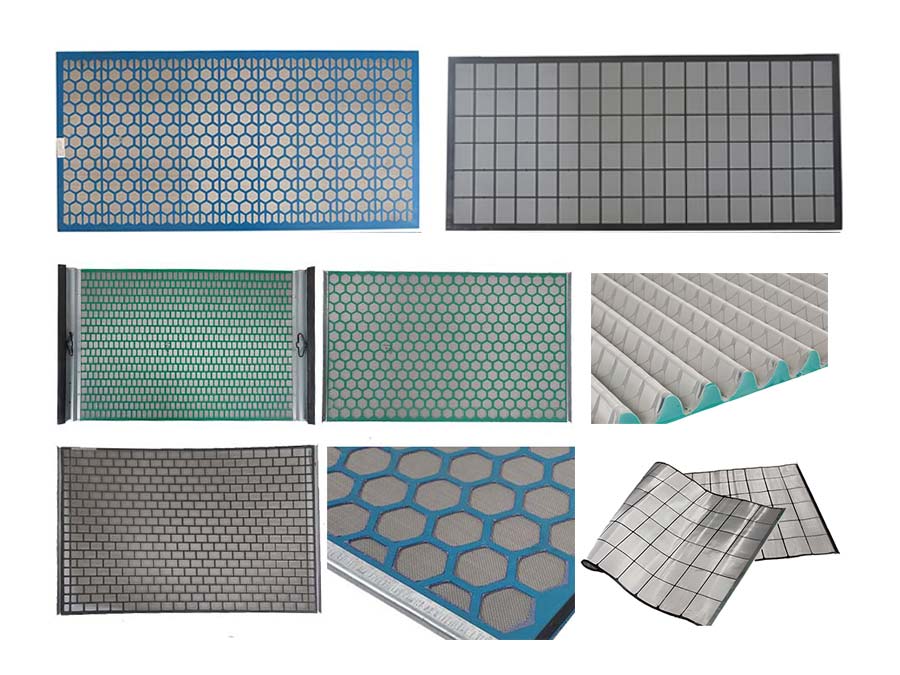
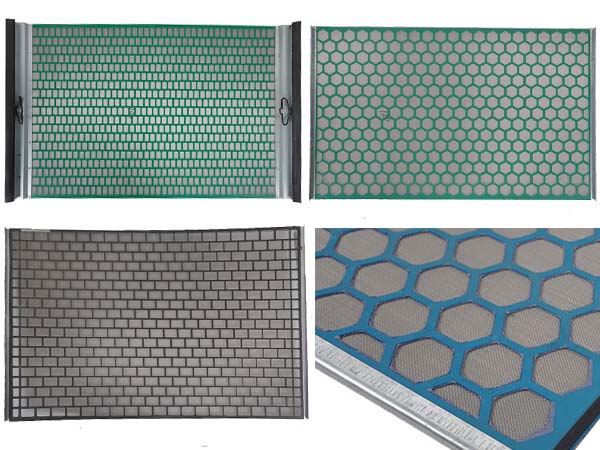
Different types of shaker screens feature various characteristics in terms of material, mesh shape, number of layers, and structural design, making them suitable for different operational environments. As a long-time supplier of drilling consumables for onshore drilling projects, KOSUN is committed to providing customers with mainstream shale shaker screen products currently available on the market. Below, we will detail several major screen types, analyze their benefits and ideal usage scenarios, and help you pinpoint the most suitable solution to enhance overall drilling efficiency and reduce operational costs.
5 Main Types of Shale Shaker Screens
Shale shaker screens can be categorized in many ways – by material, mesh shape, number of layers, or brand, among other dimensions. However, one of the more popular approaches at present is classification by structural type. Different structural types of screens exhibit unique features in material selection, mesh design, and layer composition. Below, we will focus on several common structural types to help you understand their strengths and weaknesses, so you can choose the right screen for your specific drilling environment.
1. Hook Strip Flat Screen
Hook strip flat screens are multilayer screens designed specifically for shale shakers. They typically consist of two or three layers of 304 or 316 stainless steel wire cloth affixed to a steel backing plate. A fine upper mesh layer provides accurate filtration, while coarser middle and lower layers supply support to maintain stable performance under high loads. The steel backing plate (available in various thicknesses with hexagonal, rectangular, or square cutouts) can be adapted for various shale shakers. Its partitioned design effectively prevents localized damage from spreading, significantly extending service life.
Hook Strip Flat Shale Shaker Screen
Renowned for their superior wear resistance and high throughput, these screens can effectively separate solids even when processing large volumes of drilling fluid, and they are easy to remove and maintain. The hook strip design simplifies screen replacement and reduces downtime. Compliant with API RP13C standards, hook strip flat screens are widely used in oil and gas drilling, mining, and construction industries that require efficient solids control. They are suitable for shale shakers such as the Derrick 500 series.
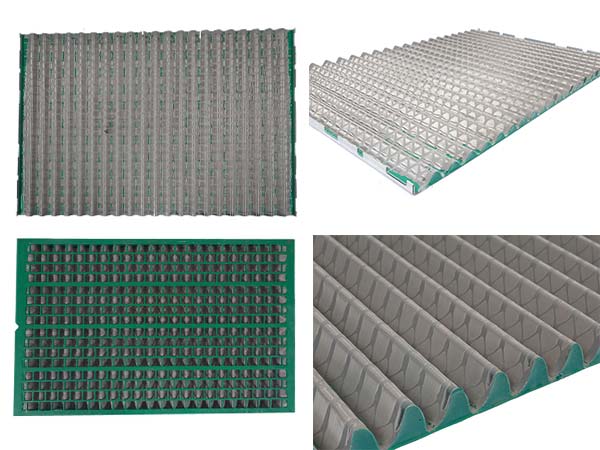
2. Pyramid Shale Shaker Screen
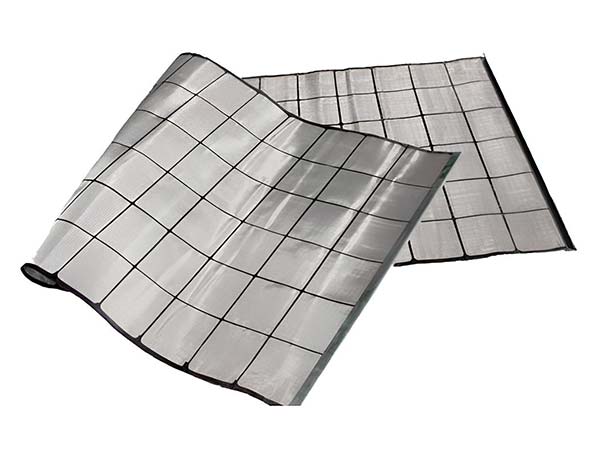
Pyramid shaker screens, sometimes referred to as three-dimensional or wave-type shaker screens, increase the screening area by 120% to 150% compared to conventional flat screens, greatly improving solid-liquid separation efficiency. They are composed of two or three layers of 304 or 316 stainless steel cloth tightly bonded to a perforated metal backing plate. A coarse bottom layer of wire cloth adds structural support and extends the overall service life. By layering meshes of varying densities, these screens enable more precise separation of different particle sizes while maintaining stability under heavy loads.
Pyramid Shale Shaker Screen
These screens can rapidly process large volumes of drilling mud, delivering drier cuttings and reducing residual solids in the fluid, and similar shale shakers, pyramid screens are widely applied in oil, gas, and mining operations that require robust, high-volume solids control.
3. Steel Frame Shale Shaker Screen
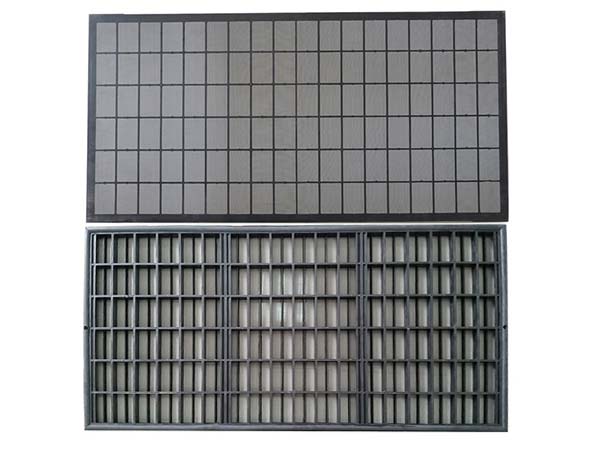
Steel frame shale shaker screens bond two or three layers of 304 or 316 stainless steel cloth onto a metal frame. By selecting the appropriate mesh count (from 20 to 325) and using perforated backing plates of different sizes, these screens achieve highly efficient solid-liquid separation. The bottom metal frame and reinforcement ribs provide overall structural strength, while the properly tensioned top layers ensure screen stability during filtration. The screen cloth is divided into multiple independent small panels, effectively preventing localized damage from spreading and allowing quick patching with rubber plugs to minimize downtime.
Steel Frame Shale Shaker Screen
This type of screen is noted for its excellent wear, corrosion, and high-temperature resistance. It is suitable for solids control and mud circulation systems in oil and gas drilling, as well as for mud separation in mining and industrial applications. With enhanced durability and a longer service life, steel frame screens handle large fluid volumes effectively, ensuring continuous operation in complex drilling conditions and helping reduce total operational costs. , among others, commonly employs this type of screen.
4. Polyurethane Frame Shale Shaker Screen
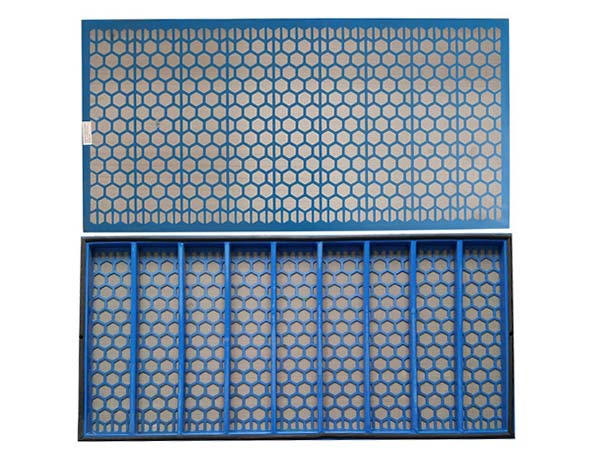
Polyurethane frame shale shaker screens feature a high-strength polyurethane framework combined with two or three layers of 304 or 316 stainless steel wire cloth, delivering exceptional solid-liquid separation and long-term stable performance. The polyurethane frame offers outstanding impact and shock resistance, as well as excellent corrosion resistance—ideal for high-wear and chemically corrosive environments. Its partitioned grid design helps prevent localized damage from spreading. In addition, the screen is equipped with specially designed rubber plugs for rapid repairs, reducing both downtime and maintenance costs. A wedge-style quick-tensioning mechanism further simplifies installation and replacement, boosting operational efficiency.
Polyurethane Frame Shale Shaker Screen
Commonly used with SWACO shale shakers in the oil and gas sector, polyurethane frame screens effectively remove solids from drilling mud, optimize solids control systems, and enhance drilling efficiency. They also excel in mining and construction applications by ensuring reliable material screening, particularly where screens must be replaced frequently.
5. Composite Shale Shaker Screen
Composite shale shaker screens integrate the advantages of both metallic and non-metallic materials. Typically made of two to four layers of stainless steel wire cloth fused to a composite frame, they are bonded into a single unit, then combined with metal reinforcement plates through spot welding or other adhesives to form a high-strength structure with a large screening area. Their effective filtration area surpasses that of flat screens, and localized damage will not spread rapidly, as specialized rubber plugs can be used for repairs.
Composite Shale Shaker Screen
Composite materials may include carbon steel plate, stainless steel plate, or aluminum plate. Stainless steel wire cloth is most frequently used, with a coarse bottom layer for support. Composite frames undergo specialized anti-corrosion treatment to cope with high-corrosion and high-humidity conditions. This makes them well-suited for drilling scenarios involving fine particles, long operational hours, or extreme environments. Furthermore, they are cost-effective, striking a sound balance between performance and budget considerations.
Other Ways to Classify Shale Shaker Screens
As mentioned earlier, shale shaker screens can also be divided by material, mesh count, application scenario, equipment brand, and number of layers. Each classification approach can be tailored to specific field conditions, optimizing drilling mud circulation, improving solids control efficiency, lowering maintenance costs, and guaranteeing both continuous and economically viable drilling operations.
Below, we discuss how these dimensions impact shale shaker screen selection:
1. By Screen Material
Screen material directly influences its wear resistance, corrosion resistance, and lifespan. In normal drilling operations, stainless steel wire cloth is widely used for its strength and resistance to corrosion. In offshore environments or in conditions prone to chemical corrosion, polyurethane and composite screens are more suitable. Polyurethane screens are particularly favored for high-humidity, chemically active mud environments due to their lightweight, shock resistance, and chemical resistance.
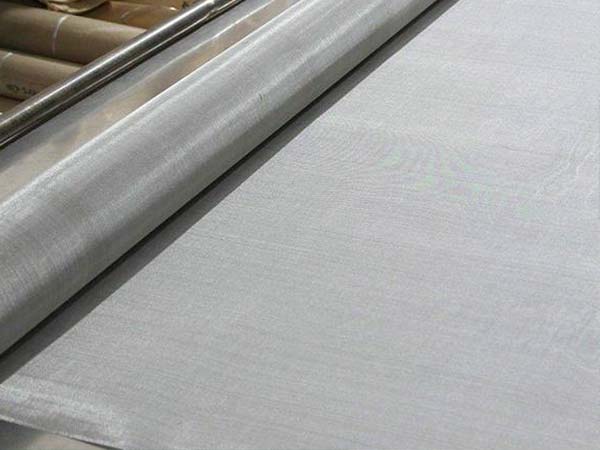
304 stainless steel wire mesh
2. By Mesh Count
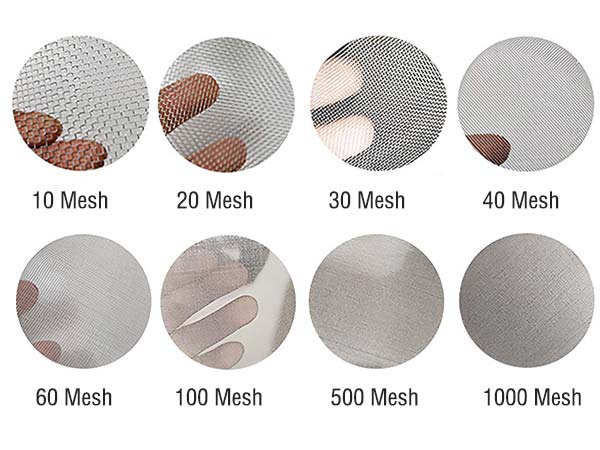
Mesh count determines a screen’s ability to filter out solids. Low mesh counts (20–60) are for coarse screening, filtering out larger cuttings and gravel. Mid-range mesh counts (60–120) target medium-sized solids, while high mesh counts (120–325 and above) remove fine particles to achieve high-purity drilling fluid. This tiered approach meets all filtration needs, from initial screening to high-precision separation.
Schematic Diagram of 10–1000 Mesh Screen Openings
3. By Application Scenario
The choice of screen type varies depending on specific operations. For onshore drilling, hook strip flat screens and steel frame screens are popular for their cost-effectiveness and ease of replacement, meeting most routine requirements. Offshore conditions are more demanding—thus, polyurethane frame or composite screens are commonly selected to combat high humidity, severe corrosion, and significant wear. Additionally, in deep wells, complex well conditions, or extended drilling operations, composite screens with their lightweight and high strength are a reliable choice.
4. By Equipment Brand
Another crucial factor is the brand of the shale shaker. Notable manufacturers such as Derrick and SWACO offer specialized screen models tailored to their own equipment, which ensures optimal solids separation efficiency, minimized adjustment time, and improved screening performance. While Western-brand screens are known for their durability, they can be quite expensive. Hence, cost-effective alternatives from China are increasingly favored by drilling service providers in the Middle East, Africa, and other regions seeking both performance and value.
As the core component of a shale shaker, the shale shaker screen plays a pivotal role in drilling fluid purification. As described above, different structural screen types each have unique advantages depending on well conditions and operational requirements. Proper selection and application of suitable shale shaker screens can enhance the efficiency of solids separation, extend equipment service life, and significantly reduce both drilling and maintenance costs.
We hope the analysis and suggestions provided in this article will be valuable to drilling engineers and procurement managers, helping you achieve efficient, safe, and economically viable drilling operations.
Oil sludge is a major environmental and economic challenge in the petroleum industry. Generated during drilling, refining, and storage operations, it contains valuable hydrocarbons mixed with water, solids, and contaminants. KOSUN Solids Control, a leader in oilfield waste management, provides cutting-edge oil sludge separation technologies that maximize oil recovery while ensuring eco-friendly disposal.