作者: Kosun_com

  • Slurry Separation System: The Role of Slurry Separators in Mud and Sludge Separation

    In various industrial processes, the management of slurry, mud, and sludge has become a critical aspect of ensuring environmental compliance and operational efficiency. One key technology that has emerged to address these challenges is the slurry separation system, a versatile solution designed to optimize the separation of solids and liquids in different applications. This article explores the significance of slurry separators, their benefits, and how understanding slurry separator price and cost can contribute to overall operational savings.


    Understanding Slurry Separators

    Slurry separators are specialized equipment used in industries such as mining, agriculture, wastewater treatment, and more. These devices play a pivotal role in mud separation, sludge separation, and slurry separation processes. The primary function of a slurry separation system is to efficiently separate solid particles from liquid components, resulting in cleaner and more manageable waste streams.
     
    Benefits of Slurry Separators

    Slurry separators contribute to environmental sustainability by facilitating the effective separation of contaminants from liquid waste. This ensures that industries meet regulatory standards and reduce their environmental footprint.

    By efficiently separating slurry into its constituent parts, industries can recover valuable resources from the process. This not only minimizes waste but also allows for the reuse or proper disposal of recovered materials.

    Sludge separation equipment enhances the overall process efficiency of the mud system by preventing the clogging of pipes and equipment due to the accumulation of solids. This leads to reduced downtime and maintenance costs.
     
    Slurry Separator Cost and Price Considerations

    The cost of acquiring a slurry separation system depends on factors such as capacity, technology, and features. While the initial investment may seem significant, it is essential to consider the long-term benefits in terms of operational efficiency and compliance.

    Slurry separators contribute to ongoing cost savings by streamlining the separation process, reducing the need for manual intervention, and minimizing equipment wear and tear. Consequently, this results in lower operating costs over the equipment's lifespan.

    Understanding slurry separator price considerations is crucial for industries aiming to enhance their waste management processes and achieve sustainable operations. A well-chosen slurry separation system delivers measurable ROI through reduced disposal costs, resource recovery, and improved compliance.
     
    Conclusion

    Slurry separators have become indispensable in various industries, addressing the challenges associated with mud separation, sludge separation, and slurry separation. While the initial investment in a slurry separation system may seem significant, the long-term benefits in terms of environmental compliance, resource optimization, and operational efficiency far outweigh the costs. By understanding slurry separator price and value drivers, industries can make informed decisions that support both their bottom line and sustainability goals.
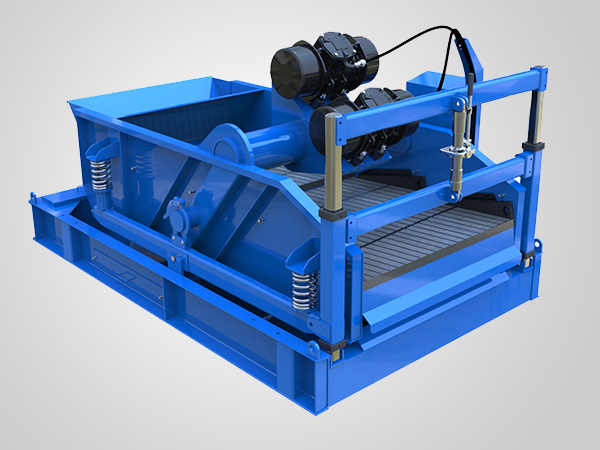
  • Linear Motion vs. Balanced Elliptical Motion Shale Shakers: Key Differences Explained

    Efficient separation of drilled solids from drilling fluid is essential in drilling operations, and shale shakers are the first line of defense in solids control. The two most common types are linear motion and balanced elliptical motion shale shaker. While both remove drilled solids, they differ in motion, efficiency, and ideal applications.
     

    Linear Motion Shale Shaker

     
    Understanding Linear Motion Shale Shakers

    Linear motion shale shaker uses a straight-line vibrating action created by two counter-rotating motors. This produces a strong, directional force that moves solids uphill while allowing drilling fluid to pass through the screen.

    They generate high G-forces (often above 5 Gs), making them highly effective for high-viscosity and high-solids drilling fluids such as oil-based muds. The aggressive motion helps prevent screen blinding and delivers a drier cuttings discharge, reducing waste and improving efficiency.

    However, the high-intensity vibration can reduce screen life and may limit the use of very fine mesh screens due to increased wear.
     
    Understanding Balanced Elliptical Motion Shale Shakers

    Balanced elliptical motion shale shaker creates an elliptical or circular vibration pattern that distributes energy more evenly across the screen.

    This gentler motion improves screen longevity and reduces operating costs. The rolling and scrubbing action is especially effective for sticky formations like gumbo, helping keep the screen clean and reducing plugging.

    These shakers perform well in top-hole drilling and with water-based muds where solids control demands are less severe. However, they may produce a wetter cuttings discharge and are less aggressive in removing fine solids under heavy loads.
     
    Direct Comparison: Linear vs. Balanced Elliptical

    When directly comparing these two technologies, the choice often comes down to a balance between separation power and operational longevity.


    Linear motion shale shaker offers superior separation efficiency and drier cuttings, making them the go-to choice for demanding applications, deep wells, and fluids with high solids content. Their ability to handle finer screen meshes effectively makes them ideal for closed-loop drilling systems.

    Balanced elliptical shaker, with its longer screen life and excellent gumbo-handling capabilities, provides a more economical solution for many land-based operations, top-hole sections, and less critical drilling phases. Their lower maintenance requirements and gentler operation lead to significant cost savings.

    The decision is not always mutually exclusive. Many modern drilling operations employ a multi-shaker setup, using a balanced elliptical shaker as a scalper to remove large cuttings and gumbo, followed by a linear motion shale shaker for fine screening. This hybrid approach leverages the strengths of both technologies to optimize overall system performance and cost-effectiveness.
     
    Key Selection Criteria for Your Operation

    Selecting the right shale shaker motion depends on drilling conditions and operational needs.

    First, consider drilling fluid type. For oil-based muds, a linear motion shaker (LS Series) with higher G-force (6.5–7.2G) is preferred for stronger solids separation and drier cuttings. For water-based muds, a balanced elliptical shaker (ES Series) (5–6.3G) offers longer screen life and lower operating cost.

    Second, evaluate geological formations. Sticky, gumbo-like shales are better handled by balanced elliptical motion due to their anti-blinding, self-cleaning action. Harder and more abrasive formations suit linear shakers, which provide stronger conveyance and more efficient solids removal.

    Third, assess flow rate and solids load. Elliptical shakers handle high flow rates up to 170 m³/h effectively, while linear shakers manage 113–170 m³/h with better fine-solids separation and finer screen capability.

    Finally, consider long-term costs such as screen wear, energy use, and downtime. Elliptical units reduce maintenance costs, while linear shakers deliver higher performance in demanding applications requiring drier cuttings.
     
    Conclusion

    Shale shaker technology continues to evolve, but the core difference between linear and balanced elliptical motion remains central to solids control strategy.

    Proper selection based on fluid type, formation, and operating conditions ensures better efficiency and cost control.

    KOSUN offers both LS Series Linear motion shale shaker (6.5–7.2G) and ES Series balanced elliptical shakers (5–6.3G). Linear units excel in high-demand drilling, while elliptical systems are ideal for gumbo-prone formations and extended screen life.

    Choosing the right system improves solids control, protects equipment, stabilizes drilling fluids, and enhances overall drilling performance.


  • How Modern Solids Control Equipment Elevates Drilling Rig Performance

    In modern energy exploration, drilling efficiency depends on effective fluid management. Drilling fluid serves as the critical link between rig mechanics and subsurface geology. As the drill bit generates cuttings, these particles can disrupt fluid performance and increase operational risks. Therefore, high-quality solids control equipment plays a vital role in maximizing productivity and minimizing non-productive time.


    The Mechanical Foundation of Efficient Drilling Solids Control

    The impact of drilling solids control becomes clear when considering the effects of poor fluid quality. Recirculated solids act as abrasive material, accelerating wear on pumps, drill strings, and MWD tools. Effective solids control relies on a staged separation process that removes particles by size.

    The process begins with shale shakers that remove larger cuttings, followed by hydrocyclones and centrifuges that target finer solids. Maintaining low solids content allows drilling mud to circulate efficiently while retaining enough carrying capacity for cuttings transport. Cleaner mud also reduces chip hold-down, helping the bit achieve higher penetration rates.
     
    Maximizing Hydraulic Efficiency with Mud Cleaner Drilling Rig Systems

    A mud cleaner drilling rig treats fluid cleaning as a critical component of drilling performance. Mud cleaners combine desanders, desilters, and fine screens to improve fluid quality, particularly in deepwater operations where drilling fluids represent a major investment.

    Hydrocyclones concentrate solids into an underflow stream that passes across fine screens, enabling barite recovery while removing unwanted particles. The result is reduced torque and drag, improved lubricity, lower fuel consumption, and more efficient drilling operations.
     
    Asset Protection Through Advanced Solids Control Systems

    Comprehensive solids control systems not only improve drilling efficiency but also protect expensive equipment. Excess solids accelerate wear on mud pump liners, pistons, and valves, increasing maintenance costs and downtime.

    Modern systems use automation and real-time monitoring to optimize separation performance. Sensors track particle removal efficiency and automatically adjust operating parameters when solids loading increases. This reduces human error, extends equipment life, and helps protect bottom-hole assemblies from abrasive damage.
     
    Improving Wellbore Stability with Superior Solids Removal

    Proper solids removal also contributes to wellbore stability. When fine solids accumulate, they can create a thick filter cake that increases the risk of differential sticking and other costly drilling problems.

    High-performance separation equipment helps maintain a thin, impermeable filter cake that limits fluid invasion and preserves borehole integrity. The result is smoother tripping operations, easier casing runs, and improved overall drilling performance.
     
    The Future of Digital Solids Control

    The next generation of solids control systems will incorporate intelligent automation and predictive analytics. Machine learning technologies will enable equipment to anticipate solids-loading changes based on geological conditions and adjust automatically.

    These innovations will further reduce equipment wear, improve fuel efficiency, enhance environmental performance, and support wellbore stability. As drilling environments become increasingly complex, effective solids control will remain a key driver of operational success. In today's competitive industry, cleaner mud often translates directly into faster, more efficient drilling.

  • Desander: How It Works, Benefits, and Applications in Wastewater Treatment

    A desander removes suspended solids from liquid process streams, primarily to improve wastewater quality. In fact, desanders play a critical role in the solids removal step of wastewater treatment, helping facilities meet regulatory discharge specifications.


    How Does a Desander Work?

    A desander features an entry port, a hydrocyclone central component, and two discharge points, one at the top and one at the bottom. The hydrocyclone is oriented with the wide opening at the top and the narrow opening at the bottom.

    The product stream enters at an angle, creating a circular flow. As a result, the narrowing shape causes water to swirl at high speed. Consequently, centrifugal forces push heavier solids against the cyclone walls, where they migrate downward and are removed from the bottom. Meanwhile, water and light particles rise to exit through the top.

    A typical wastewater desander removes particles with a mean size of up to 10 microns. Moreover, any flow rate can be accommodated by appropriate sizing. To protect the desander, screens are sometimes used upstream to remove large items. As a result, a desander can operate for up to 10 years if properly maintained.


    Environmental Benefits

    In wastewater treatment, the desander removes solids that may contain bacteria, thereby improving water clarity.

    Regulators use turbidity to set discharge specifications. Specifically, higher suspended solids mean less light transmission and higher turbidity. Furthermore, high turbidity water tends to be hotter, reducing dissolved oxygen and harming aquatic life. Therefore, a desander directly contributes to lower turbidity and healthier ecosystems.
     
    Mechanical Benefits

    The desander's efficiency directly influences filtration costs and reliability. If excess solids are not removed, they enter filters and quickly build up, increasing maintenance frequency and costs.

    Additionally, pumps are vulnerable to solid contaminants. For example, the scouring effect of suspended solids damages pump seals, resulting in leaks and equipment outages. Thus, a properly functioning desander protects downstream equipment and extends service life.
     
    Where Are Desanders Used?

    Desanders are used in any industry where suspended solids may be present.

    Mine sites use desanders for wastewater solids removal.

    Construction sites and factories generate wastewater requiring solids removal for regulatory compliance.

    Industrial process water relies on desanders to prevent equipment damage.

    In summary, desanders are essential across mining, construction, and manufacturing.

    Conclusion

    A desander removes suspended solids, improving water clarity, protecting equipment, cutting costs, and ensuring environmental compliance. Whether in mining, construction, or manufacturing, desanders deliver reliable, efficient solids removal.


  • What Is the Difference Between Oil Tanks, Water Tanks, and Mud Tanks?

    In modern industrial systems, storage tanks are indispensable across various fields. Whether it is oil storage in the energy industry, water supply in daily life, or slurry treatment in construction and oil drilling, industrial storage tanks play a key role. According to the different storage media, industrial storage tanks are mainly divided into oil tanks, water tanks, and mud tanks — each with its own unique use, functional characteristics, and important value in its respective area.
     
    Oil Tanks: Key Facilities for Energy Storage

    Uses and Functions: Oil tanks store crude oil extracted from the ground, providing a safe and stable storage environment that prevents leakage and volatilization. They also store refined products like gasoline and diesel, with good sealing to prevent volatilization and oxidation. Oil tanks also play a role in oil blending and act as buffers to handle fluctuations in production and distribution.

    Application Fields: Oil tanks are essential in oil extraction (offshore platforms and onshore fields), refineries and petrochemical plants, gas stations (underground double-layer tanks), and airports (aviation fuel storage).


    Water Tanks: Vital Vehicles for Water Security

    Uses and Functions: Water tanks store purified domestic water, regulating pressure for a stable supply during peak periods. Firefighting water tanks store large volumes of water for emergencies. Industrial water tanks support the textile, chemical, and power industries. They can also collect rainwater for non-drinking uses like irrigation and car washing.

    Application Fields: Water tanks are used in municipal water supply systems, residential and commercial buildings, industrial enterprises, and agricultural irrigation.


    Mud Tanks: Special Storage Equipment for Industrial Operations

    A mud tank is a container for storing, treating, and regulating mud, widely used in oil and gas drilling and geological exploration. Inside the mud tank, a mixing system ensures even mixing of clay, weighting agents, and additives.

    Uses and Functions: Mud tanks store drilling mud, treat and separate solid particles using shale shakers, desanders, and desilters so mud can be reused — reducing costs and pollution. They also adjust mud density and viscosity for optimal drilling performance.

    Application Fields: Mud tanks are indispensable in oil and gas drilling (offshore and land), geological exploration (small movable tanks), building construction (piling and diaphragm walls), and mining (storing and treating mine effluent).


    Conclusion
    Oil tanks, water tanks, and mud tanks each play unique and important roles in their respective fields. Oil tanks guarantee energy storage and transport, key facilities in the energy industry. Water tanks ensure a stable supply and rational use of water resources, related to daily life and industrial production. Mud tanks provide necessary support for special operations in petroleum extraction, building construction, and other industries.


  • Industrial Decanter Centrifuge for Wastewater Sludge Dewatering

    Wastewater treatment plants generate large volumes of sludge during the purification process. Efficient sludge management is essential to reduce disposal costs and improve environmental performance. One of the most widely used technologies for this purpose is the decanter centrifuge, which provides reliable and continuous sludge dewatering.

    Industrial decanter centrifuges are designed to separate solids from liquids at high speed, making them ideal for municipal wastewater plants, industrial wastewater facilities, and sludge treatment systems.

    The Importance of Sludge Dewatering in Wastewater Treatment
    Sludge produced during wastewater treatment typically contains a high percentage of water. Without proper dewatering, sludge disposal becomes costly and difficult.

    By using a sludge dewatering centrifuge, treatment plants can reduce sludge volume significantly, lower transportation and disposal costs, improve overall plant efficiency, and produce clearer discharge water. Modern centrifuge technology allows facilities to process large amounts of sludge continuously while maintaining stable performance.

    How Decanter Centrifuges Work in Sludge Treatment
    A decanter centrifuge separates materials based on density differences. When sludge enters the centrifuge bowl, it rotates at a very high speed. The centrifugal force pushes heavier solids toward the outer wall while lighter liquid moves inward.

    Inside the rotating bowl, a screw conveyor transports the separated solids toward the discharge section while clarified liquid exits through adjustable outlets. This continuous separation process ensures high dewatering efficiency and stable operation in demanding industrial environments.

    Key Advantages of Using Decanter Centrifuges
    Industrial wastewater facilities choose decanter centrifuges for several important reasons.

    Continuous Operation: Unlike batch separation equipment, decanter centrifuges operate continuously, making them suitable for large-scale wastewater treatment plants.

    High Separation Efficiency: The strong centrifugal force enables rapid separation of solids and liquids even when particle sizes are very small.

    Reduced Sludge Volume: Effective dewatering reduces sludge volume dramatically, lowering disposal and transportation costs.

    Low Maintenance Requirements: Modern centrifuge designs feature wear-resistant materials and automated control systems that minimize downtime.
     
    Conclusion
    Decanter centrifuges play a critical role in modern wastewater treatment by providing efficient sludge dewatering and reliable solid-liquid separation. Their continuous operation, high separation efficiency, and low maintenance requirements make them an essential technology for industrial and municipal applications.

    Investing in advanced centrifuge equipment helps wastewater facilities reduce costs, improve environmental performance, and achieve sustainable sludge management.
     

  • Protecting Downhole Tools: Advanced Solids Control Strategies Beyond Filtration

    In modern drilling, especially in Deepwater, High-Pressure/High-Temperature (HPHT), and Extended Reach Drilling projects, mud properties are often the focus of discussion. However, a silent variable often dictates the economic success of a project: Solids Content Management. As the "kidneys" of the drilling rig, a high-performance solids control system does more than recycle mud; it is the primary line of defense for millions of dollars in downhole assets.
     

    KOSUN OBM Drilling Waste Management System


    The Invisible Assassin: Erosion Mechanisms of Fine Solids

    While weighting agents like barite are essential, the accumulation of drilled solids (cuttings) is a "serial killer" for downhole tools. According to research published by the Society of Petroleum Engineers (SPE), hard solid particles with a diameter of 20 microns or larger are the leading cause of premature tool failure.

    When the solids control system efficiency drops, these micro-particles enter the drill string at high velocities. Within MWD/LWD tools, high-velocity abrasive mud causes severe erosion on pulse generator impellers, turbine rotors, and sensor seals — a true "sandblasting effect." Industry data suggests that for every 1% increase in sand content, the Mean Time Between Failures (MTBF) of downhole tools can be slashed by nearly 50%. This results not only in signal loss but also in costly Non-Productive Time (NPT) due to unplanned trips.
     
    Deep Defense: Shifting from "Shaking" to PSD Management

    A sophisticated solids control strategy is fundamentally about Particle Size Distribution (PSD) management. Following API RP 13C standards, a modern solids control system must employ a tiered defense logic.

    Primary Scalping (High-G Shakers): The goal is to remove large cuttings immediately. This prevents the "re-grinding" effect, where particles are broken down by pumps into ultra-fines (<5 microns) that are nearly impossible to remove mechanically and drastically increase mud viscosity.

    Hydrocyclone Precision: Desanders and desilters target the 20-74 micron range, bridging the gap between shakers and centrifuges.

    The Final Guard (VFD Centrifuges): High-speed, Variable Frequency Drive (VFD) centrifuges are critical for stripping harmful solids down to the 5-7 micron range. This is essential for protecting Positive Displacement Motor (PDM) bearings and maintaining the rheology of expensive Synthetic-Based Muds (SBM).
     
    Future Frontiers: Digitalization and Sustainability

    The industry is moving beyond manual operation toward Automated Closed-Loop Systems. Integrating PSD sensors allows the system to adjust centrifuge differential speeds automatically based on real-time inflow data. Modern solids control systems are now integrated with Drilling Waste Management (DWM) to maximize base oil recovery and achieve "Zero Discharge" compliance. Designing modular, high-reliability systems for Arctic or Ultra-Deepwater conditions is the new benchmark for equipment manufacturers.
     
    Effective solids control is not just a regulatory checkbox; it is a precise economic calculation. By protecting the "health" of your drilling fluid, you are safeguarding your most expensive downhole assets.

  • KOSUN Delivers Mud Storage & Treatment System to Algeria

    As summer brings renewed momentum, KOSUN Machinery has completed the manufacturing, inspection, and loading of a customized oil drilling mud storage and treatment system for an Algerian client. A total of 32 truckloads of equipment are now being transported via the ports of Lianyungang and Shanghai for shipment to Algeria.

     
    The project features KOSUN's independently developed drilling mud storage and treatment solution, covering the full mud lifecycle through three key modules:

    Mud Purification (Solids Control): Ensures efficient drilling fluid purification and stable drilling operations.
    Zero-Discharge Environmental Treatment: Utilizes solid-liquid separation, oil-water separation, wastewater treatment, and resource recovery to reduce environmental impact.
    Mud Station: Supports mud recovery, mixing, storage, and continuous supply throughout drilling operations.

    Together, these systems improve resource utilization, reduce waste, lower operating costs, and support environmentally sustainable oilfield development.


    As a strategic project in North Africa, the Algerian client required high standards for reliability, environmental adaptability, process accuracy, and production capacity. In response, KOSUN established a dedicated project team to oversee design, manufacturing, and quality assurance while strictly following international standards.

    Despite challenges including complex configurations and tight delivery schedules, KOSUN maintained rigorous quality control throughout production. Multiple inspections were conducted on critical components and assembly processes to ensure product reliability and performance.

    To ensure safe international delivery, KOSUN developed a detailed logistics plan, dispatching equipment in batches through Lianyungang and Shanghai ports. Dedicated personnel supervised loading, securing, and protective packaging to minimize transportation risks.


    The successful completion of this project demonstrates KOSUN's advanced manufacturing capabilities, strong project execution, and global delivery expertise. It also marks an important milestone in the company's international expansion strategy, further strengthening its presence in North Africa.

    Guided by its philosophy of "Craftsmanship Creates Quality, Reputation Wins Markets," KOSUN continues to focus on solid-liquid separation and sludge treatment technologies while advancing product innovation, performance, and global service capabilities.

    Looking ahead, KOSUN remains committed to delivering high-quality products, efficient solutions, and comprehensive services to customers worldwide, supporting the continued growth of Chinese manufacturing in international markets.

  • KD Series slurry separation system : Purification Solutions for Shield Tunneling

    In modern urban tunnel construction, railway shield projects, and foundation engineering, managing waste mud effectively is a major challenge. The KD Series slurry separation system, developed by KOSUN, addresses this head-on. These professional mud purification equipment provide comprehensive support for waste mud generated in slurry balance shields, diaphragm walls, and pile foundation construction.


    The Value of the KD Series Slurry Separation System
    The KD Series delivers safe operation of tunneling equipment. Through a scientific solid-liquid separation process, it precisely controls mud viscosity and specific gravity, enhancing pore formation quality. Better mud properties mean better construction efficiency. More importantly, this slurry separation system ensures safe operation in complex strata. For high-value shield machines, that means fewer downhole accidents and longer equipment life.
     
    Environmental Benefits
    The most prominent advantage of this slurry separation system is its energy-saving and emission-reduction capabilities. Through multi-stage purification, it significantly improves mud recycling rates. This saves money on bentonite and chemical additives while reducing waste mud emissions. With today's strict environmental regulations, this system is essential for green construction projects.
     
    Structural Advantages
    From a structural perspective, the KD Series embodies advanced concepts of modularity and integration. The entire set of equipment is designed strictly in accordance with standard container dimensions, which greatly facilitates sea and land transportation. Moving equipment between sites is faster, easier, and more cost-effective. At the same time, the equipped foldable operation platform makes the structure more compact, effectively reducing the footprint on the construction site. This flexibility allows the equipment to be deployed easily in areas where operational space is extremely limited — urban centers, congested job sites, or tunnels with tight clearance. A slurry separation system that fits where others cannot is a significant competitive advantage.
     
    Technical Customization
    KOSUN provides high-level technical customization. The separation process can be tailored to different KD50 cut point requirements. Processing capacity spans 100m³/h to 3000m³/h, matching everything from micro pipe-jacking to ultra-large shield machines. For sites with limited power, the system can be equipped with generator sets or vehicle-mounted mobile treatment units, achieving full-terrain coverage.
     
    Conclusion
    In modern urban tunnel construction, railway shield projects, and foundation engineering, managing waste mud effectively is a major challenge. The KD Series slurry separation system, developed by KOSUN, addresses this head-on. These professional mud purification equipment provide comprehensive support for waste mud generated in slurry balance shields, diaphragm walls, and pile foundation construction.
     
     
  • How KOSUN KSMR Series Improves HDD Drilling Efficiency and Reduces Waste

    The KSMR Series HDD mud recycling system from KOSUN is specifically engineered to improve drilling efficiency, reduce waste, and lower operational costs in horizontal directional drilling (HDD), geothermal, and resource extraction projects. With over 20 years of solids control expertise, KOSUN delivers reliable mud cleaning, recovery, mixing, and storage solutions for projects ranging from 200 to 1000 GPM capacity. Whether laying a pipeline under a city or drilling a water well in a remote location, the KSMR series provides the performance you need.

     
    Compact and Efficient Design for Small to Medium Projects
    The KSMR-200 and KSMR-350 models are designed for small HDD, geothermal, and water well projects where space is limited and portability matters. Equipped with double-deck shale shakers, these systems achieve two-stage solids separation in a compact footprint. This integrated design makes them easy to transport and allows operation in tight urban workspaces where larger equipment cannot fit. Despite their small size, these mud recycling systems deliver powerful solids control that keeps drilling fluid clean and project costs under control.
     
    Advanced Multi-Stage Purification for Demanding Operations
    For medium and large drilling operations, the KSMR-500 and KSMR-1000 offer advanced three-stage purification using shale shakers, desander cyclones, and desilter cyclones. This multi-stage approach progressively removes finer and finer solids from the drilling fluid, resulting in superior mud quality that enhances drilling performance. The KSMR-500 is ideal for projects up to 500 GPM, while the KSMR-1000 handles the most demanding large-scale HDD and coalbed methane operations with ease. By maintaining stable mud properties even during continuous, high-volume drilling, these systems reduce waste discharge, lower additive consumption, and extend the life of downstream equipment.
     
    Integrated Mud Mixing System for Closed-Loop Recycling
    The KSMR series includes an efficient mud mixing system that quickly restores drilling fluid properties by evenly mixing additives such as bentonite and polymers. After the mud undergoes multi-stage purification, the mixing system allows operators to adjust viscosity, density, and other key parameters to match specific formation requirements. This closed-loop recycling process significantly reduces fresh water usage, minimizes waste volume, and lowers the overall environmental footprint of the drilling operation. Less water to buy, less waste to haul, and better drilling performance — that is the KSMR advantage.
     
    Built for Reliability and International Standards
    KSMR systems are built for demanding drilling environments. Every unit features explosion-proof, dust-proof, and rain-proof electrical systems, ensuring safe and reliable operation in harsh conditions — from dusty desert sites to wet coastal locations. Certified to the API, CE, and ISO14001 international standards, the KSMR series meets global safety and environmental requirements, making it suitable for export and use in regulated markets worldwide. When you choose KOSUN, you are choosing equipment that is tested, certified, and ready to work.

    From the lightweight KSMR-200 to the large-capacity KSMR-1000, KOSUN HDD mud recycling systems resolve the conflict between space and efficiency through finely tiered technical solutions. By selecting the appropriate model, customers can achieve both cost optimization and compliance with environmental standards.